
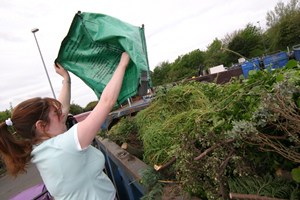
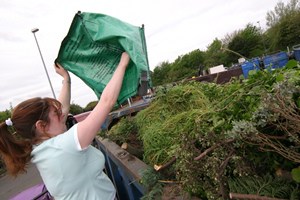
Volumes of green waste collected for recycling are 20-30% down on the levels expected at this time of year due to the exceptionally cold spring, organics recyclers have reported.
A prolonged period of cold weather, including the coldest March in four decades, has been blamed for the fall in tonnages, as fewer households carry out gardening with some estimating that volumes are around four weeks behind the normal level.
Harry Waters, commercial director of Agrivert, which runs the 35,000 tonne-a-year capacity in-vessel composting (IVC) plant at Ardley, Oxfordshire, to service its 20-year green and food waste processing contract with Oxfordshire county council, commented that seasonal fluctuations are common for organics recyclers, but said that volumes for 2013 had so far been lower than expected.
Mr Waters said: The cold weather has meant that little has grown and indeed many gardeners have not been inclined to get in the gardens and do their spring clear up. Green waste into both our IVCs and open windrow compost sites is down on the seasonal average.
This has resulted in volumes up to 20% lower than forecast for that in February and March, while April is also likely to be a month with low volumes. Seasonal fluctuations in volumes and therefore revenues is a constant feature of the organics sector. The recent extreme weather conditions also produce unexpected peaks in volume that also has its challenges.
Volumes
Meanwhile, Trelawney Dampney, managing director of Dorset-based Eco Sustainable Solutions, noted that the weather conditions have set organics recyclers back by around a month, but added that there is optimism that warmer weather forecast for coming weeks may kick start higher volumes of green waste being collected.
He said: At the moment nothing is really growing so people arent taking green waste to household waste recycling centres (HWRCs) or leaving it out for collection. By my reckoning, we are now four weeks behind where we should be and it will take a while to catch up.
‘Green waste tonnage is down compared with Spring inputs last year but as the weather warms up and days lengthen we can expect input tonnages to peak sometime in late spring or summer.’
Emily Nichols, Organics Recycling Group
Next week it is meant to heat up, up I would say that we still have about 30% less volume than what we need. The only thing we can do is not panic, as it will come back eventually.
The decline in volumes has also been confirmed by Ed Bastow, managing director of composting firm Material Change, which is based in Ipswich, Suffolk, who said that it had been a difficult start to 2013.
He commented: Like for like, volumes are down around 30%. It has been a difficult start to the year and having to catch up from that can be hard. Having said that, there were bigger volumes than anticipated at the end of last year, so it is one of those things you have to try to balance.
Emily Nichols, technical manager for the Renewable Energy Association’s Organics Recycling Group, said: Green waste tonnage is down compared with spring inputs last year but as the weather warms up and days lengthen we can expect input tonnages to peak sometime in late spring or summer.
“Composters may need to work proactively with the regulator to ensure that permit conditions are complied with during peak input months and its possible that the industry will catch up to last years total tonnage processed by the end of the year.
Shanks
Waste management firm Shanks Group also cited the adverse weather conditions a trading update for the year ended March 31, published on Tuesday (April 9). The Milton Keynes based firm said that the weather adverse weather conditions were impacting its sold and hazardous waste divisions as well as organics recycling.
The statement said: Since the Interim Management Statement on February 5 2013, the Group has continued to trade robustly and to implement its cost management actions, in market conditions which remain very challenging.
There has been an additional material impact from the recent unusually adverse weather conditions on activity levels in the Solid Waste, Hazardous Waste and Organics Divisions. Neverthless, the Board expects to deliver a full year result broadly in line with its expectations.
Councils
Related Links
Snowy weather seen throughout the first three months of 2013 has also contributed to challenging conditions for councils collecting organic waste. Local authorities including Solihull, Braintree and Wiltshire issued warnings to residents in January that they would be unable to carry out collections due to food and green waste becoming frozen to bins.
Among the councils, Wiltshire told residents that refuse collection crews would attempt to shake any frozen waste free of bins two to three times, but would leave a label on bins to inform residents where green waste could not be removed.


Register for free to comment