


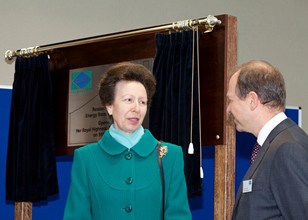
Unveiling a plaque on Wednesday (9 May 2012) to mark the event, the Princess Royal said how she was impressed by the use of the river to take waste to the plant.
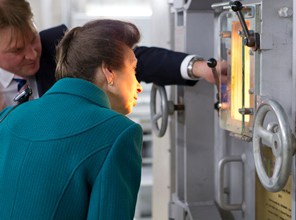
And, she referred to the development of an 85,000 tonne materials recycling facility (MRF) by Cory in Wandsworth which she had opened a year earlier (see letsrecycle.com story).
Princess Anne said: “Having opened the materials recycling facility in Wandsworth last year, I am very pleased to come back and, following the wastes journey up the Thames, see the final stage of the process. These examples of putting recycling and waste and energy together set an example for the future.”
Integrated
Both the MRF and the new EfW plant, developed by Corys Riverside Resource Recovery Ltd(RRRL) operation, form part of an integrated waste management contract which Cory signed with the Western Riverside Waste Authority in 2002. The contract is worth 1bn over 30 years.
Peter Gerstrom, chief Executive of Cory Environmental, said: “I am delighted that the Princess Royal has recognised the importance of the work we are doing to reduce the impact Londons waste has on the environment and the potential of that waste to generate renewable energy.”
Mr Gerstrom continued: “The process of taking control and commencing operations at the plant has been very smooth. The plant is about to start its availability trials which are the final phase of commissioning and it is already exporting electricity to the National Grid.”
The RRR facility at Belvedere will process an average of 585,000 tonnes of residual waste each year, generating 66MW of renewable electricity for export to the National. RRR is currently the largest EfW facility in the UK and seen as one of the most efficient.
The majority of the waste comes from WRWAs four London boroughs Wandsworth, Hammersmith and Fulham, Lambeth and the Royal Borough of Kensington and Chelsea WRWA is considered the anchor client for the facility. Cory also takes in waste from the London borough of Bexley, the City of London and Westminster city council, and also commercial and industrial waste from the surrounding area.
History
The development of the plant has a long and chequered history. There was strong local opposition and former London Mayor Ken Livingstone fought a long battle to get it scrapped.
Originally proposed 20 years ago, the opposition to RRR lead to a large reduction in capacity with the current facility being less than half the size first planned. Some of those present at the opening felt that London may never see the development of a new EfW plant on the scale of the RRR facility, although redevelopment may take place at the existing Edmonton incinerator.
Mr Gerstrom said: “London certainly needs a number of facilities to generate energy from waste but whether it is that they prepare waste or transfer it, or are built like this plant is a question for the market. London certainly doesnt have the capacity to deal with its own waste.”
Referring to the current trend to export refuse-derived fuel, Mr Gerstrom said: “I think it is a sad thing that we have to export it”.
Construction
Construction work by Costain on RRR commenced in summer 2008 and Cory Environmental took full operational control in October 2011. The EPC contractor was Hitachi Zosen Inova with ongoing engineering operation and maintenance by Wheelabrator Technologies.
The plant uses moving grate combustion technology and produces APC residues flyash – at 4%, and these are stored at the Minosus facility in Cheshire.
Some 28% of the facilitys waste throughput is left over at the end of the process as incinerator bottom ash (IBA). Metal is not extracted on site but instead at a reprocessing facility for the ash at Tilbury, Essex run by Ballast Phoenix. The residue is matured to produce a secondary aggregate which can be used in construction although the process does not count as recycling in terms of UK government figures.
Norfolk
Now, the company is set to continue working on its proposed Kings Lynn, Norfolkenergy from waste facilitiy which is going through planning and permitting processes.
In terms of ownership, Cory is owned by a number of financial institutions. A sale of the business is expected at some point but not for at least three years. However, much may depend on the economy and financial view of the waste sector.

Register for free to comment