


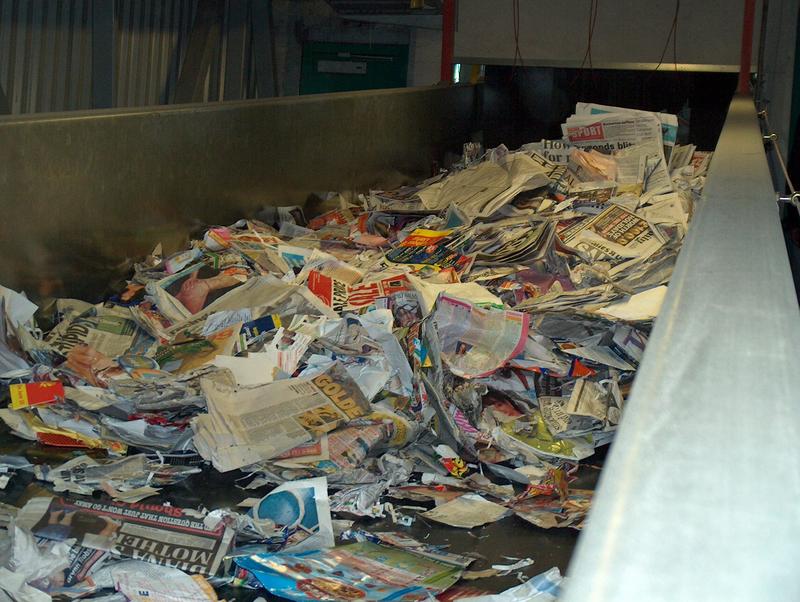
Prices paid for used newspapers and magazines have soared to new heights this month with local authorities signing new contracts achieving as much as £85 per tonne.
The price rises for newspapers and magazines (news and pams) come in the wake of increased demand for the material from the export market, a scarcity in supply and because more newspapers are ending up with soft-mixed grades.
Soft-mixed, which often comes from materials recycling facilities, is proving particularly popular on the export market because of its newspaper content and so is achieving prices in the order of £68-70 for export.
Although current prices are seen as high, some in the sector are forecasting that they could rise substantially next year, partly because the Palm Paper newsprint mill in King's Lynn will start to source material in the second quarter of 2009.
However, while the high prices are likely to be welcomed by local authorities, within the waste paper sector there was a recognition that there is little room for profit-making because of higher transport costs and the fact that customers are likely to want to be paid for more material.
And, the point was also made that the volume of material available is low, partly because newspaper pagination is down and sales are reduced, although free newspapers are helping, to an extent, to compensate.
One London merchant, Graeme Coombes, managing director of TGM Environmental, told letsrecycle.com: “There is a sheer lack of volume. It is all very well having high prices to sell at but there is a shortage. Feedstock bays at MRFs are empty and I have heard of shovels getting to the back of the push wall.”
Mr Coombes also said that the fact that England failed to qualify for Euro2008 did not help. “This would have given us an extra 6-8 pages a day in newspapers.”
Chris White, director of Aylesford Newsprint, said that while he could see the price for used newspapers dipping a little over the summer, they were likely to rise again later in the year. And, he added that local authorities should “start demanding extra money from people taking their material to materials recycling facilities.”
Energy costs
Mr White, who is also president of the recovered paper division of the Confederation of Paper Industries (CPI), said that the price rise for material is hitting the industry, which is also having to cope with high prices for gas and power supplies.
He said: “Raw material is a big cost and we are not only facing higher prices for newspapers and magazines but also substantial price rises for our energy supplies.”
Ron Humphreys, managing director of AbitibiBowater Recycling Europe, which runs the Bridgewater newsprint mill at Ellesmere Port, said that he too was expecting prices to rise further.
“Generally the trend is going to be dragging upwards from a fairly high level. There are some signs that certain countries are now saying they won't buy any more because of the high UK prices but I can see much higher prices being possible next year,” he said.
Mr Humphreys recalled how, in 1995, prices reached £150 a tonne. At that time there was the beginning of the export market plus Aylesford coming on stream. With Palm Paper starting to buy next year, Mr Humphreys said: “Palm will put extra pressure on and if the export market is still so bullish we will see these higher prices.”
However, he cautioned that the amount of poorer quality material was rising because of the growth in soft mix. Abitibi, he explained, had carried out trials of newspapers from MRFs recently but was still having to reject some loads.
Supplies down
UPM-Kymmene is also seeing higher market prices for material. Craig Robinson, senior manager for fibre purchasing, said that supplies were down, partly because of reduced newspaper pagination with a downturn in advertising spend. He also highlighted the increased costs mills were facing for energy and water usage.
Construction work on the Palm Paper mill at King's Lynn, Norfolk is progressing well according to managing director Derek Harman. Currently material is not being bought for the plant but talks are underway with potential suppliers.
He said: “We are just talking to people to see what is available. We are going to some local authorities, waste companies, merchants and traders.” He added that the company is also keen to collect overissue newspapers from press rooms, potentially using the same vehicles that will deliver rolls of newsprint from the Norfolk mill.
On prices, he said he did not expect the £150 a tonne mark to be reached but added “this is all very difficult to predict. I did not see oil at $150 a barrel!”
Exports
Both Newport Paper and Holmen are also very active in the marketplace seeking material for export. Newport Paper is understood to be seeking extra tonnages for Stora Enso in Belgium while Holmen's UK team is said to be “very active” and helping to feed a “hungry” newsprint mill just south of Madrid, Spain.
Sorting facilities
The two exporters – Newport and Holmen – have both set up sorting plants in the UK. This is seen as an attempt to sort soft mixed material to help gain extra volumes of used newspapers and it now seems that more mills are going down this route.
UPM-Kymmene at Shotton has turned to one of its contractors – Alan Morris Transport, based close to the mill – to provide sorting facilities although full details are yet to be released.
AbitibiBowater is also looking at options and, while not disclosing the contractor, the company has confirmed that it is likely to make use of third party sorting facilities, particularly in the north east of England. 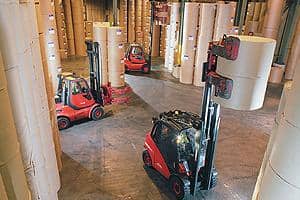
Managing director Ron Humphreys explained that the company, which offers a kerbside sorting service for many councils, might use a sorting plant to separate newspapers from cardboard when councils want a more comprehensive service.
Chris White of Aylesford Newsprint has said that his company's board is aware of the potential requirement for sorting. However, he emphasised that quality issues remain from commingled material.
Overall, the sector now says that it will be watching the market closely over the next few months, especially as the summer period usually sees a fall in the amount of used material generated.


Register for free to comment