

Plastic packaging recycling in the UK may need to double from the level recorded in 2011 if the UK is to meet its 2017 packaging recycling target, according to plastics recycling body Recoup.
This is among the findings of Recoups annual UK Households Plastic Packaging Survey, now in its 18th year, which assesses the local authority collection infrastructure for plastics across the UK.

Headline findings from the survey, which covers the 2011 period, were published late last year, and showed that the collection rate for plastic bottles had broken the 50% barrier for the first time (see letsrecycle.com story). In total 306,259 tonnes of plastic bottles were collected in 2011, compared to around 281,000 tonnes collected the previous year.
And, in the full survey published last month, Recoup estimates that collections from households totalled 426,591 tonnes during 2011. But the organisation claims that this figure would need to rise to 828,297 tonnes from households if the government target to recycle 57% of plastic packaging by 2017 is to be met.
Recoup estimates that a total of 1.2 million tonnes of plastic packaging may need to be collected in 2017 from households and the commercial and industrial sectors.
Target
Commenting on the data, Recoups technical manager, Steve Morgan, said that it showed that there is still a lot of work to be done if the 57% recycling target for plastic packaging is to be met in 2017.
He said: The data clearly shows plastics collection levels have come a long way since the first survey recorded the collection of 425 tonnes of plastic bottles.
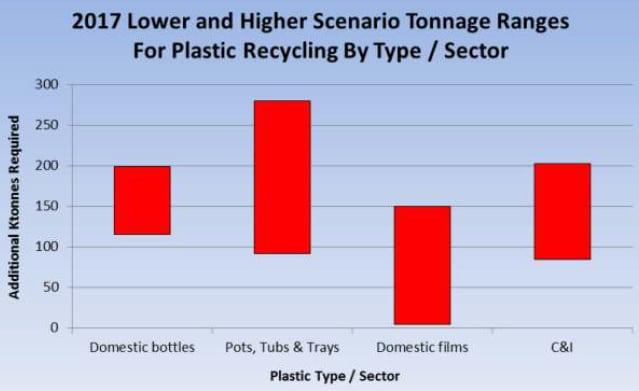
Focussing on the volumes collected from households, Mr Morgan added: There are many possible scenarios about what might be collected from households in 2017, one of them described in the survey report is that the plastics packaging collected from households could need to rise from 426,591 tonnes in 2011 to 828,297 tonnes in 2017.”
Infrastructure
The survey does show that recycling rate for pots, tubs and trays reached 20%, with a total of around 120,332 tonnes of pots, tubs and trays were collected. This represents a 58% increase on the number of pots, tubs and trays collected the previous year. The vast majority (112,553 tonnes) were collected under kerbside schemes, while the remaining 7,779 tonnes were via bring sites.
Related Links
Sponsored by Nampak Plastics, Wellman Recycling (Indorama Ventures) and GlaxoSmithKline, the survey looks at collection data from every local authority in the UK, and provides an in-depth overview of the infrastructure for the collection of household plastics for recycling.
The completed survey was distributed to Recoup members and councils earlier this year, and is now available for download via the Recoup website. The organisation is scheduled to publish findings from its 2013 survey at its AGM meeting in September.


Register for free to comment