



Leading figures in the plastics recycling sector have come out in support of Coca Cola Enterprises' claim that council recycling collections are adversely affecting the quality of recycled PET.
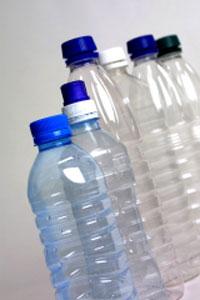
Speaking to letsrecycle.com, trade association Recoup and plastics recycling firms with a focus on food-grade plastic, such as Closed Loop Recycling and AWS Ecoplastics, agreed with the concerns voiced by Coca-Cola. And, they called on local authorities to consider more closely what material they collect.
Chris Dow, managing director of Closed Loop Recycling, said: “We join with [Coca-Cola Enterprises' recycling director, Patrick] McGuirk in asking local authorities to look harder at where their collected material goes and how it is sorted and then ask themselves are we doing the right thing from a collection point of view to properly support this growing and crucial industry.”
And Mr Dow, whose Dagenham facility reprocesses 35,000 tonnes of plastic bottles each year, said that the issue of quality rPET “all starts at the kerbside” and claimed that the UK could miss its opportunity to “soar past other countries” with regards to reprocessing capacity.
Mixed plastic
In addition, Jonathan Short, managing director of AWS Ecoplastics, claimed that the increased impetus among councils to include a wider range of plastics at the kerbside was becoming an issue for recyclers.
He told letsrecycle.com: “We are talking about increasing mixed plastic collections significantly and there is already a great deal mixed plastics in the mix to begin with.
I don't think that increased mixed plastic collections would possibly have an effect on food grade, I am saying that it definitely would
Jonathan Short, AWS Ecoplastics
“And, to go forward with an ill thought-out policy in the mix before infrastructure is ready then it will affect those who have put a lot of money into process.”
“I don't think that increased mixed plastic collections would possibly have an effect on food grade, I am saying that it definitely would. It is something that I feel very strongly about.”
Mr Short said that, in order to combat this, collections should be “as simple as possible”. “If it is kept as simple as that then that would help keep the collection operations easy and that would be a help in ensuring we have got a quality source,” he said.
The detrimental impact of mixed plastic collections raised by Coca-Cola was resoundingly supported by Recoup, which said concerns about the quality of feedstock was becoming a “sign of the times”.
Stuart Foster, director at Recoup, said: “The UK needs to follow a simple rule – only collect non bottle plastics if there is a facility to separate it from the bottles before sending to a reprocessor. The UK needs to start treating bottles as a separate commodity to the plastic pots, tubs and trays.”
And, Mr Foster said that Mr McGuirk was “absolutely right” to identify the increasing levels of plastic pots, tubs and trays collections as a “key factor” in deteriorating bottle quality in the domestic market.
Mr Foster said he would “strongly argue” for the adoption of the provision of kerbside plastic bottle recycling for every UK household, installation of facilities to separate bottles from non-bottle plastics, and an outright ban on the inclusion of flexible plastics within local authority managed kerbside and bring collection schemes.
Competition
Another plastics reprocessor, who wished to remain anonymous, claimed that, while councils had an “integral” role to play, internal competition among domestic plastics recycling firms was one issue that was leading to a lower quality of PET being accepted for recycling.
He said: “There is that much competition that suppliers say if one company doesn't want it then another will. The higher quality in the front end then the higher quality you get coming out the other end. It is the competition that is driving quality down as there is always someone willing to take it.”

Register for free to comment