


Communities secretary Eric Pickles yesterday (January 17) used the second reading of the Localism Bill in the House of Commons to give one of his strongest indications yet that decisions on the frequency and arrangement of waste collections should be made at a local level.
But, he also issued an apparent warning that councils running fortnightly collections could find it affected the outcome of elections.
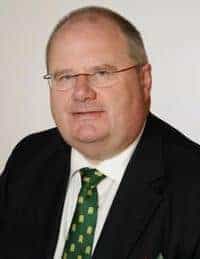
Refuse collection is a matter for local people
Eric Pickles, communities secretary
His comments came in a debate on the proposed legislation which also heard concerns raised by opposition MPs that moves to enforce the government’s localism agenda on planning decisions could jeopardise the development of the waste infrastructure needed to meet EU targets.
On the issue of collections, Mr Pickles was asked by the Labour MP for Greenwich and Woolwich, Nick Raynsford, whether collection decisions should be left entirely to councils to he would be “tempted” to intervene, in light of the bill’s support for local people to determine their services.
In response, Mr Pickles, who has strongly espoused the merits of weekly waste collections (see letsrecycle.com story), said: “Of course refuse collection is a matter for local people.”
However, he also stressed that there was now no incentive to run fortnightly collections, and suggested councils that did so could see it impact on their electoral performance.
“We have ended Labour’s bin taxes, and there will no longer be an incentive to have a fortnightly collection,” he said.
“If, on that basis, councils want to continue to have fortnightly collections, then good luck to them in facing their electorates,” he added.
Planning
In terms of planning, the Bill, which was originally published in December 2010 (see letsrecycle.com story), aims to increase the role that local communities and councils have in deciding on proposals for new developments.
But, in yesterday’s debate, Labour MP’s claimed that this approach came into “conflict” with government’s chances of securing the 20 billion investment in new waste infrastructure and 200 billion of investment in renewables that would be needed by 2020 to meet European targets.
The Labour MP for Brent North, Barry Gardiner, claimed: “The flaw in the Bill is that it peddles a myth that thousands of decisions taken by atomised local communities up and down the country will somehow amount to a coherent vision for the national and regional infrastructure that we all require.”
He added: “The Bill will create uncertainty in the business plans of those who want to invest in our country’s infrastructure. That will be as devastating a block on development as the increased voice for those whom outsiders sometimes call nimbys.”
He said that, while clause 90 of the Bill specifically requires local councils to co-operate on planning sustainable development, it did not require them to do the same “positively” on sustainable development infrastructure.
And, as a result, he called for the bill to include a presumption in favour of sustainable development that specifically accorded with the national planning framework.
The Labour MP for Southampton Test, Dr Alan Whitehead,said this was needed “to reconcile local decision making, the duty to co-operate and the cumulative impact of the developments on sustainability”.
Concerns have already been raised by key players in the waste sector that the current Bill does not do enough to address the planning barriers faced in developing waste sector, and in particular encouraging community buy-in for new projects (see letsrecycle.com story).
LGA
Reaction to yesterday’s debate came from the Local Government Association (LGA), whose chairman, Baroness Margaret Eaton, welcomed the “main thrust” of the Bill, in particular giving councils a General Power of Competence’, which she said gave them “greater freedom to make decisions based on local needs”.
But, she criticised the 142 powers she said the bill would give to central government to lay down regulations, issue guidance and “otherwise direct” how localism would work.
“We think that threatens to undermine some otherwise positive attempts by Ministers to give people at neighbourhood level greater control over public services and planning.”
EU fines
In a briefing document on the second reading debate, the LGA also raised concerns over clauses 30 to 34 of the legislative proposals which would allow ministers to require councils to contribute to fines passed down to the UK by the European Union.
Related links
The LGA branded the proposals for this approach “unfair, unworkable, dangerous and unconstitutional”. Waste is among the areas where targets are set by EU legislation and, as such, could be affected by these proposals.
The Bill will now be sent to the Commons’ Public Bill Committee for scrutiny.


Register for free to comment