

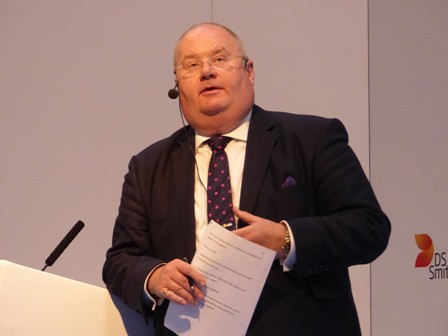
Delivering a speech on waste collection frequency at the RWM show, Mr Pickles criticised the ‘extinction’ of weekly rounds in Wales and Scotland and blamed the previous Labour government for allowing local authorities to ‘ignore’ the electorate.
He went on to cite a number of authorities – including East Cambridgeshire and the London borough of Havering – that had benefited from government funding to retain weekly waste collections and establish recycling incentive schemes for residents.
Mr Pickles said: “It was our goal to increase the frequency and quality of waste collection and make it easier to recycle after Labour put its head in the sand.
“Local government has been bullied into fortnightly collections. It’s a common view among council leaders that they have trained the electorate to accept less frequent collections, but ask the residents what they want and I bet they would be surprised.”
He added: “Don’t treat the public like naughty children who need to be kept in their place.”
Some audience members in the show theatre were visibly angered by Mr Pickles’ comments, with many taking the opportunity to ask the minister why he thought central government knew what was best for residents.
Criticism
And, Chartered Institution of Wastes Management chief executive Steve Lee, who chaired the session, was accused by the minister of ‘abusing his position’ after asking for a show of hands on who thought weekly waste collections were the best way to improve recycling rates.
Mr Lee has previously been a vocal critic of DCLG’s campaign to incentivise councils into keeping their weekly refuse collections.
The minister also came under fire on DCLG’s ‘revised’ stance on weekly food waste collections, with Mr Pickles flatly denying there had been a U-turn on the issue. Councils which collect food waste weekly were made eligible for a new £5 million fund announced by the department earlier this month (see letsrecycle.com story).
One audience member asked: “Has your department made a U-turn and now supporting separate collections of food waste following the funding announcement?”
Mr Pickles added: “We have always wanted to see smelly waste collected on a weekly basis, so this is definitely not a U-turn.”
Mr Pickles was also careful not to elaborate on the future of energy-from-waste plants in the UK, as three facilities are currently awaiting approval from DCLG. He said that the EfW projects would be ‘treated with an open heart’.

Register for free to comment