


And, Reuben Bolton, president of the Recycling Association, has said that “the stick of encouragement should be offered to MRFs rather than condemnation”.
The reaction comes after the Campaign for Real Recycling wrote last week (see letsrecycle.com story) to Defra recycling minister Jane Kennedy and told her that material was being stockpiled and “to put it bluntly, we cannot reprocess much of the material that is currently being stockpiled.” The Campaign urged Ms Kennedy to promote investment in collection methods which “are known to provide materials of a quality for suitable processing”.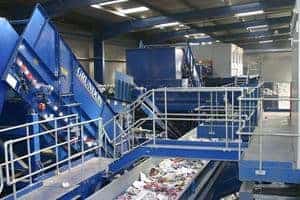
The Campaign takes the stance that: “Collection systems that gather a range of different materials in one bag or bin and then compact them could permanently undermine the environmental and financial benefits of recycling.”
Now reactions to the Campaign's claims have come from the Confederation of Paper Industries (CPI) and from the Recycling Association (formerly the Independent Waste Paper Processors Association).
CPI
The CPI represents mills and merchants and also has six members who are supporters of the Campaign for Real Recycling (Aylesford Newsprint; Bridgewater Paper Co – which has the AbitibiBowater Recycling arm; SCA Recycling; Smurfit Kappa; St Regis Paper – linked to Severnside Recycling; and UPM Kymmene) having given their endorsement to it through the Paperchain grouping.
Now though the CPI has gone some way towards offering support for MRFs. It said that “recovered paper and board from commingled collection systems can and does meet the quality requirement for the global paper and board industry when run through materials recycling facilities that have clear systems in place to manage the communication, inputs and sorting processes.”
And, the CPI added that: “As an organisation representing the paper recycling chain from collector to user, CPI believes the key is to ensure quality is maintained throughout the system to achieve the desired end product which can compete on the international market. This includes the process of making recovered paper available to the market as well as finished paper and board products. CPI's position is clear: we support any method of collection and processing that meets these quality aims; it is all about quality and competitiveness.”
Some CPI members such as Holmen and UPM Kymmene either have their own materials recycling facilities (MRFs) or support sorting plants for their mills. And recently, Aylesford with Abitibi/Bowater were among the contenders to run the Milton Keynes MRF.
Peter Seggie, recovered sector manager for the CPI, told letsrecycle.com: “The poorest quality stuff is not necessarily coming from commingled sources. Kerbside sorting, the whole lot has got to be quality managed.”
Recycling Association
The Recycling Association has gone one step further than the CPI and emphasised that MRFs have a role to play in increasing recycling. Among its members are waste management companies including Community Waste, Greenstar, Grundon, SITA, Veolia ES and Viridor as well as some independent firms with sorting facilities.
And, it pointed to the impact this has had: “The increased tonnage of recovered paper that they have generated has far exceeded the capacity of UK mills. Export markets had to be found to absorb the excess material with the result that the UK exports of recovered paper are now higher than the combined net exports of the rest of Europe. These exports, driven by MRF output, should be regarded as a success – the failure, if any, is the imbalance of paper production as a proportion of paper consumption in the UK which has one of the poorest ratios of any EU member state.”
The Association added: “Commingled collections do have a place in the recycling structure provided the output is correctly controlled to produce high grades standards. Most MRFs are responsibly managed and do produce material that is accepted and used by paper mills and other recyclers. MRF operations are being constantly improved by developing better management systems and installing the latest equipment.”
President Reuben Bolton, commented: “Patience together with the carrot of encouragement rather than the stick of condemnation should be exercised. Output quality will progressively improve as technology is gradually developed in this comparatively young sector of the recycling industry.”


Register for free to comment