


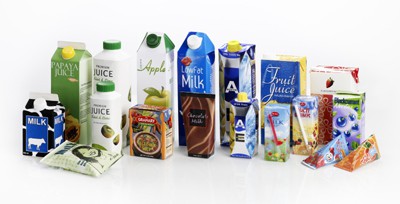
One hundred and twenty six councils now include drinks cartons in their kerbside recycling schemes and this is anticipated to grow by a further 10% over the course of 2011, container packaging manufacturer Tetra Pak UK & Ireland has revealed.

And, Tetra Pak expects this number to grow over the course of 2011 despite the impacts of tightening budgets.
Speaking to letsrecycle.com, Nick Price, recycling operations officer at Tetra Pak UK & Ireland, said: “Absolutely I expect it to grow even with the economic climate, as we need to reduce landfill by improving the range of material and improving the capture rate for all materials.
“It is my job to show local authorities that it is easy to include cartons at the kerbside and I am collecting case studies as we speak. I think as more and more materials are collected at the kerbside, things will have to become more and more visible in order for collections, such as mixed plastics and cartons.”
Attempting to put a figure on the growth, Mr Price added that, while the drinks carton industry had yet to set an official target for kerbside collection coverage in 2011, he would anticipate that drinks cartons would be included in 40% of council collections by the end of the year.
Communications
At present, drinks cartons collected for recycling are taken to a facility in Sweden for reprocessing, however Mr Price said that the company had plans to develop UK reprocessing capacity “over the next 18 months”.
The development of domestic reprocessing capacity would mark the first such facility since the Smith Anderson mill in Scotland – the UK's only drinks carton reprocessing facility – closed in June 2006 (see letsrecycle.com story).
Tetra Pak works with the Alliance for Beverage Cartons and the Environment (ACE UK) to help councils include cartons into kerbside collections. Tetra Pak stressed that it does not directly fund the collection of its material but offers case studies, advice and communications support.
At present, an estimated 58,000 tonnes of paper-based cartons are consumed every year for milk, juice, sauces and other liquid foods and drinks – the equivalent to 2.3kg per household, which could be recycled.


Register for free to comment