
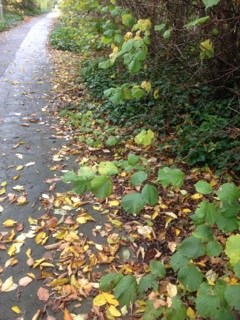
Oxfordshire county council is set to procure for an alternative long-term contract to recycle street leaf sweepings as a result of Environment Agency guidance that the material cannot be used to produce compost.
The Agency guidance which it re-affirmed in August 2013 after a series of trials were carried out states that street leaf sweepings are too contaminated for producing Quality Protocol and/or PAS100 standard compost (see letsrecycle.com story). The Agency is set to release a full report on findings of the trials soon.
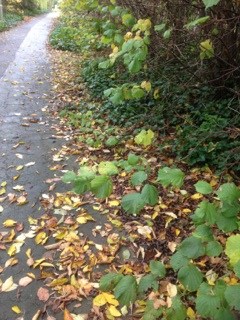
The Agency said that levels of Polycyclic Aromatic Hydrocarbons (PAH) were much higher in leaves swept from roads than those found in garden waste and that a number of samples of finished compost contained Potentially Toxic Elements (PTE) above limits allowed under PAS100 standards.
However, OWP and Warwickshire county council both said in September that they were disappointed with the Agencys guidance, as other methods of processing street sweepings are more costly for local authorities (see letsrecycle.com story).
OWP plans to continue lobbying Defra and the Agency to change this stance, as it claims that all 15 samples of untreated leaf sweepings collected and analysed from the county as part of the Agencys trials contained PTEs below thresholds set out in PAS100 standards.
And, the Oxfordshire Waste Partnership (OWP) said the county council has held discussions with a number of potential local suppliers to see if there is interest in developing a facility in the county to treat street leaf sweepings through an alternative method in the future.
There are no facilities in Oxfordshire that can process street sweeping waste but an OWP report states that a number of companies have expressed interest in developing one with the guarantee of a contract of sufficient length and value.
A timetable for the procurement of a longer term contract for recycling Oxfordshires street sweeper waste has not yet been announced, but the process is expected to begin in 2014.
Current arrangement
Until September 2012, Oxford city councils street sweepings were used as top fluff material to provide a protective layer to cover the top of landfilled waste, which contributed to recycling rates.
After this, the material was landfilled, as Her Majestys Revenue and Customs (HMRC) announced in May 2012 that top fluff material would no longer be exempt from landfill tax.
‘This is an interim solution for which we reckon we can get a good recycling performance. If it proves successful we can then hopefully do something locally to help save on the transport costs.’
Cllr David Dodds, Oxfordshire Waste Partnership chairman
Now, street sweepings in Oxfordshire are sent to Veolia Environmental Services Ling Hall recycling site near Rugby under a 12-month service level agreement with Leicestershire county council, which began on October 1 2013.
Prior to being sent to Rugby, the material is dewatered at waste transfer stations in Cherwell, Oxford city, South Oxfordshire, Vale of White Horse and West Oxfordshire districts. OWP said this arrangement is expected to deliver savings of 200,000 compared to the cost of landfill.
The OWP report states: Whilst this interim arrangement is in place, Oxfordshire county council will look into procuring a longer term contract with the expectation that a more local outlet could be sourced.
EA intransigence
David Dodds, chair of the OWP, told letsrecycle.com that the current arrangement as well as procuring for a longer term contract would help the Partnership to cope with the intransigence of the Environment Agency over its stance on street sweepings in compost.
He said: The interim arrangement is in the fairly early stages but the work they can do with that seems quite promising.
The South Oxfordshire district councillor explained that the current arrangement sees the leaf sweepings used as top layer material on reclaimed land, adding that this should result in an improvement of Oxfordshire councils recycling rates next year.
Mr Dodds said: It is an interim solution for which we reckon we can get a good recycling performance. If it proves successful we can then hopefully do something locally to help save on the transport costs.
Commenting on the type of facility that might be developed in future for processing street sweepings, Mr Dodds said: The technicalities I am not up on but my understanding is that it is something which is a fairly basic process. You are not talking about a MRF [materials recycling facility] or something like that.

Register for free to comment