


The arrangement aims to contribute to the restoration and rehabilitation efforts of waste management in Antarctica. Under the agreement, Onyx will provide services and expertise to assist in the removal of waste from Antarctica to Australia as nations operating in Antarctica must return waste to its country of origin for subsequent treatment.
Onyx will provide 240 10-tonne waste containers which the Australian Antarctic Division (AAD) will use to take waste to Australia. The AAD is part of the Australian government's department of the environment and heritage and administers the nation's Antarctic program. Onyx will also share its equipment and expertise to help other countries deal with their waste.
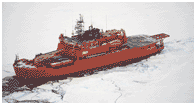 Onyx will work to remove some of the waste which has resulted from past activities in the Antarctic which have left a legacy of hazardous waste, contaminated sites and abandoned facilities. (Pictured left is a typical ship which Onyx will use to transport waste to Australia.)
Initially, Onyx will work at an Australian base, one of many abandoned stations and waste sites that exist throughout Antarctica. It is estimated that at Casey Base, the Thala Valley Tip contains between 2,000 and 3,000 tonnes of partially degraded wastes that were disposed of over a twenty year period from 1965. The site, last used in 1985 includes batteries, waste oils, chemicals, domestic waste, plastics, cardboard and building materials.
There are many difficulties in managing waste in Antarctica because the sites are remote and the climate makes work difficult with the only access to the region being by ship and only during the Australian summer months which makes the clean up of waste challenging and expensive. The terrain also presents challenges as most waste sites are in areas with variable water flows where seasonal melts transport contaminants into sensitive areas. Another problem is that the waste is in a frozen state when collected but thaws rapidly on the trip back to an Australian summer.
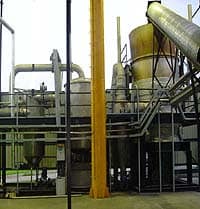 After their initial use at Casey Base, Onyx's bins will be made available for future work by Australia and other Antarctic nations. Following the removal of waste, the sites will be restored using soil and groundwater remediation processes. (Pictured left: gas cylinders in Antartica.)
Henri Proglio, chairman of Vivendi, Onyx's parent company, said: “The agreement with the Australian Antarctic Division and Onyx/Vivendi is a true reflection of Vivendi’s commitment towards sustainable development. Our mission is to not only use our expertise in waste management, but also in water preservation, energy efficiency, and transport optimisation to protect the earth’s resources and its natural heritage for future generations.”

Register for free to comment