

According to NRW, smart water is a nontoxic forensic tagging system which contains a unique identifier in its droplets. It is invisible to the naked eye once it has dried and only able to be seen with use of an ultraviolet light.
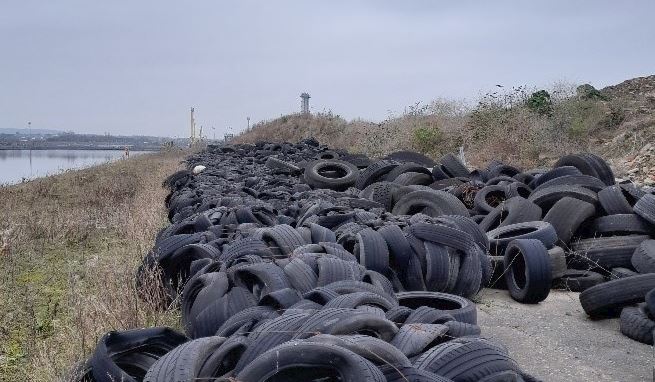
The Welsh regulator said that the site in question has an exemption permit for the treatment and storage of waste tyres, but the permitted quantity has been exceeded by an estimated 2000 waste tyres.
The enforcement body said this poses a potential fire risk which not only harms the environment, but have an impact on people’s health and undermine legitimate businesses.
NRW’s waste regulation team has served a notice on the site to remove the waste tyres but there are concerns about whether these will be disposed of legitimately.
To combat this, NRW has deployed the smart water which means that if the tyres are found to be dumped elsewhere, it would be easier to be traced back to the site owner.
Smart Water
Mark Oughton of NRW’s tackling waste crime team, said: “Once the waste has been identified as having Smart Water upon it, a sample can be sent away to a laboratory for code identification and this information can then be used as strong evidence in any enforcement or court action that is to follow.
“It is hoped that the use of Smart Water will act as a strong deterrent to illegal behaviour and will encourage the disposal of the waste tyres at a permitted site”.

Register for free to comment