

The North London Waste Authority (NLWA) is seeking an in-house service to treat residual waste via the development of a new energy-from-waste (EfW) facility alongside its existing incinerator in Edmonton.

Controversially, the Authority ended the procurement process for two major long-term waste contracts thought to be worth in the region of 3 billion in September 2013 with the aim of finding a significantly cheaper solution (see letsrecycle.com story).
This decision meant consortium FCC Skanska lost out as sole bidders for the waste services contract, while a consortium of E.ON and Wheelabrator Technologies missed out on the fuel use contract to burn 250,000-300,000 tonnes-a-year of solid recovered fuel (SRF).
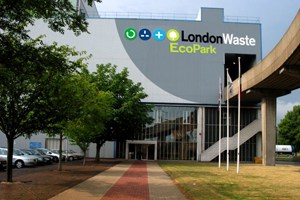
Now, according to a residual waste strategy report considered at an Authority meeting last week (December 12), NLWA is seeking an in-house service solution for its residual waste based on its existing Edmonton EfW facility, which is run by the Authoritys own LondonWaste Ltd company.
As part of the planned in-house service, it is intended that a new EfW facility will be developed alongside the existing facility at Edmonton which will be capable of delivering heat to a Decentralised Energy Network (DEN), with a target date for completion of 2025.
Work on drawing up a timetable for the Authoritys longer-term residual waste management plan will start from February 2014, with a focus on when the process of developing a new facility at Edmonton should be started.
The report states that such projects clearly have long lead-in times and that a new facility would need to be operational by 2025. As such, a timetable for developing the new facility is expected to be presented to NLWA officers for approval in June 2014
The report adds that the timing of the development of the heat network in the Upper Valley will be a key consideration with regards to developing EfW facilities at the Edmonton site.
Arrangements are also currently being considered to take over from NLWAs current Edmonton waste treatment contract with LondonWaste Ltd, which ends in December 2014. These arrangements will be detailed in a report to the Authority next year.
Additionally, having taken recent specialised technical external advice, the report states that Authority officers are confident that the current Edmonton EcoPark facility which has the capacity to treat 550,000 tonnes of residual waste per year can continue to run effectively through to December 2014 and beyond.
Waste prevention plan
Also discussed at the meeting last week was the current North London Waste Prevention Plan for 2012-14, which is set to end on March 31, with a new draft plan currently being developed for approval at the next Authority meeting in February.
Development of the new waste prevention plan has identified food waste, furniture reuse and textiles as the priority areas for action from 2014, focusing on public awareness campaigns.
he overall budget forecast for waste prevention work for 2014-15 is 315,500 for the priority waste streams, with 63,300 for core activity and 62,000 for reusable nappy subsidies, the report states.
Budget
Elsewhere, it was revealed at the meeting that the NLWA is forecasting a revenue surplus of 11.798 million at March 2014, which is an increase of 6.513 million compared to the previous 2013/14 budget review in September.
This is largely due to the continued good performance of the Authoritys company LondonWaste Ltd, which paid a 4 million dividend to the Authority in December. There have also been reductions in the waste stream and a reduction in the cost of funding the capital programme, according to NLWA.
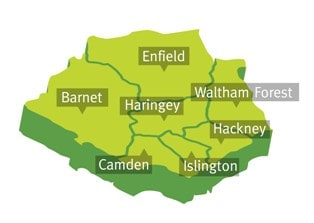
The NLWA represents seven borough councils in the capital Barnet, Camden, Enfield, Hackney, Haringey, Islington and Waltham Forest. It aims to achieve a 50% household recycling rate and to reduce the amount of waste sent to landfill to 35% (from a 1995 baseline) by 2020.

Register for free to comment