


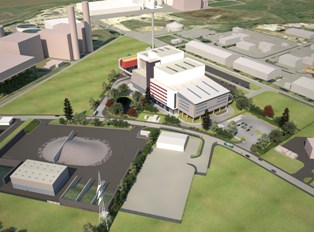
And, Norfolk council’s environment, development and transport committee, which met this week (November 18) has refused to rule out the possibility that it may develop residual waste incineration capacity in the county.

This is despite councillors seeking to impose a policy against the development of an energy-from-waste plant within the county, following widespread opposition to the 268,000 tonnes per year capacity Cory Wheelabrator EfW facility, which was scrapped in May 2014 (see letsrecycle.com story).
The collapse of the deal left the council without any long term solution for dealing with its waste. Currently, 40,000 tonnes per year of Norfolk’s residual waste is sent for processing at SITA UK’s Great Blakenham EfW plant under a two-year agreement with Suffolk county council (see letsrecycle.com story).
But the environment committee on Tuesday recommended that from March 2015 the council starts the process for securing a more long-term arrangement, with the possibility of extending the existing deal with Suffolk or securing another agreement in the meantime up to 2020.
It is expected that until 2020, Norfolk will utilise capacity in existing treatment facilities outside the county or landfill sites in Norfolk. Or, documents state, the council could secure services to generate fuel from waste for use in facilities outside Norfolk.
Policies
19 policies were originally established by the council’s waste advisory group in September, which were then put to the committee. However, the first policy regarding incineration was dropped yesterday, while another was added requiring the council to provide a “balance sheet of emissions” in its future waste plans.
The remaining policies agreed at the committee meeting include supporting waste treatment processes that “deliver guaranteed reductions in the costs of dealing with left over rubbish” and supporting anaerobic digestion to treat food waste.
One adopted policy – number 18 – states that residual waste processes “including innovative solutions, must satisfy due diligence processes and be capable of securing funding or already operational”.
Agreed policies also suggest annually reviewing arrangements to incinerate waste or fuel derived from waste outside the county and promoting waste and food waste reduction initiatives.
The policy recommendations will now be presented to the full council for approval on December 15 2014.

Register for free to comment