

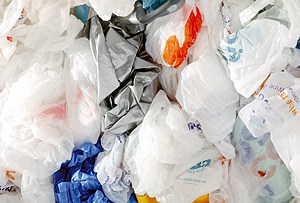
However, a spokeswoman for the Department told letsrecycle.com today that, while the 70% figure mooted by the minister at a meeting of top retailers on Monday (July 28) was not a definite target, it was indicative of the need to make a major impact on the number of bags used.

“The recent 80% cut in carrier bag use by M&S shows what can be achieved,” she added.
At Monday's event, which marked the grocery sector's success in ending packaging growth last year (see letsrecycle.com story), Mrs Ruddock also reiterated the government's commitment to potentially force retailers to charge consumers for the use of single-use bags from next year.
A compulsory levy is included within the Climate Change Bill, and would be introduced if the government's current voluntary agreement with the sector fails to substantially reduce their use.
Under the agreement, retailers are expected to reduce the environmental impact of single-use bags by 25% by the end of 2008, and government has indicated that a major reduction in the number of bags used is a more effective way to do this than purely focussing on solutions such as making bags thinner.
The carrier bag charge was originally unveiled by chancellor Alistair Darling in this year's Budget, where he claimed that a statutory charge could lead to a 90% reduction in their use, equivalent to 12 billion fewer single-use bags being used by consumers (see letsrecycle.com story).
Outlining the reasons for the government's focus on carrier bags, the Defra spokeswoman said: “Single-use bags are a visible symbol of throwaway society and the government is committed to changing this.
“Thinking about how we use carrier bags can have a positive knock on effect to other kinds of behaviour,” she added.
Indicating that the charge on single-use bags would be introduced if retailers had not made “sufficient progress” in reducing their use by the end of 2008, she explained: “This charge will apply whether bags are paper or plastic.
“Substituting plastic bags with paper ones would result in higher environmental impacts. Paper bags come from a renewable resource, but they require more energy to produce, transport and recycle than plastic bags,” she added.


Register for free to comment