


Northern Ireland consults on 60% recycling target

This target is higher than the 50% rate minimum level EU Member States are required to achieve over the same period.
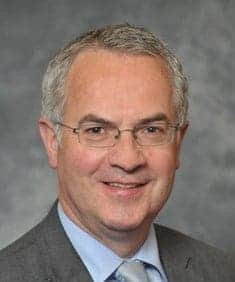
Environment minister Alex Attwood said the target would be stretching but added that there was an appetite for improvement from residents.
He commented: The enthusiastic welcome for the carrier bag levy last month demonstrated how people want to make a contribution to deal with waste and ease climate change. A 60% recycling target in our homes and towns would do precisely that.
The consultation ends on September 2 and it is hoped that the new target will be brought to the Northern Ireland Assembly early next year.
Yorwaste hits North Yorkshire recycling milestone
Residents in the districts of Hambleton, Richmondshire, Craven and Harrogate in North Yorkshire have recycled more than 25,000 tonnes of waste since waste management firm Yorwaste took over recycling in the region in early 2012.
Northallerton-based Yorwaste began work on a three-year contract to handle all recyclable materials from the four local authorities last year, and has revealed that 25,685 tonnes of glass, paper, cans, plastic and cardboard- equivalent to the weight of 56 jumbo jets- has been recycled since.
Tony Sharkey, director of future developments at Yorwaste, said: Working in partnership with the four local authorities we are pleased with the progress we have made in the last 12 months and we hope to build on this further in 2013/14.
As part of the contract we guaranteed prices for the sale of recyclables so the authorities receive maximum value for the material collected from kerbside and bring banks.
GDF SUEZ to buy energy from SITA EfW
SITA UK has signed an agreement with its sister company, energy supplier GDF SUEZ Energy UK, for the sale of energy from its planned 240,000 tonne-a-year capacity energy from waste (EfW) incinerator in St Dennis, Cornwall.

The Cornwall Energy Recovery Centre is being built under a 30-year contract with Cornwall council, originally signed in October 2006, which is estimated to be worth 1.1 billion. SITA and the council signed a restructured version of the contract in April 2013 after delays in obtaining planning approval.
The agreement with GDF SUEZ Energy UK will allow the company to purchase electricity and Levy Exemption Certificates (LECs) generated by the facility for a period of 15 years.
David Park, Director of UK Retail at GDF SUEZ Energy UK said: This new agreement with SITA UK, part of the GDF SUEZ Group, demonstrates the strength of GDF SUEZ in the UK and the ability this gives us to bring renewable energy to our customers.
Construction firm Vinci is due to begin building work on the facility in the coming months, with the plant expected to be up and running in 2016. SITA UK is part of the SUEZ Environment group, whose largest shareholder is GDF SUEZ.
FCC harvests first landfill biomass crop
Waste management firm FCC Environment has harvested its first crop of biomass fuel grown on restored landfill sites.
The crop, a fast-growing miscanthus grass, will be sent to Drax power station to be used as a fuel to generate electricity.
Mark Pailing, senior restoration and energy crops manager at FCC Environment, said: Energy security and resource scarcity are two of the key themes of our age and using former landfill sites to grow crops for the generation of carbon-neutral energy is part of our response.
We specifically select crops which will aid the long-term restoration of the sites thereby providing a further benefit to the process. We aim to have more sites in production in the coming months and years as we continue to move towards a resource-focused solution to managing the waste we all generate.
he company currently has over 200 hectares of biomass crops on 24 former landfill sites currently in production.
Solihull Hospital achieves ISO4001
Solihull Hospital has been awarded the ISO14001 environmental management standard following an 18-month project to train staff on waste and environmental issues.
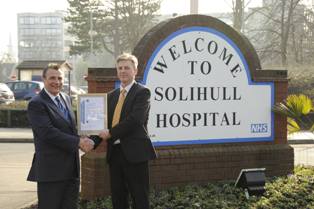
The standard ensures the organisation delivers effective management, prevention of pollution and complies with legal standards of practice.
Andy Cooke, Solihull Hospital facilities environmental representative, said: This task was initially daunting. It involved a total commitment to fully understand how Solihull Hospitals activities had the potential to harm the environment as well as compliance with external legislation. This was only possible with the help of all involved, from front line staff to senior management, all had an important role.
Achieving this certification is a great achievement, providing assurance that our environmental responsibilities are being fulfilled.
Recycling bins installed at 19 Scottish stations
Scottish rail network operator ScotRail has installed recycling bins at 19 stations, following a grant of 37,000 from Zero Waste Scotland as part of its Recycle on the Go project.
The colour-coded bins are part of a pilot scheme which will allow customers to recycle plastic bottles, paper and tin cans into separate bins at stations across the country.
Iain Gulland, director of Zero Waste Scotland, said: These new recycling bins are in busy railway stations and we’re very pleased that we’ve been able to fund this pilot.
I hope that people will make best use of the facilities, just as they are doing so more and more at home. When used materials, like empty bottles and drinks cans, can be separated and collected, we can begin to see and use this as a valuable resource rather than waste.”


Register for free to comment