



Business waste minimisation project launched in Wales
The 'Resource Efficiency Advice and Support' initiative will target 250 companies in the region, offering a tailored packaging which will involve consultants providing guidance to help businesses reduce their energy demands, maximise their use of resources and identify where they can use new technology to increase efficiency. The project, which is backed with almost £900,000 from the European Regional Development Fund, also aims to help bring companies together to commercially trade their waste resources.
Unveiling the initiative, Wales' deputy first minister, Ieuan Wyn Jones, said: The Assembly Government is proud to announce this further contribution to greening our economy as the Copenhagen conference grapples with the great issue of climate change. By tackling business resource efficiency we will also support our aim to make companies more competitive, securing employment and helping them grow as the world economy recovers from recession.”
Qualification launched for waste management staff
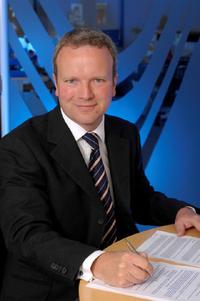
The 'Level 2 NVQ in Waste Management Operations' aims to help learners grasp issues such as team working, health and safety and dealing with emergencies. It is made up of six mandatory and four optional units, offering the potential to tailor the learning to suit specific job roles by covering areas such as preparing vehicles for use on a site.
David Grailey, chief executive at Newcastle-based NCFE, claimed the qualification – which is set to followed by a Level 3 NVQ – was needed as the UK worked to increase its recycling rate further in the future, explaining that “there will be an increased pressure on employers within this sector to train their employees adequately to ensure that the UK's waste is dealt with efficiently and effectively. Our new qualification is there to help train new entrants and re-train existing employees in all areas of waste management, as well as equip them with general workplace skills.”
Biossence submits plans for East Sussex gasification plant
Biossence (Polegate) Ltd – a joint venture between London-based technology company Biossence Ltd and Sussex company Resource Rehandling Partnership – has submitted a planning application to East Sussex county council to build a facility which would use gasification technology to turn up to 95,000 tonnes a year of recovered wood and other solid recovered fuel (SRF) into electricity and heat.
The proposals for the “community-sized” facility to be built at Cophall Wood were originally unveiled in July 2009 (see letsrecycle.com story) and would involve the plant being build next to an existing wood chipping operation. If the plans are approved, Biossence (Polegate) aims to begin construction in the second half of 2010, with a view to the facility being operational in 2011/2012, when it is expected to provide 16MW of electricity.
Dr Ralf Trottnow, director of Biossence Ltd, said, “This is a really exciting development for East Sussex in supporting its endeavours to reach landfill diversion and renewable energy targets. Our proposal is built on the foundations of partnership – between local entrepreneurs and our technical expertise. This will add to Biossence's growing portfolio of renewable energy operations in the UK”.
Merton goes commingled for flats recycling collections

The South-West London borough's flat-dwellers had been expected to separate glass and paper, but now the council is allowing residents living in blocks of 10 or more flats who have communal recycling bins to put all their recyclable materials – mixed card and paper, glass, plastic bottles, cartons and food and drink cans – all together in the same bin. The materials are then collected on a weekly basis and sent for sorting at Viridor's materials recycling facility at Crayford, near Dartford.
Commenting on the changes, the council's cabinet member for environment and leisure services, councillor David Simpson claimed that they would ensure Merton would continue to be “renowned” as a green borough, adding: “Environmental sense makes financial sense too. Recycling more means the council spends less on sending waste to landfill. This means we can invest the large sums of money that would go on landfill tax in our waste collection and recycling services instead thereby continuing to ensure value for money for Merton's council taxpayers.”
Recovered materials to be transported by train to Drax power station
Drax Power has signed a deal to supply one million tonnes per year of biomass by train to its co-firing power station and a proposed dedicated biomass plant, which is set to lower the company's ‘field to furnace' emissions by “up to 80%”. Under the new deal, which will start in 2010, rail freight company First GBRf will operate four train services a day, taking the feedstock – recovered timber and paper, forestry residues, agricultural by-products and purpose grown energy crops – from the Port of Tyne to Drax Power Station near Selby, North Yorkshire.
Drax Power has pledged that all biomass for this dedicated plant will be from sustainable sources that are independently audited. Dorothy Thompson, chief executive of Drax, said she firmly believed that sustainable biomass has an important role to play in the future energy mix of the country. She added that the deal would make an important contribution towards reducing the power station's emissions.
“Through our sustainability policy we aim to reduce greenhouse gases by at least 70% compared to coal-fired generation through substituting coal with biomass,” she said. “Emissions due to transportation are a key consideration when we calculate the ‘field to furnace' impact of the biomass we source. Our agreement with First GBRf to move biomass by rail makes an important contribution to our commitment to reduce not only our carbon footprint, but the carbon footprint of UK generation.”

Register for free to comment