


Which? calls for improved collection systems
Figures obtained by Which.co.uk show that nearly 230,000 tonnes of recycling and composting material put out by households in England last year was rejected and sent to landfill, which it claims cost taxpayers £12m. About 5% of recyclable items collected on the doorstep were rejected, but some councils were found to have rejected more than twice that amount. Councils that used commingled collection systems, where materials were collected mixed together, were generally found to have higher rejection rates than those that operated a kerbside sorting system. As a result, Which? said that improved collection systems, clearer information about how to recycle, and more careful recycling by consumers could reduce the amount that ends up in landfill.
Jess Ross, editor of Which.co.uk, said: 'Recycling our household waste has never been easier, but more could be done by councils and by consumers to ensure that we recycle more waste, more effectively. Not only will it reduce the amount of waste going to landfill, but it could even save us money on our council tax bills – which is a great incentive to recycle better.' The full article, the Truth about Recycling, appears in the May issue of Which? magazine.
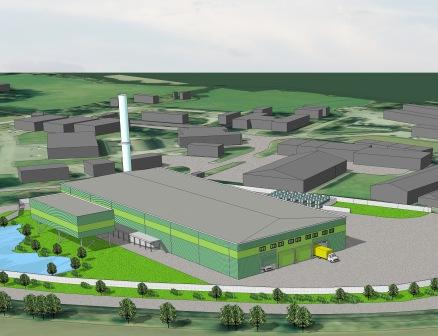
Plans submitted for £23m North Yorks EfW

The proposed plant at Marston Business Park in Tockwith, North Yorkshire, includes state-of-the-art Advanced Thermal Treatment (ATT) which would be capable of processing 60,000 tonnes of waste each year. The process is expected to recover enough energy to generate an estimated 10MW of electricity a year- sufficient to power about 10,000 homes – and will be housed in a new purpose-built unit and be air-cooled rather than water-cooled, avoiding the need to abstract large volumes of water. The revised plans plant come after an original application was withdrawn in October 2008 (see letsrecycle.com story).
Phil Boardman, managing director at BCB, said:”Our original application has been significantly refined and the company is now confident that it has the best possible waste management solution to help to divert waste from landfill.”
Peterborough gives “go ahead” to AD
Peterborough city council has decided to “go ahead” with developing an anaerobic digestion facility at its waste management site on the Fengate Industrial Estate. A spokesman this week confirmed that the council was hoping to build a 12,000 tonne-a-year capacity facility to treat food waste from the local area and is aiming for it to be operational by autumn 2010.
The site is already set to house the council's 75,000 tonne-a-year capacity materials recycling facility and the authority has also applied for planning permission to build a energy-from-waste plant at the location (see letsrecycle.com story). The council claimed that treating biodegradable waste using AD could save £1.5 million in landfill charges.
Councillor Wayne Fitzgerald said: “Food waste is now the biggest single item in household black bins, so introducing an anaerobic digestion treatment process means we can boost recycling levels by up to 10 per cent, while also generating valuable electricity and soil improver for use on farm land.
Sheffield urged to “Love your blue bin”
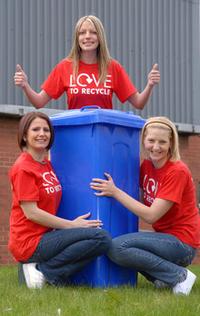
The campaign, entitled ‘Love Your Blue Bin', is intended to help residents understand what materials can be put into the blue bins and remind householders that excess paper and card can also be collected if it is placed at the side of their blue bin and neatly bundled with string or placed in a cardboard box. And, it also tells residents that a second blue bin can be supplied free of charge to residents who regularly fill their existing bin. The blue bin scheme was first introduced in Sheffield in 2003 and covers 215,000 homes in the city.
Judith Turner director of operations, collection and recycling at Veolia Environmental Services in Sheffield said: “We would like Sheffield residents to embrace recycling and do their bit for the environment by following the ‘reduce, reuse recycle' ethos and love their blue bins.”
Greater Manchester targets food waste
Greater Manchester has this week launched a campaign to encourage residents to ‘Love Food, Hate Waste' as part of a nation-wide initiative being led by the Waste & Resources Action Programme.
The Greater Manchester Waste Disposal Authority – which represents nine councils in the area – has praised the work of the residents in cutting the amount of food that they throw away, which equates to around £296 million across the UK. As part of the Greater Manchester campaign, 11 families in the Greater Manchester area are set to help launch the awareness campaign by maintaining a two week food diary to reduce their food waste and think about what they buy and throw away. Echoing the national campaign, the Greater Manchester effort is set to promote practical advice and tips to help people make the most food and buy less.
Councillor Neil Swannick, chair of the GMWDA, said: “We recognise that the results of the first year are encouraging, there is much more that we in Greater Manchester can do and we are confident we can continue to support the growing number of households cutting back this waste.”

Register for free to comment