



Apprenticeships offered at WEEE recycler
 and Rajmund Grzybek (blue hat) at EnvironCom’s state of the art WEEE facility in Grantham..jpg)
EnvironCom is aiming to increase its 15% reuse rate to 30% in the next few years. In order to do so, it requires teams of skilled engineers to identify which electrical items can be re-used or, alternatively, recycled into raw product.
Six new apprentice engineers will initially take part in the four-year programme, with successful completion resulting in an HNC Electronic and Mechanical Engineering qualification.
In addition, EnvironCom is offering 14 new and existing employees the chance to join a six to nine-month Apprentice Appliance Fitter programme, through which they can gain an NVQ in mechanical maintenance as well as additional training in numeracy, literacy and IT skills.
Sean Feeney, CEO of EnvironCom says: Training and development is at the heart of our business and is key to ensuring our philosophy of doing the right thing with WEEE is intrinsic to everything we do. Not only that, as the wider industry modernises, we need to increase its professionalism and ensure there are enough highly-trained engineers to develop processes to deal with the ever increasing sophistication in EEE technologies.
Those interested in applying for a job or apprenticeship at EnvironCom should email HR@environcom.co.uk.
Permits needed for vans at Merseyside recycling centres
Visitors to Merseyside Recycling and Waste Authority (MRWA)s household waste recycling centres are being reminded that permits are needed to use a van or large trailer.
, Glenn Davies (site foreman, Veolia) and Gerry Boyle (area supervisor, Veolia).jpg)
Introduced in October 2009, the permit scheme was put in place to prevent traders and commercial operators from accessing the regions recycling centres, which are designated for use by householders only.
Throughout February, MRWA ran a series of adverts in local newspapers, contacting van-hire companies with information, and handing out leaflets at all 14 of Merseysides centres to remind people of the scheme.
Ordinary cars do not need a permit unless they have blanked out windows or permanently removed rear seats. However, pick-up trucks are classed as vans and need permits.
Councillor Joe DeAsha, chairperson of MRWA, said: permit schemes are common around the country. We brought it in here as we had anecdotal evidence that commercial operators were using the Recycling Centres to illegally deposit trade waste. There is no perfect solution to stopping traders trying to get onto our sites, but we have found that this is the best weapon against the abusers.
Metal recycling programme reaches two million homes
The metal packaging industrys kerbside recycling promotion programme, MetalMatters, claims it reached more than two million households across 31 local authorities in 2012.

According to MetalMatters, analysis of the four promotional campaigns that concluded last year show that the programme has helped increase the metals capture rate. It has also expanded the range of metals collected at the kerbside, with 13 of the partner local authorities expanding their recycling schemes to include foil trays, household foil, aerosols and metal caps and closures.
The programme attracted stakeholders including the Department of Environment in Northern Ireland and Zero Waste Scotland, while UK minister of resources, Lord de Mauley, cited the programme as a model of best practice.
Rick Hindley, executive director of Aluminium Packaging Recycling Organisation (Alupro), said: After a year of refining the programme to suit a range of local collection systems and circumstances, and building on our experiences, I am delighted that MetalMatters continues to deliver a strong return on investment. It makes a difference within local communities and drives up local recycling rates.
We have big plans for the year ahead and firmly believe the continual growth of the programme lies within widening our network of stakeholders. We would encourage more waste management companies, waste partnerships and local authorities to become involved with MetalMatters.
MetalMatters is jointly funded by a number of industry partners. It is supported by WRAP and managed on behalf of the funding partners by Alupro.
May Gurney to take on 500 apprentices in 2013
Norwich-based services company May Gurney is aiming to create 500 apprenticeships by the end of the year as part of its UK-wide expansion of its training programme.

Following highly successful schemes in five areas (Lincolnshire, Norfolk, Northamptonshire, Surrey and East Sussex) the company plans to start a further 500 apprentices over the next 12 months.
May Gurney has developed 11 apprenticeship programmes, covering areas such as: customer service, business administration, team leading, leadership and management, IT, traffic office, sustainable waste management, cleaning and support services, local environmental services (parks and gardens), highways maintenance and driving goods vehicles.
Tracey Lucas, training adviser at May Gurney, said: We are delighted to be able to create these apprenticeships. As an accredited Investor in People, we believe training and development is essential to equip our staff to ensure they continually improve the service we offer to clients as well as building their own skills and confidence.
She added: Our apprenticeship schemes are aimed at all ages and abilities in our organisation and provide a structured training scheme focused on delivering business and individual needs and giving staff the opportunity to gain NVQ qualifications.
Think tank report highlights sustainability of cooking oil for fuel
A think tank report unveiled in the House of Commons yesterday (March 12) has shown that more than 96% of biodiesel in the UK is derived from used cooking oil and other sustainable waste products.
The paper was published and researched by think tank Chatham House and commissioned by UK used cooking oil (UCO) converter Olleco. It was unveiled today by transport minister Norman Baker MP, Olleco chief executive Robert Behan and senior research fellow at Chatham House, Rob Bailey.
Around 0.5% of biodiesel is derived from agriculturally produced edible fuels such as ethanol, the report shows, which is the most expensive form of renewable fuel. Biodiesel from used cooking oil on the other hand offers cheaper carbon abatement costs of around $200 (134) per tonne.
However, the report shows that the use of ethanol which is cheaper to import is increasing as the UK has not stipulated which fuels should be used to meet the Renewable Fuel Transport Obligation (RTFO) and the EU Renewable Energy Directive.
Mr Behan said: Ethanol should not be the default renewable fuel to the detriment of other fuels such as sustainable biodiesel. We are calling on the government to amend the RTFO to protect the consumer and ensure that what was once a waste product remains in the UK fuel mix as the most sustainable low carbon option.
Report author Mr Bailey said: Our research shows that biofuels derived from agricultural crops offer poor value for money as a means to reduce emissions and can have serious consequences for food prices. The UKs heavy reliance on corn ethanol is a particular concern in this regard. Biodiesel produced from waste cooking oil is a more sustainable option and offers cheaper emissions reductions.
Waste and transfer station to open in Leicester
Leicestershire firm 1st Choice Skip & Grab Hire Ltd will be opening its second waste transfer and materials recycling facility (MRF) in March 2013.
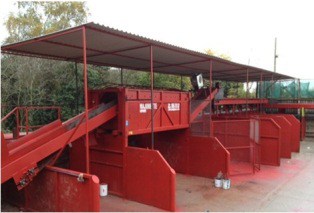
The facility, based at Granite Close in Leicesters Enderby, comprises a bespoke picking line built by recycling equipment manufacturer Baughans and will allow all waste collected by 1st Choice skips to be sorted and separated for recycling.
The firm has set a recycling target of 90% for the facility, having achieved 100% recycling at its Northamptonshire waste transfer station dedicated to construction waste.
1st Choice said it would achieve this through the segregation of mixed waste skips and reuse via resource exchange programmes and waste partners. It also said that the new facility would see its number of staff triple within its first year of operation.


Register for free to comment