


Shanks signs five-year Glasgow Airport deal

Under the contract, Glasgow Airports existing waste containers will be replaced with EcoCassette smart drum compactors, which are designed and developed by Shanks Dutch subsidiary EcoVision and can hold the equivalent of 15 large mobile bins.
The swipe card-operated compactors are fitted with GPRS enabled sensors to monitor fill-rate, so the transport depot is automatically notified when the compactors are full.
The traditional bin lorry will also be replaced with a crane-mounted vehicle that can collect four EcoCassettes per visit, each with a different source-segregated waste stream.
The airports food waste will be processed at Shanks Cumbernauld anaerobic digestion (AD) plant and its residual waste will be treated locally at the companys Glasgow facility to produce a refuse derived fuel (RDF).
Peter Eglinton, Shanks UK managing director, said: We are delighted to have been awarded this new five year contract with Glasgow Airport, which is a clear endorsement of our sustainable approach to making more from waste. By using our affordable proprietary EcoCassette compactors we will greatly improve on site operations while increasing landfill diversion and reducing carbon emissions.
Premier Waste wins University of Sheffield contract
The University of Sheffield has awarded a contract to Derbyshire-based Premier Waste Recycling to manage the waste and recycling services for the institutions residential buildings across the city from the middle of May 2013.

Premier Waste Recycling which is subsidiary of HW Martin Waste Ltd, part of the Martin Group already provides waste management services on the Universitys main campus, but this contract has been extended for a further six years and the residential buildings element has also been added to the agreement.
Phil Darwin, general manager at Premier Waste Recycling Ltd, said: It is fantastic that the University of Sheffield has chosen to go forward with us. The contract was won against some tough competition and it says a lot about what we can do when a high profile organisation like the University includes us in their vision for the future.
The University of Sheffield has nearly 24,000 students from 124 countries and almost 6,000 academic staff. As well as the mile-long campus, the University student residences accommodate 5,500 students.
SITA UKs Suffolk EfW building site judged exceptional
The building site on which SITA UKs Great Blakenham energy-from-waste (EfW) incinerator near Ipswich is currently being developed has been judged as exceptional by the nationally-recognised Considerate Contractors Scheme.

SITA UKs construction contractors CNIM/Lagan signed up to the voluntary Scheme, under which construction sites are expected to respect the local community, care for the workforce, be environmentally conscious and set high standards for safety and appearance.
Assessors for the Scheme said the Great Blakenham site, which has been inspected three times, was demonstrating the very highest level of achievement far above the minimum standards set by the Schemes code, according to SITA UK.
SITA UK is developing the facility as part of a 1 billion 25-year contract with Suffolk county council signed in 2010 (see letsrecycle.com story). Construction started in January 2012 and the site is expected to be fully operational by the end of 2014.
Cliff Matthews, energy-from-waste regional manager for SITA UK, said: We have set very high standards for every aspect of this project and are really pleased our efforts have been recognised through this national scheme.
Stockport cracks down on rogue waste traders
Three vehicles carrying waste were unable to produce waste carriers licences and were served formal notices to produce the required documents by the Safer Stockport Partnership following a crackdown on rogue traders in the borough.

The crackdown was part of a national week of action against rogue traders last month by the Partnership, which is made up of various public and voluntary organisations in the area such as Stockport council and Greater Manchester Police.
A total of 23 people were checked by Greater Manchester Police and other agencies as part of the crackdown, which included: verifying trading details; vetting business documentation; overloading checks; checking vehicle roadworthiness; checking waste carriers licences; and checking specific business activities such as registration of scrap metal dealers.
Police, council Trading Standards officers and Public Realm Enforcement officers roadside checks on traders in the Marple and Hazel Grove areas to see that they were operating legitimately. During the week, the SSP distributed information packs to householders in Edgeley which has previously been targeted by rogue traders.
Councillor Mark Weldon, executive member for supporting communities, said: This high profile initiative tackles rogue traders and at the same time protects residents and the thousands of legitimate traders operating in Stockport. Our message is that we will not accept such criminal conduct and those found to be contravening relevant legislation will be dealt with robustly.
Consultancy launched following Sauce and 3G merger
New waste management communications firm Copper Consultancy has been launched this week following the merger of two recycling communications companies last year.
3G Communications and Sauce Consultancy merged in July 2012 (see letsrecycle.com story) and will now both work under the Copper Consultancy banner.
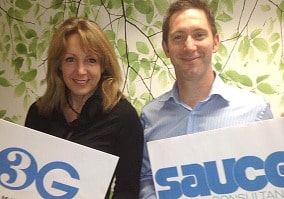
The new company will provide communications and stakeholder engagement for companies developing projects across energy, resources, transport, water and the built environment sectors.
With over 40 staff at offices in London, Bristol, Ipswich and Cumbria, Copper provides communications for a number of major clients, including National Grid, Scottish Power, RWE, Vattenfall, Urbaser Balfour Beatty and FCC.
Copper managing director, Claire Gordon, said: The rebrand completes the successful merger of the two consultancies and were delighted to be moving forward with such a strong identity and proposition.
Executive director, John Twitchen, added: There is a pressing need for nationally and regionally co-ordinated communications to manage and meet the publics expectations of new infrastructure and regeneration.

Register for free to comment