

Wood Recyclers’ Association launches MP Engagement Project
The Wood Recyclers’ Association (WRA) has launched an ‘MP Engagement Project’, which was marked with a visit from the MP for Bassetlaw, Brendan Clarke-Smith.
The WRA said that Mr Clarke-Smith visited R Plevin & Sons’ wood recycling site in Nottinghamshire earlier this month (14 October).
The visit came as the WRA launched the nationwide Project, which it said was intended to improve understanding of wood recycling among policymakers and to build a network of MPs supporting the industry. As part of the project, the association has been inviting MPs to visit member sites.
Mr Clarke-Smith was shown around the 12-acre wood processing site at Elkesley where around 150,000 tonnes of wood – including up to 100,000 tonnes of waste wood – are transformed into products annually.
Mr Clarke-Smith said: “I was delighted to visit R Plevin & Sons to learn first-hand about the important role waste wood plays in our circular economy. This family-run business is a great example of making the most from our waste and of how the industry contributes to energy security, net zero and the growth agenda.”
Defra response to DIY waste consultation due ‘this autumn’
The government will publish its response to the consultation on DIY waste charges at household waste recycling centres (HWRCs) this autumn, Trudy Harrison has said.
Ms Harrison made the claim on 25 October when she was recycling minister in an answer to a written question by MP for Ellesmere Port and Nelson, Justin Madders.

It is unclear if she will remain in post under Rishi Sunak’s Environment Secretary, Thérèse Coffey.
Mr Madders posed the question on 10 October, asking “whether a timetable has been set for the government to respond to the consultation on preventing charges for DIY waste at household waste recycling centres which closed on 4 July”.
Ms Harrison said in response: “HM Government is currently considering responses following closure of the technical consultation on preventing charging for DIY waste at HWRCs.
She added: “On 21 September we confirmed on gov.uk that we aim to publish the summary of responses and the HM Government response in autumn 2022.”
The Environment Agency warns of ‘bonfire bandits’
The Environment Agency has advised those celebrating Guy Fawkes’ night to go an organised event to avoid being “a bonfire bandit”.
The regulator highlighted the impact bonfires have on climate as well as harm to wildlife, environment and human health if the wrong materials are burned.
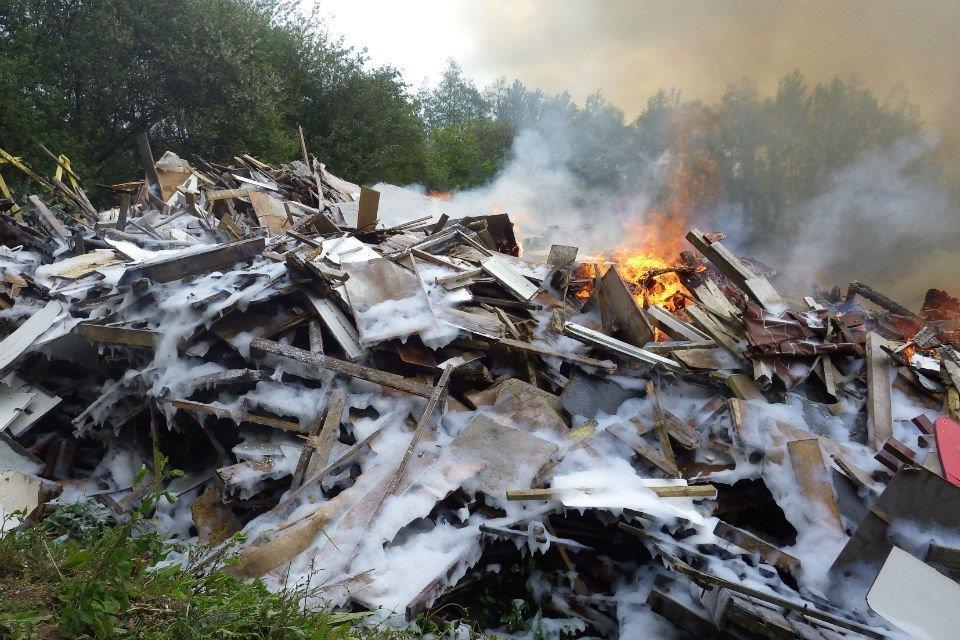
The Agency pointed out that the only materials that should be used in bonfires are dry, untreated and unpainted wood, along with small amounts of paper or cardboard. It explained that using wet wood creates smoke which can spread and cause a nuisance to neighbours, and bonfires can quickly get out of control if not properly managed.
Those who are intending to have a bonfire at home have been warned not to dispose of household waste such as plastic, rubber, glass, oils or metal. The regulator reasoned that these cause a pollution risk to water, air, soil, plants, animals. The Agency added that the bonfire should always be checked for hedgehogs and other wildlife before setting light to it.
CIWM helps launch Modern Slavery Protocol
The Chartered Institution of Wastes Management (CIWM) hosted a webinar last week (18 October) to launch the Waste and Recycling Modern Slavery Protocol.
Marking this year’s anti-slavery day, the webinar was held on behalf of the Indirect Procurement Human Rights Forum (IPHR).
Last July, the CIWM and Environmental Services Association (ESA) announced a joint commitment to tackle slavery, forced labour and human trafficking across the industry.

The CIWM said that since then, it has been supporting organisations and initiatives to reduce the risk of modern slavery across its membership base and the wider sector.
The IHPR Modern Slavery Protocol sets out how organisations in the sector will take action to protect vulnerable and exploited workers and help build understanding of risks and embed responsible practices to improve standards.
In 2018, it was reported that two thirds of victims of modern slavery had been placed within the waste and recycling sector at some point during their period of exploitation. The number of actual victims of modern slavery in the UK is estimated at around 100,000 people.

Register for free to comment