



MEPs reveal timetable for Waste Directive discussions
Following a meeting earlier this week, the chairman of the Parliament's environment committee, Czech MEP Miroslav Ouzky, announced that discussions would take place in late February and March before a vote by his committee on April 3. A full hearing before all MEPs will then take place in June.
The Directive, which lays the ground rules for waste management in Europe, is being updated to establish a five-stage waste hierarchy and encourage more action by European governments in areas like waste minimisation and recycling (see letsrecycle.com story).
Voluntary fridge recycling standard agreed in Europe

The standard specifies requirements related to the transport, storage and treatment of appliances containing CFC, HCFC and HFC and also provides specifications for the recovery and destruction of those substances. Regular performance verification tests carried out by independent auditors are included. It was agreed by the European Committee of Domestic Equipment Manufacturers (CECED), the European Electronics Recyclers Association and the producer responsibility organisations' group the WEEE Forum.
Norbert Zonneveld, executive secretary of EERA, said: “The agreed specifications provide for a framework within which operators can make investment decisions, and therefore create business certainty. It is a step forward in harmonizing the standards for treatment of WEEE in Europe. Furthermore it demonstrates that parties addressed in the WEEE Directive are best positioned to develop a dynamic system of best available technologies (BAT) for WEEE recycling. The EU Member States and the European Commission are invited to accept these standards as guidelines.”
Veolia wins planning consent for Midlands MRF
Veolia Environmental Services has received planning permission from Staffordshire county council for its sixth materials recycling facility (MRF) in the UK.
The new plant, which will include the sorting of plastic bottles, cans and glass from kerbside recycling schemes, as well as commercial paper and cardboard waste, is to be located at Veolia's existing Four Ashes site, near Wolverhampton. Expected to be open later this year with the creation of 25-30 jobs, the facility will be established in an existing industrial unit, and will have a 40,000 tonne annual capacity.
Veolia (UK) chief executive Jean-Dominique Mallet said: “The West Midlands is severely under-resourced with large recycling facilities and it is important that there is major expenditure in recycling infrastructure.”
Axion develops recycled WEEE plastic
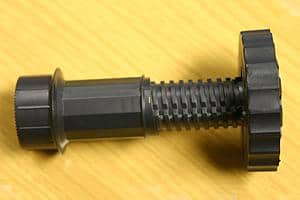
The company has found a way to remove brominated flame retardants from discarded casings, which now cannot be used to make new electrical goods under the European RoHS Directive. The new plastic, called Axpoly PS02, is now undergoing pre-production trials with several major electrical equipment manufacturers to assess its potential use in the manufacture of new products.
Axion's commercial director Roger Morton said: “We are the only processors in the UK to produce this 100% recycled material, which is consistent, has high impact strength (10KJ/sq m) and performance similar to virgin polymer. Testing is also being carried out to assess its use in new components where filled virgin polypropylene can be replaced with our high grade recyclate, thus ‘closing the loop' for end-of-life waste electrical and electronic equipment.”
Compost to regenerate five brownfield sites in North East

It said five sites in the North East will each use 500 tonnes of PAS 100 compost provided by Durham firm Premier Waste Management, under a “BioReGen” project managed by the University of Teesside's Clean Environment Management Centre and due to be completed by 2010. The sites include a former shipyard at Haverton Hill, a capped slag heap at Tees Barrage, a former coke works at Binchester, a former sewage treatment works at Rainton Bridge and a former landfill site at Warden Law.
WRAP's landscape and regeneration programme manager, Paul Mathers, said: “Previous trials have shown that using locally sourced quality PAS 100 compost as a soil improver, not only saves transportation and landfill costs, but also produces good quality, fertile soil making it suitable for a wide range of uses. These five trailblazer sites are leading the way in researching the use of quality compost in restoring brownfield land for the production of energy crops.”

Register for free to comment