


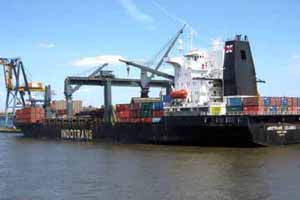
Tougher EU waste shipment laws take step closer
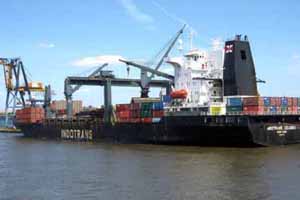
Plans were originally drawn up by the European Commission to target port hopping by illegal exporters of waste who target Member States with the most lenient controls on waste exports.
The new regulations will force Member States to toughen inspection requirements for waste shipments, and give authorities greater powers to demand evidence from suspected waste importers. They will also have to develop inspection plans which outline the objectives and priorities of the inspection regime and how it will be carried out by authorities.
In a statement, the European Council said: The new regulation contains strengthened measures to ensure a more uniform implementation of the waste shipment regulation throughout the EU. By 1 January 2017, Member States will have to establish inspection plans, which must include, as minimum requirements, the objectives and priorities of the inspections, the geographical area covered by the inspection plans and the tasks assigned to each authority involved in the inspections. The inspection plans must be based on a risk assessment. They are to be regularly reviewed and updated at least every three years.
Final approval for the regulations could be given at a vote by the full Parliament in a session in Strasbourg between April 14-17.
Survey finds 83% of firms aware of zero waste regs
An independent survey of Scottish businesses has revealed that 83% of firms are aware of the need to be compliant with the new Waste (Scotland) Regulations, which came into force at the start of 2014.
Under the regulations, it is now mandatory for all Scottish businesses to separate plastic, glass, metal, paper and card for recycling. The majority of food businesses are also required to separate their food waste. Enforced by the Scottish Environment Protection Agency (SEPA) and businesses flouting the regulations risk a maximum 10,000 fine.
Zero Waste Scotland has also launched Scotlands Resource Sector Commitment, to which early signatories include: ACE, Biffa, BinWaste, Changeworks Recycling, EIS Waste Services, Lowmac, North Ayrshire Council , South Ayrshire council, SWR Waste Management, Valpak, Viridor, and the William Tracey Group.
The new regulations form part of the Scottish Governments target of 70% recycling and just 5% of waste going to landfill by 2025.
Iain Gulland, director of Zero Waste Scotland, said: Its very encouraging that awareness levels are so high just a few months after the introduction of the new waste regulations. We are grateful to local authorities, waste contractors and the industry who have all played a vital role in helping to raise awareness across businesses.
Viridor tackles aftermath of Somerset floods
Taunton-based Viridor has been established a make-shift waste transfer station in Moorland to assist thousands of volunteers taking skips and containers full of debris and rotting furniture from nearby Somerset homes in the aftermath of the recent floods.

According to the waste management firm, it had by last week taken away approximately 30 tonnes of waste and flood debris.
Due to water contamination, Viridor said that most of the waste was going to landfill, but that metals and small and large domestic appliances such as fridges, cookers could still be recycled.
In addition, the company is setting up a similar operation in nearby Burrowbridge. Both sites are closed to the general public but accessible to the teams of official volunteers.
Viridor is also helping out by storing pending a decision on their future the thousands of sandbags that were used during the floods at their landfill and anaerobic digestion (AD) site in Bridgwater.
Mike Griffin, Viridors operations manager, said: Whilst the volunteers are undoubtedly the heroes of the clear up operation, we are pleased to be able to help. Some of these houses have been under water for five weeks, so very little is salvageable and because its on such a big scale its likely to go on for some weeks yet.
Survey finds majority favour landfill tax rise
Many would favour landfill tax increasing beyond 100 per tonne, according to the results of a survey carried out by the Chartered Institution of Wastes Management (CIWM).
The survey found that of more than 500 who responded to the survey, 36% believed that landfill tax should increase beyond 100 per tonne, while a further 28% felt that while the rate should increase it should not rise any higher than 100.
Landfill tax for active waste is set to rise from 72 to 80 in April this year, but it is not yet known how much landfill tax will be from 2015/16 with an announcement therefore expected on this in the Budget today (March 19).
In addition, an overwhelming majority of respondents 83% – also said they thought there should be guidance on how to determine what is the best technical economic environmental performance (TEEP) option for collecting recyclable materials.
And, more than 50% said that there were not enough waste and resource management facilities being built in the UK, but that were getting there.
However, respondents were more equally divided over the reasons for the lack of facilities, with planning issues (57%), a lack of investment (61%), a lack of confidence in new technologies (45.7%), public attitude (55%) and a lack of guaranteed feedstock (30%) all cited as problems.
Other findings CIWMs Great Waste & Resources Survey 2014 showed that most respondents felt the lack of data on waste arisings was a problem for the waste and recycling industry that 33% were against the introduction of three-weekly or monthly collections.
UKs first dry AD plant in full operation
The UKs first dry anaerobic digestion (AD) plant at the Lochhead landfill site in Dunfermline is now in full operation after a successful commissioning period, the company which developed the technology for the plant, Celtic BioEnergy, has announced.

The plant is designed to process 40,000 tonnes of commingled domestic biowaste and 3,000 tonnes of category three commercial food waste per year on behalf of Fife council, producing 1.4MW of electricity and contributing 900kW of heat into the district heating system in Dunfermline.
Fife council decided on a dry AD solution as it enabled the processing of both food and green waste along with the flexibility to process commercial food waste.
According to Celtic BioEnergy, while dry or high solids anaerobic digestion is quite commonly deployed in the processing of bio-waste in mainland Europe, the first tranche of AD facilities in the UK have all been wet systems where pumpable substrates are digested in stirred cylindrical tanks.
Dry digestion is thought to be well suited to the processing of comingled food and green waste, contaminated food waste and the biological fraction of municipal solid waste.
And, the firm said the plant was also likely to become the first in the UK to generate PAS 100 quality compost, as it is reportedly due to be issued its full license shortly.
Lochhead Energy a joint venture between Jones Engineering and Luddon Construction – was awarded the contract by the council to deliver the facility in 2011, and the plant began commissioning and performance testing period in July 2013.



Register for free to comment