



Palm Recycling opens Antree MRF

The 44,000 sq. ft. Aintree facility is more than twice the size of the companys Kirkby facility, which it replaces. It takes source-segregated paper, cans, glass, textiles and food waste from Sefton metropolitan borough councils weekly household kerbside collection.
The material streams arriving at the facility from 130,000 Sefton households are stored in bays for onward haulage to strategic UK material end users. The mixed can material is processed and sorted into high grade steel and aluminium grades using specialist sorting technology on site at the facility.
All newspapers and magazines, however, are transferred to parent company Palm Paper and its paper mill in Kings Lynn, Norfolk, for reprocessing into fresh newsprint.
Ruairi Holyoake, North West operations manager at Palm Recycling, said: The new location gives us so much more capacity, which means we can take a wider range of materials, as well as store more before reprocessing. At present were taking 32,000 tonnes of material per annum, but we aim to increase this in the future with additional contract opportunities within the region.
UK papermaking sector achieves injury rate reduction
The UK achieved a 37% improvement in the number of reported injuries in the papermaking sector during 2012 compared to the previous year, statistics released by the Confederation of Paper Industries (CPI) show.
According to the statistics, there were 64 reportable injuries in the papermaking sector in 2012 compared to the 103 reported in 2011.
There also were improvements of between 42% and 56% across the UK in four regions the south east, south west, north and Scotland.
In manufacturing, slip trip and fall, and manual handling injuries have decreased by 24% and 59% respectively. There was also a 63% reduction in contact with machinery type injuries, which are described as low-frequency but often high-severity incidents.
Andrew Braund, director of health, safety and social affairs said: When I joined CPI in 2000, the industry was castigated for its poor health and safety performance. Not only is the paper industry now on a par with UK manufacturing, but it has one of the lowest papermaking accident rates in Europe.
It is important that we dont let our health and safety standards slip. We have more work to do with reducing the number of major injuries, and under the new Paper & Board Industry Advisory Committee (PABIAC) strategy Being the difference together, three-year plans (2012 2014) are in place for addressing these types of injuries. CPI and its partners in PABIAC will continue to instil good practice and standards to deliver continuous improvement in the paper industry.
York invests in new collection fleet
City of York council has invested in new waste and recycling vehicles that will enable it to make another 750 collections per week.
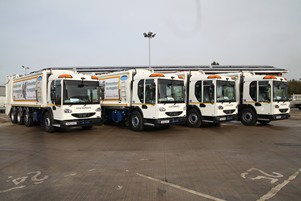
According to the council, the new fleet will also increase productivity by 5% and also reduce fuel use by 20%. The larger waste vehicles are 32 tonnes in gross weight instead of the previous 26 tonnes and can hold 16 tonnes of waste compared to the previous 10. They also feature electric bin lift systems that require no fuel to run which, along with the cleaner, diesel engines, contribute to the 20% fuel costs savings.
The vehicles are designed so that crews can load materials easier and faster, as instead of having to stop and wait for materials to be lifted up and tipped into the vehicle, they can be continuously loaded into the rear.
The vehicle chassis and bodies were made by Warwick-based recycling firm Dennis Eagle, while the bin lifts were provided by waste equipment firm Terberg UK Ltd.
Cllr David Levene, cabinet member for environmental services, said: The new vehicles are designed so that we can now access the 1% of households in remote parts of York meaning an additional 750 collections could be made per week. Crews will also be able to see first-hand if properties require special action such as assisted collection and they can receive direct information from the York Customer Centre in real time, on issues such as damaged bins and non-presented bins. Instant messaging is also a part of the system and will, as it is rolled out across the fleet, replace reliance on mobile phones.
Augean Plc appoints new chief executive
Waste management firm Augean Plc has announced the appointment of Dr Stewart John Rodney Davies, who will take over as chief executive from August 2013.
Dr Stewart, 52, has more than 27 years of experience in the industrial services sector, having worked in senior management positions at groups such as Serco, Corus and Rugby Cement. He is also a governing board member on the Technology Strategy Board, the UKs national innovation agency.
He joins from Stockport-based workplace facilities provider Romec Ltd jointly owned by the Royal Mail Group and Balfour Beatty Workplace Ltd where he is managing director. He is also the managing director for Balfour Beatty Technical Services.
Paul Blacker will continue as chief executive until the end of March following the end of the notice period for his resignation, when Richard Allen will take over as the interim chief executive.
Jim Meredith, Augean chairman, said: We are delighted to welcome Stewart to the Board and we look forward to working with him. The Group carried out a rigorous selection process and Stewart stood out as the ideal candidate, both in terms of his track record and technical knowledge, to lead Augean during the next phase of the Groups development and beyond. Once again I would like thank Paul for his contribution and wish him all the very best for the future.
Dr Davies said: I am very excited about this opportunity. It is clear that the management team has done a great job in putting in place a strong platform for growth, with a number of significant opportunities to build on, and I look forward to working with them to enhance Augeans reputation as a leading hazardous waste business.
Biffa and partners to start work on Wirral community park
Work is underway on a 2.3 million scheme to turn a former Wirral landfill site into a community park.
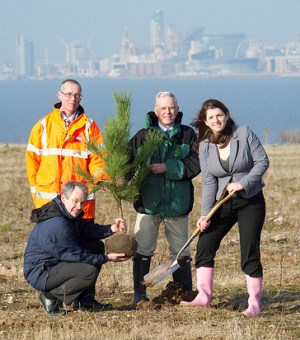
The Port Sunlight River Park is due to open in summer 2014 on the 28-hectare former Bromborough Dock landfill site owned by waste management firm Biffa.
The park is funded by the Newlands scheme, which was set up in 2003 by the Northwest Regional Development Agency and the Forestry Commission to reclaim large areas of derelict land, although Biffa and other delivery partners will also contribute time and money to the project.
Plans include utilising the sites existing 37-metre high mound to create a new green visitor attraction featuring a walk to the summit featuring new wildlife habitats and seating. A perimeter walk along the waterfront is also planned.
The project is being managed by national charity the Land Trust on behalf of Biffa and other delivery partners including BIS, the Forestry Commission, Wirral borough council, Gillespies, Unilever, Essar, United Utilities, Port Sunlight Village Trust and the Woodland Trust.
A tree planting marked the start of work on the project, which was attended by Wirral South MP Alison McGovern, who said: Im so pleased that work has started on our new riverside park. Opening this up has been a priority of mine over the past two years reuniting Wirral people with their coastline and bringing in new tourism opportunities, especially given the walking routes between this park and Port Sunlight, and the Mersey coast of the Wirral.
John Devine, regional operations manager for Biffa, said: We are delighted that this former landfill site is to be part of this regeneration scheme and that it will be used as a platform to benefit the local community through its footpaths and views and also the variety of wildlife habitats it now supports.
Environment Agency publishes landspreading guidance
Revised guidance for all those involved in spreading waste materials on land was published by the Environment Agency (EA) last week (March 11).
The guidance is designed to assist permit holders, contractors, waste producers, land managers and farmers in complying with a landspreading permit by ensuring that operations do not impact on human health and the environment.
It includes information on whether a landspreading operation is considered to be recovery or disposal as well as updated information on waste types and technical standards.
According to the EA, landspreading can beneficially add organic matter to soil and reduce reliance on manufactured fertilisers and quarried soil conditioners. The guidance is available to download here.
Revision of ISO 14001 expected early in 2015
The international standard for environmental management systems, ISO 14001, is being revised, with an expected new standard due in early 2015.
The ISO 14001 (2004) was established by the International Standards Organisation to encourage companies to evaluate all areas where its activities have environmental impact. It maps out a framework that a company or organisation can follow to set up an effective environmental management system, although it does not state requirements for environmental performance.
The new standard will reinforce the requirement to carry out ecodesign to address and mitigate the life cycle environmental impacts of an organisations products and services in the value chain.
Guidelines on how to do this have been published as BS EN ISO 14006:2011 Environmental management systems: Guidelines for incorporating ecodesign. More information is available in the online video.
As part of the revision, the International Organisation for Standardisation (ISO) is currently consulting with users of ISO 14001 through an international online survey. The survey takes 20 minutes to complete and is available on the ISO website.


Register for free to comment