
EA ruling for AD benefits fruit and veg producers
Biogas producers will no longer need to pay for permits or waste handling controls to use fruit and vegetable by-products in the anaerobic digestion (AD) process, the Environment Agency has confirmed.
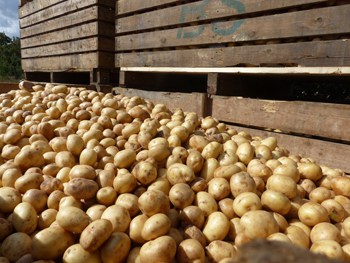
Previously, the addition of even a small quantity of these by-products into the AD process (such as leaves and roots, or produce that is misshapen, bruised or undersized) would require operators to apply for a permit and implement the same waste handling controls as a commercial food waste AD plant. However the changes made to waste regulations will mean that this is no longer the case. The change to the regulations follows campaigning by the Renewable Energy Association (REA) on this issue, including a letter to Environment Secretary Owen Paterson in June 2014.
Commenting on the changes, REA technical director Jeremy Jacobs said: “This regulatory boost will be the final piece in the puzzle for several on-site and on-farm AD projects that had been hanging in the balance, which is great news. However, this sector is still being stifled by structural problems with the Feed-in Tariff, which disproportionately affect the smaller players in the market.”
REA member Branston Ltd, a potato producer who feeds outgraded potatoes into its Lincoln AD plant, is one of the companies to benefit from this change. Vidyanath Gururajan, innovations director at the firm, said: “It is very encouraging to see that the Environment Agency has issued a briefing note to differentiate crop residues from food waste. This is definitely a step in the right direction for encouraging the fresh produce industry to use AD technology to reduce its carbon emissions.”
FCC Environment hosts ministerial visit
Resource minister Dan Rogerson and HMT Exchequer secretary Priti Patel visited FCC Environment’s materials recycling facility (MRF) in Bletchley, Buckinghamshire on Tuesday September 9.
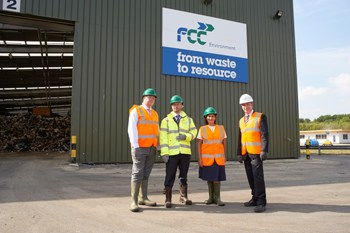
The recycling and waste management firm hosted the visit on behalf of the Environment Agency as part of a fact finding mission on a number of issues affecting the waste industry. They were shown round by FCC Environment’s sales, marketing and communications director Kristian Dales and south region director Steve Longdon.
As part of the visit, the ministers were given a tour of FCC Environment’s operations at Bletchley and shown the scale of waste processing on the site. Opened in September 2013, the MRF has the capacity to process 100,000 tonnes of waste per annum which comes from households in Milton Keynes and Central Bedfordshire as well as trade waste customers. The site also hosts a landfill.
Construction complete on ReFood Widnes AD plant
Construction has been completed on ReFood’s £20 million anaerobic digestion plant in Widnes, Cheshire.
Britcon, a civil engineer and structural steelwork contractor, who was appointed to construct the facility has handed it over to ReFood. The facility has the capacity to treat up to 90,000 tonnes of commercial and domestic food waste per year generating up to 17NWhs of biogas.
John Whitmore, construction director for Britcon, said: “Through our work with ReFood we have developed an intense process of value engineering which ensures best value throughout all elements and stages of the project. It requires a complex arrangement of a highly experienced team throughout procurement, delivery, flexibility and post management to deliver the project together with an exemplary health and safety record.
“We have built a strong and trusting relationship with ReFood across the UK and are delighted to be considered a valued partner as it seeks to expand existing operations.”
Love Food Hate Waste kicks off in Cardiff
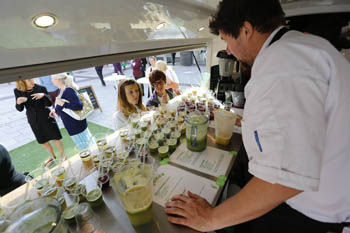
A Love Food Hate Waste campaign was kicked off in Cardiff last week (Thursday September 11) with an event that saw fruit and vegetable smoothies served from ingredients that are commonly wasted in the home.
The City’s event, which is the next stop on the ‘Love Food Hate Waste 10 Cities’ tour, is in partnership with Sainsbury’s and the City of Cardiff council. Cardiff was named as one of the 10 Love Food Hate Waste cities by WRAP earlier this year – alongside Belfast, Birmingham, Glasgow and Newcastle among others – meaning it will campaign to help its residents reduce food waste in 2014 to 2016. Launch events have been taking place since June and with the final ones occurring this month.
Minister for Natural Resource, Culture and Sport John Griffiths said: “We can all take steps to make the most of the food that we have bought. This can mean getting creative with leftovers or just being aware of use by dates. The Love Food, Hate Waste campaign is full of useful suggestions to prevent waste and many people in Wales are already saving money because of their efforts.”
Emma Marsh, head of Love Food Hate Waste, added: “The Liquid Greens Machine is just one example of a creative way for people to experiment with the good food and drink they buy and try making something delicious and different as well as kicking off our exciting campaign in Cardiff.”

Register for free to comment