


Northern Ireland intends to press ahead with introducing a landfill ban for source segregated food waste from April next year, the countrys Department of the Environment (DOE) has confirmed.
The partial landfill ban is contained within the proposed Food Waste Regulations (Northern Ireland) (see letsrecycle.com story), following a consultation in September 2013. Meanwhile, a draft paper is scheduled to be laid out for the Northern Ireland Assembly ‘later this year’.
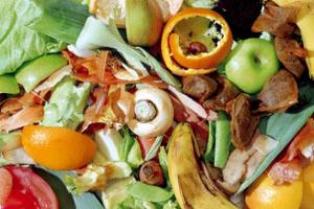
The Regulations will mean that from April 1 2015, the landfilling and mixing of separately collected food waste will be prohibited. The DOE is also preparing to review commingled collections of bio-waste and food waste to ensure they are kept separate to increase capture rates.
Meanwhile all local authorities will need to roll out separate receptacles for collection of food waste to households by April 2017 a year later than originally proposed in order to give councils time to comply.
And, businesses producing more than 50kg of food waste per week will be required to present food waste for separate collection from 2016, with smaller producers (5-50kg per week) to follow in 2017.
Scotland
The decision to implement the ban follows the recent success of similar food waste schemes in Ireland and Scotland. Under the Waste (Scotland) Regulations, an onus placed on Scottish businesses to present food waste for separate collection in January this year led to a surge in the amount of material treated at AD plants since November 2013 (see letsrecycle.com story).
In its response to the consultation feedback, the Department of Environment stated: The Department intends to proceed with the phased introduction of the Regulations based on the quantity of food waste businesses produce to ensure that smaller producers have sufficient time to make arrangements to present food waste separately for collection.
- April 1 2015: the acceptance of separately collected food waste at landfill sites prohibited
- April 1 2016: food businesses that produce more than 50kg of food waste per week to present that food waste for separate collection
- April 1 2017: councils to have provided receptacles to every domestic property for the separate collection of food waste, and; food businesses that produce more than 50kg of food waste per week to present that food waste for separate collection
The Department agrees with respondents who commented that small food waste producers will benefit from experience gained through earlier introduction with the large food waste producers.
It continues: A simple landfill ban for all food waste would be impractical to enforce as this would mean monitoring the residual waste bins from domestic properties and ensuring that no food waste is put into them. The regime underpinned by the Food Waste Regulations will encourage behavioural change to minimise the amount of food waste being deposited in residual bins.
Welcomed
The proposals were broadly welcomed by respondents to the consultation, who believe that the ban will give an added impetus to the development of alternative infrastructure while separate collections would help improve recycling rates.
However, others expressed concern that councils would need a longer lead time in order to phase in the new regulations, and also noted that significant funding would be required for councils to implement the measures.
Other respondents thought that the Department was too prescriptive over collection and treatment methods of food waste, highlighting its preference for anaerobic digestion over in-vessel composting.
The report added: Some respondents sought assurance that the provisions in the Regulations are sufficiently flexible to allow food waste to be mixed with other waste for treatment purposes, particularly for composting where mixing with other wastes can optimise the process.
Some respondents expressed concern that a ban on mixing food waste with biodegradable waste could lead to existing IVC plants becoming redundant and queried the Departments preference for AD over IVC.
AD
While the Department has argued it will not prescribe treatment of food waste to local authorities, it does admit a preference for anaerobic digestion over in-vessel composting and believes the successful implementation of the regulations will lead to increasing volumes of feedstock for additional facilities.
Related Links
A report published by consultancy firm Eunomia last week warned that the market for AD has reached a tipping point, beyond which there is not enough feedstock being collected to support future development (see letsrecycle.com story).


Register for free to comment