


The announcement came as major retailers meet with local government and WRAP to discuss possible moves towards strengthening action against plastic bags – and packaging in general.
The meeting is linked to WRAP's Courtauld Commitment, which has already set a target for retailers signed up to stabilise the amount of waste they produce by 2008 and begin reductions in waste by 2010.
Local authorities hope that by improving the Courtauld Commitment, they can get retailers doing more to help reduce and recycle household waste, since attempts to strengthen the packaging producer responsibility system have proved frustrating so far.
And, behind the scenes suggestions are that the retailers within the Commitment are keen to do more.
M&S
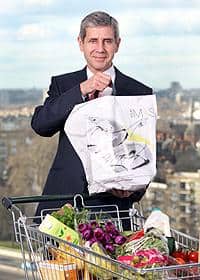
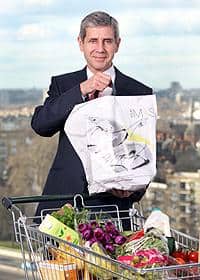
Marks and Spencer, which has a high-profile “Plan A” campaign to move towards greener approaches to retail and highlight the moves to its customers, said today that it would start a plastic bag levy in its food stores from May 6.
Money raised from the levy will go to environmental charity Groundwork, to improve parks and play areas around the UK, the retailer said.
Announcing the move, Sir Stuart Rose said: “We want to make it easy for our customers to do their bit to help the environment and our trials have shown us that they want to take action. Just imagine if M&S customers right across the UK cut the number of food bags they use by 70% – that's over 280 million bags they'd be saving every year.”
Councils
Local authorities have welcomed Marks and Spencer's announcement. Councils see the bags issue as important in highlighting other waste problems, raising the profile of activities like recycling.
With pictures in the national press this morning of wildlife swimming around in bag-infested seas, councils are also keen to point out the litter potential of carrier bags.
Cllr Denise Hawksworth, who chairs the Scrutiny Board at Chesterfield council – one of the growing number of authorities now seeking to take local action against bags, said: “It is a major and a growing problem. More needs to be done to discourage their use and raise awareness of the damage they cause to the natural environment.”

There has never been such interest by policy makers in this topic.
ACR+
London Councils, the organisation of London boroughs behind the London Shopping Bags Bill, which is currently threatening a ban on free single-use shopping bags in the capital (see letsrecycle.com story), praised Marks and Spencer as a “shining light” among retailers.
London Councils chairman Councillor Merrick Cockell said: “I applaud Marks & Spencer for setting a shining example to other major retailers on throwaway shopping bags. Their decision to stop offering free throwaway shopping bags demonstrates what can be achieved when businesses choose to take a lead on today's most important issues.”
Europe
Plastic bags are also stirring the European agenda, with municipal authorities organisation the Association of Cities and Regions for Recycling and Sustainable Resource Management (ACR+) stating that: “There has never been such interest by policy makers in this topic”.
ACR+ has recently updated its 2005 report on policies and practices that could reduce their consumption.
The report suggests that the average person in a typical industrialised country gets through 300 bags a year, and that 150 billion are handed out in the European Union each year.
However, the ACR+ advises that “bags are at worst a nuisance”, pouring cold water on the notion that bags represent “a serious environmental and amenity hazard”.
The report, which looks at policies and practices across the world, says 200 million plastic bags only contains around 1,000 tonnes of plastic. Commenting on countries outside Europe that have banned carrier bags, it states: “This level of market intrusion would appear to be unjustified”.
However, the report suggests that “the power of economic instruments to change behaviour is undeniable”, and says whether measures are voluntary or mandatory, policies to cut down on bags have to be driven by strong local information campaigns, with alternative re-usable bags in supermarkets, with any revenue from levies used in appropriate environmental projects.
The report concludes: “If the goal is to attack the bag because it serves as proxy for much of modern unsustainable lifestyles then sociological and cultural tools will be relevant, to work for the broader interests of sustainable consumption and production.
“If littering is the problem to be addressed, then producer responsibility schemes can help. If the concerns are based on the persistence of these bags in landfills and in the countryside, then standards and codes to encourage biodegradable bags may be a worthwhile route to pursue.”

Register for free to comment