



Operations at materials recycling facilities are to come under scrutiny from April as the Health and Safety Executive (HSE) is set to make them the subject of hotspot inspections.
In a move welcomed by MRF experts, facilities across Great Britain will be subject to visits from HSE officers to assess health and safety standards across all areas of operations. The initiative will run for a year between April 2013 and March 2014.

Under the proactive inspection initiative, the HSE will focus on high risk areas including machinery, vehicles and equipment and will also look at matters concerning occupational health such as exposure to noise and dust.
Wayne Williams, inspector for the HSE, said the initiative will help the HSE to gain a better understanding of the health and safety issues faced at different types of MRFs.
He said: In MRFs we know that there are some technical pieces of transport and machinery and slips and falls but also potentially health issues in terms of noise, exposure to dust and bioaerosols so we are going to give them an overall look next year.
We will be looking at machinery guarding and isolation issues and a lot of transport related stuff which goes on because most of the material is delivered to the facility floor which causes a problem.
He added: There are also areas which are noisy and particularly the nature of the place means there will be dust and bioaerosols and contamination in the air. We want to assess all of these things.
Mr Williams said the inspections could result in more guidance being produced, if it is required, and will allow the HSE to target particular issues that are highlighted.
The injury rate in waste and recycling is considerably higher than that of other industries. The HSE said this poor performance is reflected in high levels of enforcement arising from previous inspection initiatives which have covered waste electrical and electronic equipment (WEEE) recycling facilities, scrap yards and skip hire premises. Transport and the guarding and isolation of machinery, among others, were highlighted as significant issues from these.
Health
Mr Williams said health was often the poor relation in health and safety. In all health and safety generally the health aspect is the poor relation because the results of the incidents in safety are immediate whereas the health issues are much further down the line. They dont get the attention that the higher profile incidents do.
He added that the HSE was looking to address this through its hotspot inspections as well as other research such as the sickness absence survey. He said hygiene would also be coming under the spotlight in the future.
Discrepancy
The additional focus on the facilities by the HSE been welcomed by manufacturers of MRF equipment, Kaizen Recycling and O.Kay Engineering.
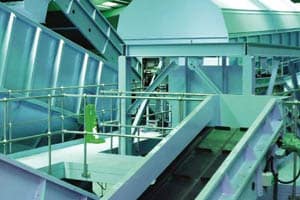
Speaking to letsrecycle.com, Antonia Kay, director of Northamptonshire-based O.Kay Engineering said the inspections would help to create a level playing field across the industry.
Discussing the main problem areas in MRFs, she said: The most important thing is preventing people getting to moving parts and certainly anything that could cause harm to life. Secondly, consideration also needs to be given to peoples routes across the building.
She added: I think there is a massive discrepancy in health and safety across the UK, particularly in MRFs, so if somebody can do those spot-checks and bring it up to a level playing field then that is a good thing.
Ms Kay noted while health and safety features can be built into the design of the equipment for a MRF the operators must also ensure it runs safely as well.
Safety
Duncan Bowett, managing director of Shrewsbury-based Kaizen Recycling, said his customers are increasingly taking health and safety more seriously and noted the improvement made by the waste industry over the last decade. However, he noted that budgetary constraints could mean restrictions.
Definitely our customers are taking health and safety more seriously. More and more investment is going on in MRFs, certainly in new MRFs, as you cant really put a price on safety. However, having challenging times like now I am sure some people are maybe not taking as many appropriate actions as they would if they had more money to spend.
He added that Kaizens customers, particularly larger firms, were asking for more equipment to remove dust in a bid to tackle the longer term health factors.
He added: We are seeing a lot more investment in health and safety but you cant take away the human factor of doing something stupid which no amount of money can prevent.
Mr Bowett said training was very important to help increase awareness among staff of the health and safety issues associated with their jobs.
Training
One company which coordinates training for MRF operatives is Axion Consulting. Keith Freegard, director of Axion, said he welcomed the HSEs work and said the waste sector could learn lessons from other industries.
I welcome the extra attention to the MRF sector by the HSE and I hope that it will encourage more people to adopt more professional management of health and safety that they can pick up from other industries such as the chemical engineering and manufacturing.
Mr Freegard added that while the HSE did good work it was pushing the industry to take initiative and take it upon themselves to improve health and safety.

Register for free to comment