


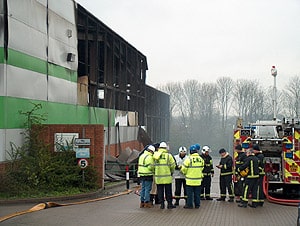
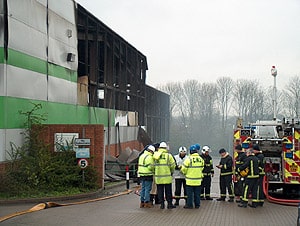
Afire atamaterials recycling facility in Milton Keynes in 2005 was likely to have been caused by a cigarette discarded by an electrician working on site.
The materials recycling facility (MRF) which is owned by Milton Keynes council, and was then run by Community Waste, was severely damaged by the fire in April 2005 which burned for several days (see letsrecycle.com story).
Last year, a judge ruled that the theory argued by lawyers for National Insurance and Guarantee Corporation Limited (NIG), the liability insurance company of the electrician Michael Nulty, was inherently unlikely.
The lawyers argued that the fire was caused by electrical cabling coming into contact with a current and overheating, and opted to appeal the decision.
And, in a judgement published last week, judges dismissed the appeal, ruling that there was less evidence to suggest the fire had been caused by the cables, and it was more likely that a cigarette discarded by Mr Nulty, who died in December 2010, had caused the fire.
Ruling
In his closing statement, Lord Justice Toulson, commented that it would have taken a remarkable combination of unlikely events for the fire to have been caused by cables, as had been suggested by NIG and said that circumstantial evidence that a cigarette had been the cause was compelling.
He said: The [previous] judge’s finding that the cause of the fire was very much less likely to have been arcing of the Boa cable than the cigarette end discarded by Mr Nulty was reached after a painstaking examination of the evidence and was properly open to him. Rational analysis of the Boa cable theory showed that it was highly improbable.
It would have required a remarkable combination of unlikely events. The objection to the discarded cigarette end theory was of a different nature. There was no comparable scientific or practical improbability about it.
Related Links
Mr Nulty was working alone at the relevant place and time. He had the opportunity and could well have had the temptation to do what the council alleged. The objection to it was that he would not have been expected to behave in such a way, but the circumstantial evidence that he did so on this occasion was compelling.
In my view the judge was right to find that he did so and I would dismiss the appeal.
Milton Keynes council declined to issue a statement on the ruling and NIG were unavailable for comment.


Register for free to comment