

As the first stage of a landfill ban on tyres comes into force this week (see letsrecycle.com story), the Stuttgart-based company is already in talks with one company with regard to a new plant that could be built in the South of England next year. With the second stage of the ban, banning even shredded tyres from landfill from July 2006, MeWa believes there will be real opportunities in the UK market.
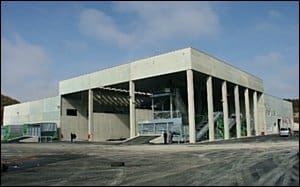
 MeWa has already built a tyre plant in Gmunden, Austria |
Best known for its fridge recycling technology – MeWa has already built fridge plants for EMR (see letsrecycle.com story), P & O and is beginning work on its second for Sims in Newport – the company has already built a tyre recycling plant for the Asamer Group in Gmunden, Austria. This took around 12 months to set up, at a cost of about 7 million.
A single MeWa tyre plant can process about 40,000 tonnes of tyres each year, including truck tyres. In a three stage process, the plant can produce several sizes of rubber granule, from 6 mm down to rubber powder 50 to 350 m across.
Markets
Tyres can be recycled into a number of products including sports track surfaces, floor surfaces for playgrounds and schools and industrial construction.
But the major market MeWa believes will soon take off in Europe and the UK is in asphalt rubber to re-surface roads in a way that will reduce noise and increase safety.
Karsten Mennerich, marketing director at MeWa told letsrecycle.com: “There are a lot of opportunities in the asphalt rubber market. The benefits of asphalt rubber are widespread: it is much safer, giving better control for vehicles even in the wet, and has a longer life than other road surfaces.”
He went on: “The biggest effect is on noise: tests have shown a five decibel reduction in road noise with asphalt rubber, that's nearly a 50% reduction. We're beginning to see laws in California saying roads must be made with asphalt-rubber, and should see them some time in the future in Europe.”
Rubber powder also has a variety of uses in the chemicals industry, for the production of compounds and anti-corrosives.

Register for free to comment