

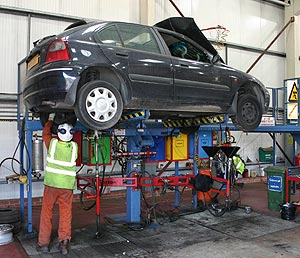
The two companies, who operate over sixty authorised treatment facilities (ATFs) to de-pollute waste cars between them, said they were still collating data from last year and some recycling operations were still in the pipeline.
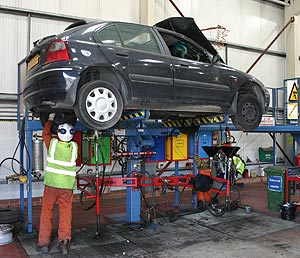 Progress has been made in raising recycling rates for old cars thanks to new technology, according to the UK's largest metal recycling companies |
The comments came following claims made earlier this month by service providers Autogreen and Cartakeback that their ATFs had reached the targets of 80% recycling and reuse and 8% recycling, reuse and recovery (see letsrecycle.com story).
Speaking to letsrecycle.com on Friday, Graeme Carus, business development director at European Metal Recycling, said: “It's a bit premature for us to comment about the targets. A lot of materials are still in the pipeline to be recycled and the DTI need to check and confirm the figures.”
Mr Carus explained that materials such as engine oil could be stored at smaller sites for up to three months, depending on the number of ELVs the company was de-polluting. He added that this was the reason the DTI did not ask for 2006 data until March.
“Huge strides”
Derek Campbell, who is responsible for ELVs at Sims agreed that it was “a little premature” for his company to comment on its 2006 recycling rates.
But he stressed: “We have spent significant time, money and effort in achieving the targets. From the historical levels of 75% recycling we have made huge strides forward above and beyond that.”
He added: “We don't believe the rest of Europe are going to achieve the 85% recovery levels.”
| Related links: |
Increase
Under the ELV regulations, the government assumes that 75% of ELVs sent for shredding are recycled for metal, whereas the other 10% needed to reach the targets require the recycling of more challenging materials like plastics.
Mr Carus said: “The level of recovery did increase within 2006 through the use of new technology and I can say that everyone is working hard across the board to meet the targets and recover previously unrecycled materials.”

Register for free to comment