

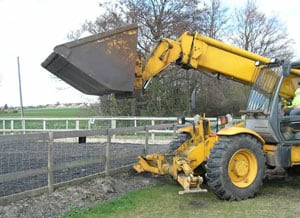
Metals recycling firm Ling Metals has been fined £200,000 after a work died following an incident involving a loading bucket over turning at its site in Minster, Kent.
The fine for the Parham-based company follows a court case at Canterbury Crown Court in March 2007.
The court heard how Darren Baker, 35 of Thanington in Canterbury, had been helping to lay a new horse riding surface of crumbled rubber at Brambles Stables, Watchester Lane, Minster, Ramsgate.
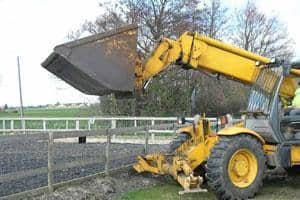
Mr Baker was struck by the extendable arm of a ‘telehandler' which had reached its balance point and tipped forward. The bucket hit Mr Baker on the head and forced him to the ground. Mr Baker died in hospital two days later from multiple injuries.
The company was sentenced on Friday (January 28 2011) for breaching section 2(1) and section 3(1) of the Health and Safety at Work etc Act 1974, which place requirements on employers to ensure worker health, safety and welfare is protected as far as reasonable practicable.
Ling Metals also pleaded guilty to breaching regulation 7(c) and regulation 10(3) of the Lifting Operations and Lifting Equipment Regulations, which place an obligation on employers to ensure equipment is fit-for-use and it is clearly marked for safe use.
The company was fined £200,000 and also ordered to pay £11,384.11 in costs.
Incident
In the incident in question, a colleague was driving the telescopic materials handler – a forklift truck with an extendable arm or boom – commonly referred to as a ‘telehandler'.
The vehicle was fitted with a loading bucket containing the rubber and it had extended its boom more than six metres. It was resting on its wheels and the hydraulic stabilisers fitted at the front of the machine were not being used.
Furthermore, the court heard how that the telehandler was fitted with a ‘Safe Load Indicator' device, which helps operators stay within safe limits when using the loader and should help prevent an overturn. It was found that the telehandler used had not been properly calibrated.
In addition, the machine's Certificate of Thorough Examination had expired, with inspection and repair work on the telehandler unable to be completed due to the “poor condition” of the machine.
The court also heard how the operator of the telehandler had not been told how heavy the bucket was, either empty or full, and also lacked the understanding of the machine instructions. These indicated how much could be lifted and how far the boom could be extended.
Commenting on the case, HSE Inspector John Underwood said: “I would like to remind owners and operators of machines fitted with older style Safe Load Indicators that these need checking and recalibrating on a regular basis as some older machines do not tell the operator when they have decalibrated.”
Mr Underwood added that it was “vital” that owners and operators of equipment have in place a “robust procedure” to ensure worker competence around machinery. He said: “Each machine should be checked by plant fitters and maintained in line with the manufacturer's recommendations.”
“This was a wholly avoidable incident which led to unnecessary loss of life. I hope this fine will be an example to those involved in the use of telehandlers that machine maintenance is critical to enable safe operation,” he added.
Ling Metals said it had no comment.

Register for free to comment