

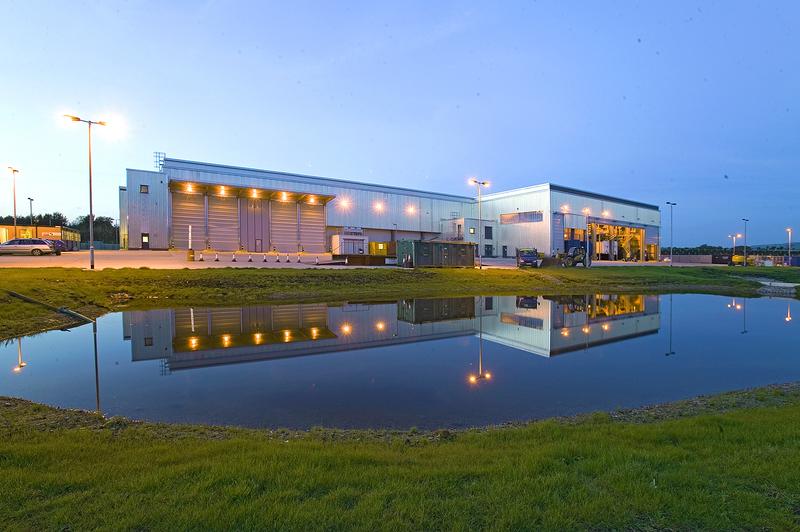

Subject to conditions such as only treating municipal waste generated in South Wales, the application would see Shanks turning residual waste into Solid Recovered Fuel (SRF).
Shanks already produce SRF at facilities in East London and Dumfries and recently agreed a new contract to provide it as fuel to construciton giant Castle Cement (see letsrecycle.com story).
The MBT planning application was submitted as a speculative gesture by Shanks to support a future bid for a forthcoming residual waste management contract in Torfaen, which is expected to be procured in partnership with Blaenau Gwent council.
However, the planning proposal has generated opposition from locals who have voiced fears over health issues related to the site's former use as a hazardous waste incinerator, when it was owned by Rechem International Ltd.
Other objections – over noise, traffic and pollution – were submitted by Pontypool Community council and a letter of objection countersigned by 500 different addresses raised concerns that MBT was too expensive and would land residents with hefty council tax bills.
The letter said: “MBT is expensive. Cumbria County Council has agreed a 25 year £400,000,000 MBT contract with Shanks. We should be extremely cautious about committing this level of Council Tax revenue.”
Approval of this planning application does not confirm any preference for the council's method of dealing with waste in future
Torfaen council
Summing up its reasons to approve the facility, however, Torfaen council said that it was aware of “the sensitivities in relation to the site due in the past activities”, but that these should not affect the new application.
In the meeting report from February 5, the council said: “The council, as the local planning authority, have to judge the merits of the current proposal, not the previous operation of the site.”
The council added that the issue over expense to council taxpayers was irrelevant because it was not signing a contract with Shanks but only approving a facility.
It said: “The decision to be taken on this planning application is not one of procurement; it is to determine whether this building and process is appropriate in land use terms on this particular site and compliant with relevant waste and planning policies.”
Torfaen members added that even though MBT might be an option for the council to divert waste from landfill in future, approval of the planning application did not “confirm any preference for the council's method of dealing with waste in the future.”
The council went on to explain that it deemed the proposal acceptable in terms of its implications on issues such as traffic, visual appearance, odour and noise.
The report said: “The proposal is considered an acceptable development at this industrial estate for what can be considered an industrial process to all intents and purposes.”
Bid
Commenting on receiving planning permission for the MBT facility, Shanks managing director Ian Goodfellow said he believed the facility would help South Wales to divert waste from landfill.
He said: “We are clearly delighted that this planning application has been approved. We feel that Shanks' MBT technology will go a long way to ensuring that the South East Wales region is capable of meeting Wales' challenging recycling and diversion targets.”
Over the coming months Shanks will now start work to remover the existing plant and buildings from the site whilst commencing the process of securing appropriate contracts.


Register for free to comment