

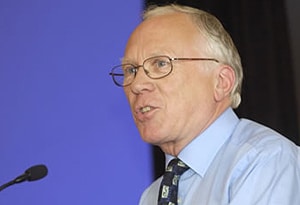
A debate as part of the second reading of the Climate Change Bill on Tuesday saw government minister Lord Rooker telling fellow peers that UK waste management must improve “dramatically” – and that incentive schemes “could significantly help”.

Piloting will allow us to trial different schemes in different areas, monitor their impacts and report back to Parliament before any decision is taken to roll them out more widely.
Lord Rooker
Cross-bench peer Lord Oxburgh and Labour peer Baroness Jones of Whitchurch supported this view of schemes that could take the form of “pay as you throw” initiatives.
Baroness Whitchurch, who is also a non-executive director of the Waste and Resources Action Programme (WRAP), said recycling incentives were being used in Europe and were the “logical next step in delivering comprehensive behavioural change” in Britain.
Emissions
The six-hour debate on the Climate Change Bill on Tuesday night saw long discussions of the government's proposed target for a 60% reduction in greenhouse gas emissions by 2050.
Minister of State for Defra Lord Rooker told peers that currently 3% of all greenhouse gas emissions come in the form of methane from biodegradable waste in landfill. He said research suggested incentive schemes would help cut this impact.
Explaining the general format of the schemes, he said: “We will invite local authorities to propose schemes for their areas, subject to various safeguards. Householders who reduce and recycle their waste will receive a rebate which may be integrated with the council tax system.
“In some schemes, householders who do not do that – that is, recycle – could end up paying more. Piloting will allow us to trial different schemes in different areas, monitor their impacts and report back to Parliament before any decision is taken to roll them out more widely,” Lord Rooker said.
The minister added that the local authority sector via the Local Government Association has welcomed the proposed pilots.
Recycling
Later in the debate, Baroness Jones of Whitchurch highlighted work by WRAP that showed awareness of the need to recycle was rising among the general public. However, she added: “There is still considerable scope to reduce our waste levels and recycle more, thereby reducing our CO2 emissions further.”
Supporting the concept of incentive schemes, the Baroness added a note of warning that the schemes should be “administered effectively”.
She said of incentives: “They can work only where communities understand the benefits and support the schemes, where strategies are put in place to prevent fly-tipping and where good kerbside recycling already exists. It is also vital that any money collected is paid back to the community, rather than being perceived as an extra tax.”
Energy recovery
Crossbencher Lord Oxburgh, the former non-executive chairman of oil company Shell, also welcomed the government's intention to tackle the UK's “abysmal record on the management of waste”.
But he also raised the question as to whether recycling would prove the best use of energy within waste materials.
Lord Oxburgh argued in favour of using more gasification plants – which he insisted was “a quite different process” from incineration in recovering energy from waste.
He said: “What cannot be recycled should be gasified – effectively heating organic material in a controlled environment to produce a synthetic gas, an important component of which is hydrogen – to produce liquid fuels or electric power. At the moment, this scarcely happens because our existing infrastructure has developed in a low-cost energy environment. But that environment has gone for ever and we need to look at these things very hard.”
Baroness Jones of Whitchurch commented that an international review carried out by WRAP had showed that “across a wide range of wastes, recycling offers more environmental benefits and lower environmental impact than either incineration or landfill”, arguing the case for more recycling.
“Crucial”
In his concluding remarks, responding to Lord Oxburgh's call for the government to take more account of “green” energy within waste, Lord Rooker said: “Certainly, the need to recover energy from organic waste is crucial because we are wasting so much.
“I understand that 6 million tonnes of wood that could be used for energy go into landfill every year. It is an appalling waste. Whether it is anaerobic digestion or other methods, all are technologies that we should use and seek the best benefit from. We will not get to the point where we will have a single answer to this, but we will have to take the Bill through and debate it in detail,” said the minister.

Register for free to comment