

And, it called for incineration “not to be exempt from London’s ambition to improve air quality”, pointing to a link noted by the British Society for Ecological Medicine “between incineration and cancers, birth defects and cardiovascular mortality”.
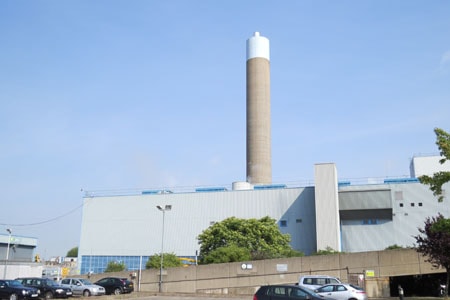
The report, with the heading “London sets fire to over half its waste”, was published this morning by the committee which said that despite efforts to cut waste and increase recycling, more than half (53%) of London’s waste ends up being incinerated. 30% is recycled with the remaining 17% going to landfill or other routes.
The London Assembly’s role is to hold the Mayor and Mayoral advisers to account by “publicly examining policies and programmes through committee meetings, plenary sessions, site visits and investigations”.
Food waste
The assembly committee explained that anaerobic digesters in London are under-utilised and criticised the EfW sites for not checking the content of waste received.
The sites were accused of “potentially burning the resources of the future” and being a “hindrance” to the circular economy. This was followed by calls for the facilities to be encouraged to increase separation at all points along the disposal chain. The committee suggests that “black bag waste could be sorted after collection to separate out recyclable materials, reducing the tonnage to incinerate and the need for new incinerators”.
Because not all boroughs offer separate food waste collections, the committee stated that food waste is being burnt rather going to other processes which are more environmentally beneficial, such as anaerobic digestion.
‘Potentially harmful’
Leonie Cooper, chair of the Environment Committee which is Labour-controlled, said: “We have got to get a grip on the amount of waste being sent to incineration. Burning recyclable and organic materials is wasteful and potentially harmful and as London is expected to grow, we urgently need to reduce the amount being sent for incineration and to separate out useful materials. Once these materials are burnt, they are lost forever and can’t be used within a circular economy.”
The assembly member continued: “Incineration can no longer be relied upon to manage our waste effectively. Energy from waste does have its benefits in generating heat and power, but, along with exporting waste elsewhere and sending waste to landfill, this should really be an option of last resort.”
Resources

The committee’s report explained that “by not checking the content of waste received, EfW sites are potentially burning the resources of the future – a hindrance to the circular economy as well as releasing carbon emissions into the environment”. The report further explained that encouraging separation by the EfW facilities, as well as at all points along the disposal chain, would benefit the environment and health by reducing carbon and other emissions and increasing recycling.
“It should also be recognised that about 64% of inputs into EfW is deemed as renewable; it is biogenic material. The remainder of that is the fossil fuel material, which is the carbon that we have to work hard to move away from,” Dan Cooke, director of regulatory affairs at Viridor was quoted in the report as saying.
Inconclusive evidence
The committee stated that the evidence around the health impacts of EfW “remains inconclusive”. Although a report by Public Health England which found “found little evidence of incinerator-related particulates that could be distinguished from traffic pollution, it highlights the comments by the British Society for Ecological Medicine.
Manchester
The report added that it was “essential that London burns less organic and plastic waste, as well as recyclable materials.” This appears to an extent to be in contrast to a view from Greater Manchester earlier this week concerning plastics.
The Greater Manchester Waste Disposal Authority has been told that plastic pots, tubs and trays are “a very important part of the calorific value” required to supply the ‘thermal power station’ at Runcorn run by Viridor.
The comments on calorific value come in a report to the authority which suggests that burning the plastics for energy recovery is more efficient than recycling them (see letsrecycle.com story).
Edmonton
The Assembly’s concerns about energy from waste come just a few days after North London Heat and Power announced plans for a construction open day for its £650 million 700,000 tonne proposed new facility.
Related links
London Assembly environment committee: report on energy from waste

Register for free to comment