

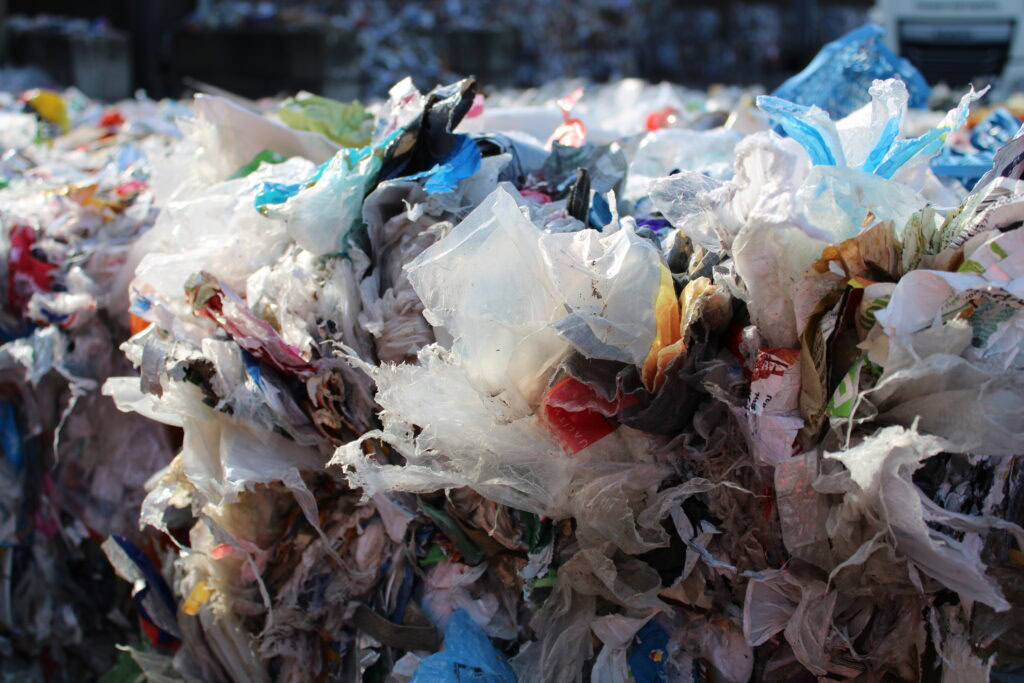
All local authorities in England were expected to start collecting these materials from the kerbside from 31 March 2027 under the Simpler Recycling regulations.
Reactions from the industry have varied, with some grateful for the pressure it may take off local authorities while others have lamented the last-minute change.
Find out more about the update here and see how the industry has responded below.
British Plastics Federation (BPF)

A spokesperson for the British Plastics Federation (BPF) said: “The British Plastics Federation (BPF) is extremely disappointed by the Government’s decision to postpone mandatory household and workplace plastic film collections from March 2027 to April 2030. This decision creates further uncertainty for businesses across the plastics value chain and comes on top of extensive delays to other key collection and packaging reform legislation.
“We share the profound frustration of the chemical recycling sector. The assertion that the “collection, sorting and reprocessing system is not yet ready to deliver plastic film recycling” ignores the innovators who have secured technology, capital, and off-take agreements, and who are ready to process this material today or build infrastructure in the short term. For these companies, a three-year delay destabilises the investment case, undermines market confidence, and risks driving green capital overseas. We cannot allow this delay to reward inaction or stall the UK’s circular economy ambitions.
“The announcement also reflects the recent changes to the Recycling Assessment Methodology (RAM) under Packaging Extended Producer Responsibility (pEPR), which classifies flexible plastic packaging as ‘Red’. Together, these developments risk undermining confidence in future investment in recyclable flexible packaging and the infrastructure needed to support a circular economy.
“The next three years represent an opportunity we cannot afford to waste. The Government must urgently provide clear, bankable policy signals, including utilising pEPR funding and the forthcoming Emissions Trading Scheme (ETS) expansion, to bridge the investment gap. Crucially, the Government needs to look at what support can be put in place for those companies that have already committed investments, ensuring they can continue to operate and develop to enable the infrastructure to be there for 2030.
“The UK plastics industry remains committed to increasing the collection and recycling of flexible plastic packaging. However, achieving this requires a stable and predictable policy framework that gives businesses the confidence to invest.”
Association for Public Service Excellence (APSE)

Bonni Jee, Principal Advisor at the Association for Public Service Excellence (APSE), said: “APSE welcomes the delay to the mandatory collection of flexible plastics for recycling.
“Whilst 63% of authorities who responded to our 2025 survey said that they would plan to collect the material if required, there were concerns around seeking sorting and disposal outlets.
“The relative lack of infrastructure and end markets is a further concern since this could result in stockpiles or exporting, leading to a possibility of negative press coverage that could undermine the recycling system and damage confidence in local authorities.
“Equally there is an imperative that local authorities consider future implementation of collections over the next 3.5 years, where possible, and if viable recycling outlets exist rather than waiting until the 2030 implementation date. With mandatory food waste collections, there was a rush and bottleneck in the run-up to March 2026, so hopefully lessons can be learned and authorities that are able to seek the appropriate outlets can begin to phase in flexible plastic collections earlier than 2030.
“Extending collection systems now can be a positive story for recycling, residents and elected members if they are able to recycle more plastics at the kerbside, as there is currently a lot of confusion.
“A number of authorities have successfully used facilities to bring in flexible plastic recycling fully commingled, making it easier for residents. The FlexCollect trials are helpful in demonstrating what works and what doesn’t in terms of capturing the material and help to evidence effective collections. APSE would also encourage authorities to look at best practice through our Waste and Recycling network.”
Chartered Institution of Wastes Management (CIWM)
Dan Cooke, Director of Policy, Communications and External Affairs at the Chartered Institution of Wastes Management (CIWM), said: “The decision to delay the introduction of mandatory collections of difficult-to-recycle films and flexible plastics seems pragmatic and reflects market realities. It should give clarity and breathing space to local authority service providers – whilst they are also dealing with the implications of local government reform – and to the wider sector.

“It is important that government and sector operators and stakeholders now work collaboratively to identify economically, socially, and environmentally beneficial solutions for this fossil-based packaging. This may include phasing out non-critical use wherever possible, material substitution to biogenic material (where feasible) and enabling realistic recycling options.
“The announcement of delay also reflects the lack of clarity on strategic direction and policy framework that our essential sector faces, including ongoing delays on a Circular Economy Growth Plan and associated material roadmaps, including plastics. CIWM will shortly be publishing important research findings on investment barriers and opportunities for repair, reuse and recycling, which will provide additional evidence and practical recommendations to drive increases in UK recycling and resource efficiency.”
North London Waste Authority (NLWA)

North London Waste Authority (NLWA) Chair Councillor Jacob Cable said: “The Government’s decision to delay mandatory collections of flexible plastics until 2030 is a recognition that simply telling councils to collect more material does not, on its own, lead to a more circular economy. The real priority must be reducing the use of hard-to-recycle materials, particularly unnecessary and problematic plastic packaging, while ensuring that any material collected can actually be reprocessed into new products.
“NLWA has been working with the sector to try and find ways to get flexible plastics from households recycled, but the UK lacks the infrastructure to process it at scale, so mandatory collections could have led to stockpiles of material sitting in warehouses with limited recycling routes. Reducing the production of flexible plastics must always remain the priority, alongside developing more sustainable alternatives.
“This delay must not be treated as a pause. Government, producers and the waste sector should use the additional time to deliver policy and infrastructure changes. That means accelerating action to reduce the prevalence of hard-to-recycle materials, creating stronger incentives for packaging redesign, and investing in UK sorting and reprocessing capacity to manage the material that remains.
“If the next four years are used effectively, the country can move towards a system that prioritises waste prevention, supports local authorities, and ensures that materials collected from households are genuinely recycled rather than exported, stockpiled or incinerated.”
HAHN Plastics UK

Noel Marques-Neves, Operations Director at HAHN Plastics UK, said: “Naturally, it’s disappointing to see the rollout of household flexible plastics collections delayed, as increasing the amount of material we collect and recycle remains an important step towards building a more circular economy. However, at HAHN, we have been vocal for some time that collection is only part of the solution, and we envisaged a real issue if the Government didn’t consider the wider infrastructure requirements. Without the right investment across sorting, reprocessing and end markets, there was a real risk that the waste sector would struggle to keep pace with additional material entering the system.
“The additional time now provides an important opportunity for the industry to build the infrastructure needed to make Flex Collect a long-term success. Over the last two years, we’ve worked alongside waste operators, manufacturers and industry partners to help prepare for these changes, and there is already valuable learning that can be built upon. The priority should now be using this time to strengthen supply chains, expand processing capacity and ensure the whole recycling system is ready before collections begin.
“We continue to believe that recycling infrastructure deserves the same strategic focus as other forms of critical national infrastructure. By using the coming years to invest across the entire recycling supply chain, the UK has the opportunity to create a more resilient system that both collects more flexible plastics, and ensures they are recycled into valuable new products.”
Reconomy

David Gudgeon, Head of External Affairs at Reconomy, said: “While the delay is not entirely surprising given the widely documented lack of infrastructure for flexible plastic recycling, it is disappointing given that it was included in the original guidance published in 2024 and for businesses across the sector, including Reconomy, who have been investing to strengthen domestic infrastructure.
“It does little to support business confidence and also raises questions over whether Scotland and Wales will follow suit and whether we will see further policy divergence across the UK.
“The key now is for the Government to provide policy certainty, giving operators like us the confidence to continue investing in the infrastructure needed to recycle this material domestically and build a truly circular economy.”
Suez UK

Stuart Hayward-Higham, Chief Technical Development and Innovation Officer for SUEZ in the UK, said: “During the FlexCollect project our team saw firsthand the public’s enthusiasm for recycling flexible plastics but we also saw the lack of homegrown reprocessing infrastructure to meet the full demand. With many businesses still yet to fully embrace the first phase of Simpler Recycling and business collections falling outside the EPR regime, delaying the roll out of mandatory collections of flexible plastics for businesses makes good sense, allowing time for the UK to develop the necessary reprocessing infrastructure.
“However, any impact to the growing momentum we have seen behind household collections of flexibles and planned investments in that remaining missing infrastructure, risks undermining confidence in the UK market and the pace of infrastructure development. We hope that authorities rolling out collections from now can continue to do so with the full support of EPR payments as significant recycling capacity is in place or is in development.
“With flexible plastics representing a major source of fossil carbon in our residual waste, this delay must also be considered when deciding the timeline for the expansion of the Emissions Trading Scheme to include energy-from-waste.”
The Environmental Services Association (ESA)

Executive Director of the ESA, Jacob Hayler, said: “Maximising opportunities for recycling, and moving as much waste material up the waste hierarchy as possible, are critical steps towards achieving our sectoral ambitions to eliminate avoidable waste and achieve net-zero emissions by 2040.
“While we remain committed to these important ambitions, a delay to the inclusion of flexible packaging and plastic films under the Simpler Recycling regime is the correct decision given the lack of market capacity for these materials and demand-side drivers – issues that the ESA has raised repeatedly for years now.
“It is essential that Government uses the next three years to create investor confidence; deliver domestic reprocessing capacity and ensure that sufficient end-market demand exists to allow these materials to be effectively returned to the circular economy.”
WRAP

Adam Herriott, Interim Head of Packaging at WRAP, said: “Simpler Recycling remains one of the most significant reforms to England’s recycling system in a generation. While the latest announcement changes the timetable for mandatory household collections of flexible plastics, it does not change the long-term ambition to collect and recycle more of this material.
“WRAP will continue working with government, local authorities, producers and the recycling sector to support the transition. Through the UK Packaging Pact, we will continue to bring industry together to improve packaging design, strengthen collection and recycling systems, build confidence for investment in recycling infrastructure. Ensuring collection, sorting, recycling capacity and end markets continue to develop together.
“This collaborative approach will help ensure that, when mandatory collections are introduced, they deliver the environmental outcomes they are intended to achieve. In the meantime, local authorities and waste collectors that already collect flexible plastics, or are preparing to introduce collections, should absolutely continue to do so.
“The delay should not be used to simply sit back and do nothing, rather redouble our efforts to ensure that an effective flexible plastic recycling system is implemented.”
Robbie Staniforth (Ecosurety)

Robbie Staniforth, Chief Policy and Impact Officer at Ecosurety and Co-Host of the Talking Rubbish podcast, said: “Just when I thought the 2-1 semi-final loss was the worst thing to happen to England this week, we get this announcement. Further delaying mandated collections will not in itself create end-markets. The markets have had four years of advanced warning and throughout that period investor confidence in flexible plastic recycling remained low. Today, that investor position has been justified. Delaying for a further three years is unlikely to improve their confidence.
“Once again, industry is left with the chicken and egg dilemma of whether to build reprocessing facilities before collecting material or vice versa. Obviously, the solution is to develop collections, sorting and reprocessing in lockstep to ensure we do not build ‘white elephant’ recycling plants, nor begin ‘recycling’ collections that end up getting burnt for energy. This announcement should prompt soul searching for those closely involved, including myself, to understand what has gone so wrong and how we can ensure mistakes of the past are not repeated.
“Looking back at the 2018 Resources and Waste Strategy now, a pattern has emerged. The bold ambitions outlined have not been followed up with quick enough action, causing almost all of the policies to be delayed or abandoned. Against such a backdrop, it is no surprise that private enterprise has not delivered new infrastructure.
“However, we are pleased that Government has recognised the need to immediately reconvene stakeholders to kick-start the work this Autumn. We will continue to engage directly and advocate for a new future that includes the genuine recycling of flexible plastic packaging.”
Local Authority Recycling Advisory Committee (LARAC)
LARAC has welcomed the Government’s decision to delay the mandatory collection of plastic films and flexible packaging from households and businesses in England until 1 April 2030.
The delay is a position that LARAC members have consistently called for through the Defra Change Network sessions and wider policy engagement. Local authorities have repeatedly raised concerns about the lack of established domestic end markets, the readiness of sorting and reprocessing infrastructure, and the significant financial and operational implications of introducing these collections.

LARAC said that the additional three years will give local authorities more time to plan and prepare for the effective collection of this material, while recognising that some councils have already introduced kerbside schemes.
LARAC also hopes the revised timetable will allow the Government and the wider recycling sector to develop sufficient sorting and recycling capacity within the UK, reducing reliance on export and other potentially non-circular solutions.
Gareth Rollings, Chair of LARAC, said: “LARAC welcomes the Government’s intention to move the mandatory collection date for plastic films and flexibles to 1 April 2030. This reflects the concerns that our members have consistently raised about the readiness of the wider system and the financial and operational consequences for local authorities.”

“Councils remain committed to delivering effective recycling services, but they need a system that is properly funded and supported by viable sorting, reprocessing and end-market capacity. The additional three years must now be used constructively by government and industry to build that infrastructure and provide local authorities with the clarity they need to plan.”
Toni McNamara, Executive Director of LARAC, added: “We are pleased that the views shared by LARAC members through the DEFRA Change Networks and wider policy discussions have been heard. We look forward to working with DEFRA as the legislation and implementation arrangements are developed.”
This is a live reactions piece and will be continually updated. Want to see your reaction here? Email savannah.c@letsrecycle.com.

I can only echo Robbie’s thoughts here, clearly disappointing but inevitable. The inability to deliver this change on time, demonstrates what happens when a policy is introduced without the required level of supporting work and coordination being done to ensure its successful delivery. The delay will further undermine investor confidence in plastics recycling in the UK. A bad day for all of us who want to see plastics recycling flourish in the UK.
While the delay is undoubtedly frustrating for many and will probably impact confidence across the sector, it’s also a reminder that effective policy implementation requires robust planning, clear guidance, and close collaboration between government and industry which doesnt seem to happen.
With any luck this additional time will be used to get the framework right, so that when it is introduced, it delivers the certainty and outcomes the recycling sector has been calling for.