



Speaking during a panel discussion on the future of RDF export at the annual Birmingham exhibition on Wednesday (September 16), senior technical advisor at the Agency, Pandora Rene, suggested that any technical standard for RDF would not be in the best interests of the industry.
She said: “We don’t want a standard. We are looking at a definition which will look at when material can legitimately be called RDF and when it can be considered municipal solid waste. We won’t have that definition for use probably until next year.”
But Ms Rene emphasised that the Agency “does not intend” to provide a technical standard to work through: “That is not right and that does not work as the industry knows best what it wants and needs.”
Her comments follow an email sent round by the Environment Agency in July inviting comments from a small number of operators on its draft “concise” definition for RDF (see letsrecycle.com story).
The draft definition simply states that RDF is ‘a fuel produced from residual waste that meets an end user contractual specification for recovery at an energy from waste facility’.
Ms Rene’s stance against introducing a technical RDF standard was also backed by others on the panel, which included speakers from Eunomia, waste firm Suez, Pembrokeshire council and the Dutch Waste Management Association (DWMA).
Pembrokeshire
Daniel John, project manager at Pembrokeshire council, said: “We should be looking for the market to provide that standard” and that as long as the market listens to the requirements of EfW plants “that should offset the need for a standard”.
He added that future improvements in recycling would help to boost RDF quality and minimise occasional environmental issues such as odour from storage at ports.
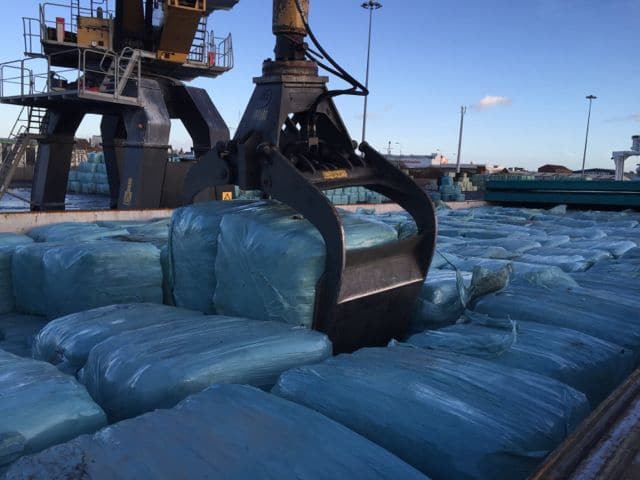
Mr John oversaw Pembrokeshire and Ceredigion councils’ joint £48 million RDF deal signed earlier this year to produce 30,000 tonnes of RDF for export to Sweden, although the start of operations caused some odour issues at Pembroke Dock (see letsrecycle.com).
Mr John explained that the councils had considered several options for their waste before agreeing the deal, but that shipping material was more cost effective and had a much more “marginal effect” on carbon emissions in comparison to road haulage.
But, he added: “It [RDF export] is a relatively new market so there are sometimes going to be teething problems in its production.”
Netherlands
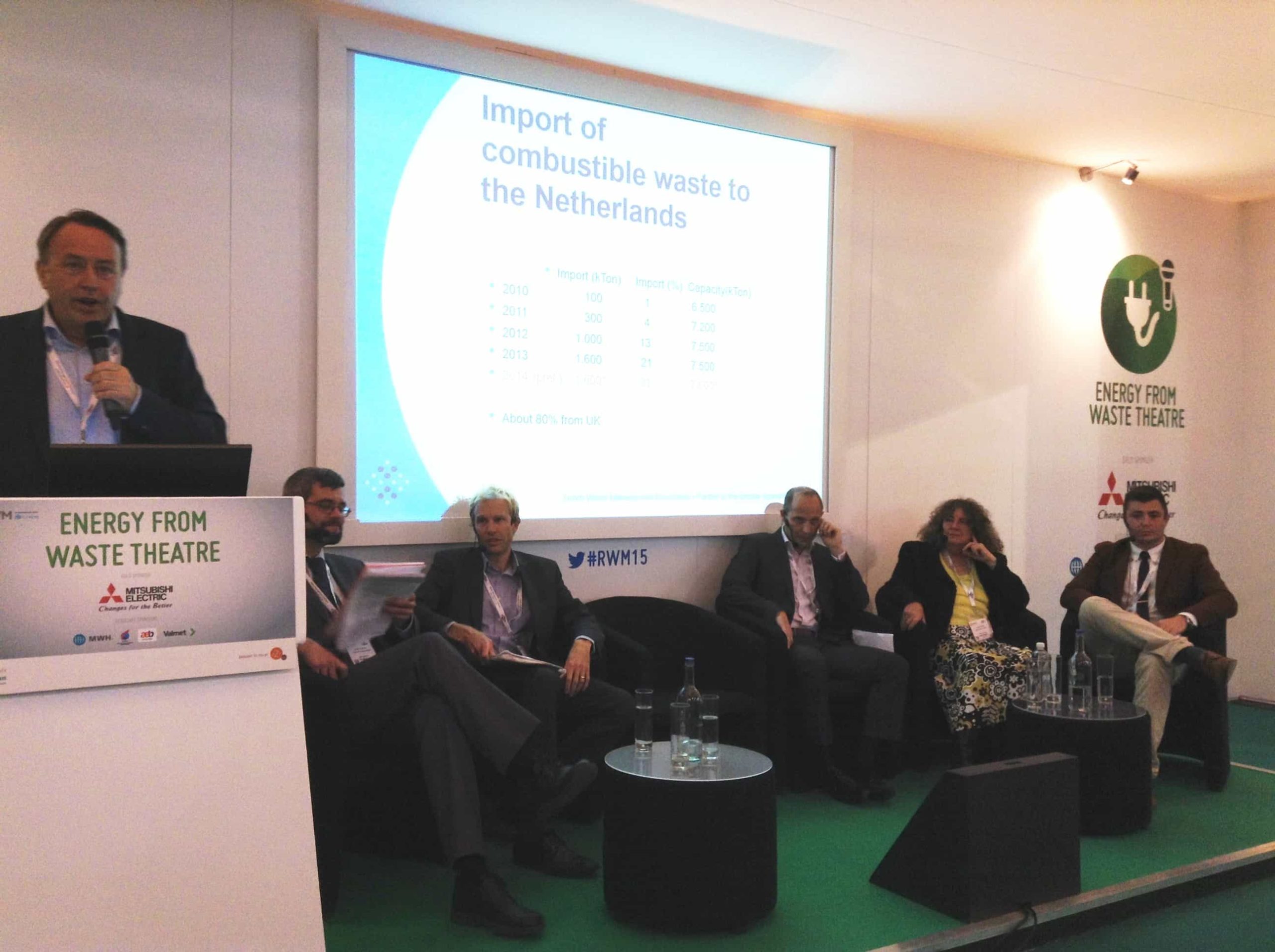
Earlier, managing director of the DWMA, Dick Hoogendoorn, began the session by stating that he saw RDF largely as a “North East European market”, with little material currently going much further afield.
He also explained that around 80% of the 1.6 million tonnes of RDF imported into the Netherlands in 2014 came from the UK, adding this figure now “seems to have stabilised”.
But he said that as “we are facing a slight over supply of waste” in the Netherlands, the country is very keen to guard against impeding exports from the UK, and had therefore only introduced taxes in January 2015 on the export of Dutch waste.
Capacity
Also speaking on the panel, Suez’s alternative fuels manager Mark Terrell defended the need to export material to the continent as “we simply do not have the facilities to deal with that material – we may in 3-5 years’ time, but we don’t at the moment. Holland is not that far away compared to Scotland or Wales, so is crossing the UK border an issue?”
Mr Terrell also suggested that excess capacity in the Netherlands and other parts of Europe may potentially “put off” investors in the UK. They may currently see little point in large domestic facilities when the material can go abroad, he explained, while they may also foresee future waste reduction also leaving the UK with overcapacity.
But looking to the future, he said: “I don’t see demand for UK RDF going away, but it is levelling off a little.”

Register for free to comment