

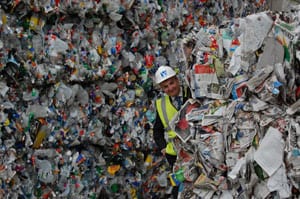

Opening the facility, Mr Lochhead said: “This plant can play a key role in helping Scotland meet our 70% recycling target and is an example of the type of infrastructure Scotland needs to move away from landfill.”
“There is no doubt that recycling and landfill targets are challenging; however, they reflect where we need to get to. It won't be an easy journey towards zero waste, it will require behavioural change, investment and commitment – but it is achievable,” he added.
Contracts
Viridor, which has created 19 new jobs with the opening of the Scottish plant, is nearing the end of two contracts worth a combined £23 million with South Lanarkshire council.
Signed in 2003, the two seven-year deals see the company handle 80,000 tonnes of residual waste and 42,000 tonnes of recyclable material on behalf of the Scottish council. Kerbside collected recyclables are set to be treated at the Bargeddie MRF.
Colin Paterson, Scottish regional director for Viridor, said: “Scotland is undergoing a green revolution and Viridor is at its core as the nation's leading recycling, energy recovery and waste management provider.
“Our latest £7.1 million investment in the country's most advanced materials recycling facility is essential in ensuring families, communities, councils and the private sector meet ambitious Scottish and European recycling targets,” he added.
Challenges
Looking ahead at future challenges for the country, Mr Lochhead said: “We will soon be consulting on Scotland's National Waste Management Plan which will set out in detail how we move towards becoming a zero waste society.
“Companies such as Viridor are giving us the means to achieve these targets, now we must step up to the mark and make it happen,” he added.
A consultation on the National Waste Plan is set to run through July, August and September with the aim of finalising the plan in February 2010.
It will outline how Scotland aims to reach its ambitious Zero Waste targets for reducing waste in the country, which include plans to increase recycling to 40% by 2010, 50% by 2013 and 70% by 2025, while capping energy-from-waste provisions.

Register for free to comment