

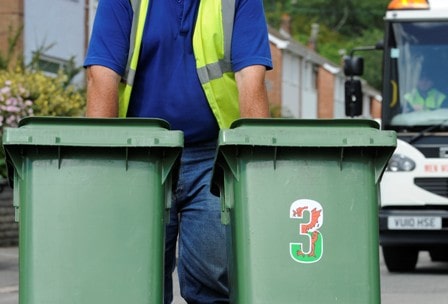
The reprocessing sector has welcomed a consultation on proposed new legislation in Wales which could lead to landfill bans for some waste streams and a greater obligation for councils to carry out separate collections of recyclables.
A White Paper, published for consultation by the Welsh Government last week (October 23), outlines a raft of policy proposals seeking to provide the legislative framework to manage natural resources in a joined-up way.
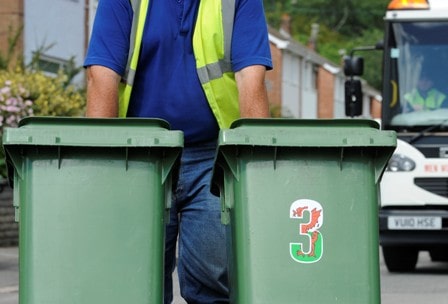
Among the policy options discussed in the paper, which is expected to form the basis of an Environment Bill to be passed in spring 2016, are proposals to give Welsh Ministers the power to extend the requirement to collect paper, glass, metal and plastic separately to also include card, wood and food wastes.
According to the Welsh Government, this proposal would maximise the quantity and quality of materials available for recycling and provide greater certainty of investment in recycling waste collection and treatment infrastructure.
Elsewhere the paper also looks at a ban on sending uncontaminated paper, wood, glass, metal and plastic to energy from waste facilities. This proposed ban would take effect from January 2017, with EfW facility operators given the duty to ensure that prohibited wastes are not treated via this route.
In proposing a range of complementary measures such as landfill and EFW bans on key materials and separation of wastes by the waste producer the Welsh Government is proposing some bold measures and sending clear market signals to boost resource capture and recycling.
Ray Georgeson, Resource Association
Landfill
Meanwhile, a similar ban on sending paper, card, glass, plastic, metal, food and wood waste from household industrial, commercial and construction sources to landfill is also discussed.
According to the Resource Association, the trade body representing the recycling and reprocessing sector, the document contains a number of bold measures which, if passed, would boost resource capture and recycling in Wales.
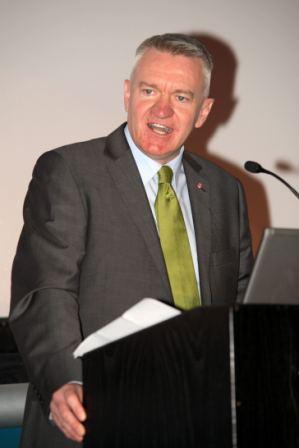
Resource Association chief executive Ray Georgeson, said: The Resource Association warmly welcomes this White Paper and will be contributing fully to the consultation process. In proposing a range of complementary measures such as landfill and EFW bans on key materials and separation of wastes by the waste producer the Welsh Government is proposing some bold measures and sending clear market signals to boost resource capture and recycling.
Provided such measures are also complemented by a strong eco-industrial strategic approach to building business that can effectively utilise high quality recovered resources we see merit in the clarity of these market signals.
The minister for natural resources and food makes it clear in his foreword that he sees the need for a modern legislative framework that recognises that our water, land and air are all interlinked and our economy, society and environment are all inter-dependent. We are encouraged by the integrated nature of the approach taken in the White Paper and urge that this is maintained across eco-industrial strategy.
Related Links
Stakeholders have been given until January 15 2014 to comment on the measures outlined in the white paper, in which the minister for natural resource and food, Alun Davies, also outlined his aim to cut red tape and simplify natural resource management for businesses.

Register for free to comment