

Reforms led by the Department of Communities and Local Government (DCLG) will see the existing “Best Value” indicators, on which recycling targets have been based in the past, dropped in favour of three waste indicators that form part of a new set of 198 national indicators covering all local authority services.
The move is being taken in an attempt to give local authorities more control over their services following last autumn's Comprehensive Spending Review.
The new waste indicators
National Indicator (NI) 191: Residual household waste per head – Waste collected, minus material sent for recycling, composting or re-use.
NI 192: Household waste recycled and composted –
Material sent for re-use, reprocessing or controlled biological decomposition.
NI 193: Municipal waste landfilled – Collected municipal waste sent to landfill, including recycling rejects.
It seeks to make councils less dependent on centrally-set targets. Service levels will be required to meet priorities set by Local Area Agreements between central and local government. These LAAs will be monitored using the new national indicators.
Councils look likely to start measuring their performance under the new indicators from April 1, with Local Area Agreements negotiated with the relevant regional Government Office initially for the 2008 to 2011 period.
These LAAs will include 35 “priority targets” using agreed benchmarks based on the 198 indicators, plus 17 legally-required targets in the education sector.
The agreements will also include further “non-designated” targets for local improvement, which will be managed locally but “not subject to upward reporting and monitoring by central government” according to the DCLG.
Waste indicators
Three new indicators will be used to monitor waste and recycling services – one for residual household waste per head, one for household waste recycled and composted, and a third looking at the amount of municipal waste landfilled.
Two further indicators looking at overall carbon emissions could involve recycling activities, but it is less clear how mandatory these indicators will be.
Despite the limited number of priority targets to be included in the Local Area Agreements, Defra has said every authority will report performance under the waste indicators, although only disposal authorities will report the landfill indicator.
Defra explained: “Any waste target will generally be negotiated to balance local priorities and levels of performance with the national improvement priorities set out in the Waste Strategy.”
A consultation from the DCLG closed just before Christmas on the technical definitions of the national indicators, with those local authorities responding urging some caution with the proposals, for example in including re-use and certain incinerator residues within recycling performances.
Final guidance on the technical definitions of the indicators is expected in January or February 2008.
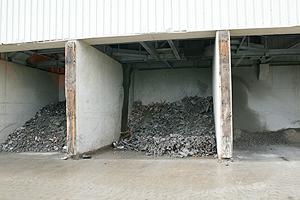
Incinerator residues

Almost nine in ten local authorities expressed support for such a move during informal consultations with government last year, including every one of the 25 waste disposal authorities who responded to the question.
LARAC – the Local Authority Recycling Advisory Committee – has supported the move to include some incinerator residues within recycling rates.
But, responding to the latest consultation that closed on December 21, LARAC's waste management development officer Andrew Craig warned that: “Care needs to be taken with the inclusion of incinerator residues in this indicator.
“LARAC would, on balance, include ferrous and non-ferrous metals from household waste that has been recovered through an EfW [energy-from-waste] or MBT [mechanical biological treatment] process, although even this portion will be subject to uncertainty if the proportion of household to non-household waste processed is not accurately known,” he explained.
Furthermore, Mr Craig pointed out that material from incinerator ash recycled into building materials is “chemically altered through an incineration process” and is similar in application to rubble, which the government has excluded from the recycling indicator.
As it shaped its response to the consultation that ended just before Christmas, the North London Waste Authority revealed that if incinerator residues were included within recycling indicators as suggested by the government, its recycling rate for 2006/07 would be 50% more than it has reported.
In a note to members, Authority officers stated: “As detailed in the Authority's Best Value Performance Plan 2007, the Authority's 2006-07 recycling and composting rate was 22.82%. If incinerator residues recycled were included, as per the government's new proposals, this would have increased the Authority's combined recycling and composting rate for 2006-07 to 33.15%.”
Re-use
Another issue within the changes proposed by the government is that the re-use of items like furniture and electrical goods should hold more sway thanks to its inclusion within the definition of “household waste” under the residual waste per head and recycling/composting indicators.
Under the previous system, re-use carried out by separate community or council projects could not count towards recycling targets because recycling was measured against the amount of waste being collected by councils.
Responding to the proposals, local authorities appear favourable, but are awaiting guidance from the government on exactly what counts as third party re-use. Authorities are also keen to find out exactly how carrying out more re-use activities would impact on their compliance with the Landfill Allowance Trading Scheme and the recycling credit system.
WasteDataFlow
A key component of the new national indicators will work will be a requirement for local authorities to report their data within the internet-based WasteDataFlow system.
While such a requirement is already mandatory for waste disposal authorities, the Waste Strategy for England published by Defra last May said it would become mandatory for collection authorities as well.
Cllr Brian Coleman, chair of the North London Waste Authority said: “Whilst waste disposal authorities have a mandatory requirement to complete returns, waste collection authorities have no similar obligation. It is felt that management of the data process would be easier if all authorities had the same requirements.”

Register for free to comment