


Hackney council had a recycling rate of 28.3% in the 2019/20 financial year, below the national average of 45.5%.
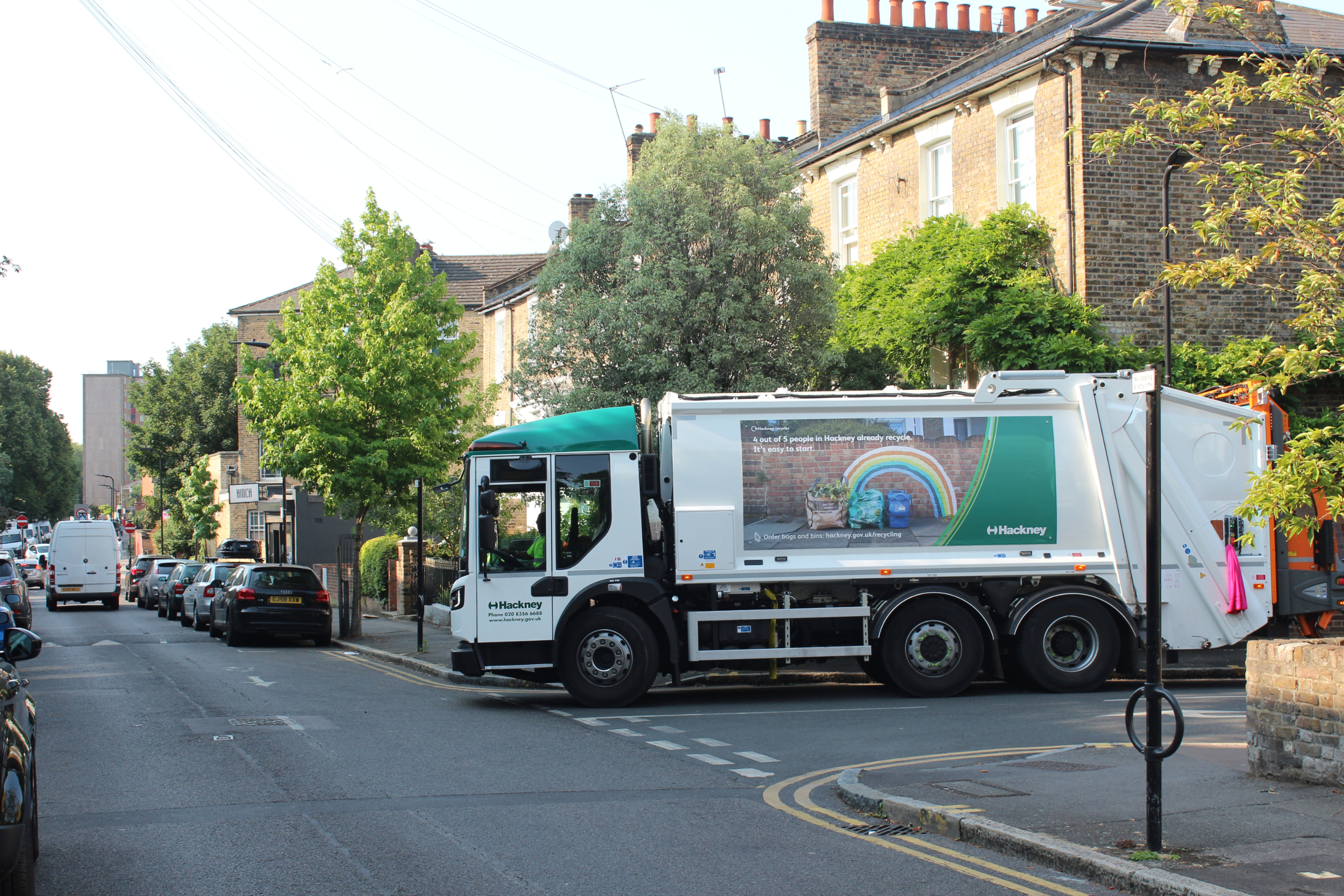
Residual waste collections at some properties in Hackney switched to every two weeks from 1 March (see letsrecycle.com story). The change only affected street-level properties, and not blocks of flats or estates.
The recycling rates at the street-level properties affected by the changes have risen by 7% to 46.4%, the council said.
In a statement published on 29 June, councillor Mete Coban, Hackney’s cabinet member for energy, waste, transport and public realm, said: “We’ve always been clear that this change was about increasing the amount we all recycle, so I’d like to congratulate Hackney residents on these incredible results, which are seeing more of Hackney’s waste recycled into something new.
“We all have a duty to take care of our waste and recycling and I’m so proud of the vast majority of households that are doing so.”
Food waste and recycling collections remained weekly despite the changes.
Changes
When fortnightly waste collections were introduced, all the households involved were given 180 litre wheelie bins, into which all their waste had to fit. Additional bins are available for large families or families with babies.
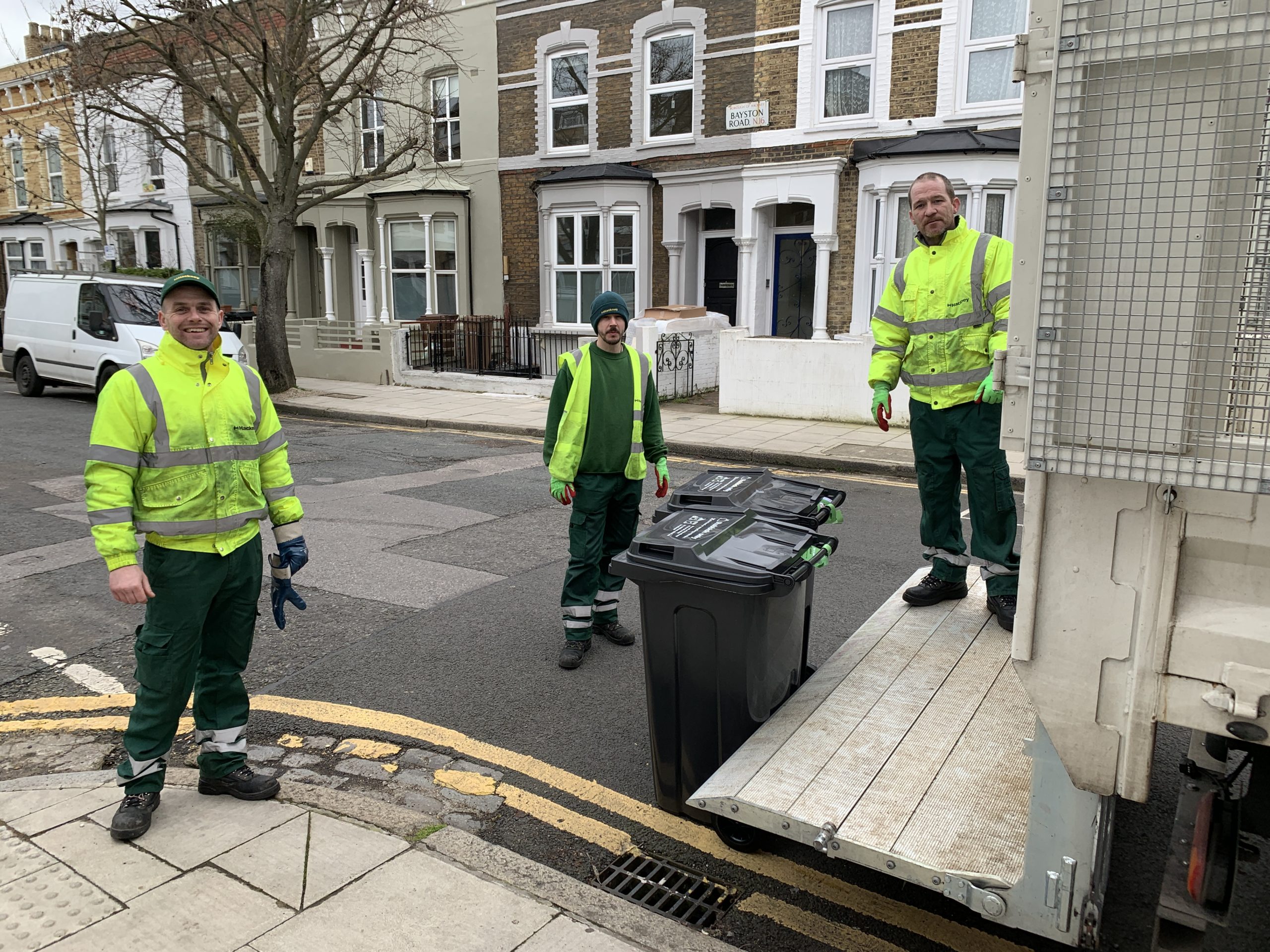
To keep pavements as accessible as possible, the council said it provided wheelie bins only where there was space to store them off the pavement. The council said it would now start to issue removal notices to properties that persistently stored wheelie bins on the pavement “unnecessarily”.
The switch to fortnightly residual collections means that around an additional 190 tonnes of waste per month is now recycled rather than sent for energy from waste (EfW), the council said.
Enforcement
To help residents understand the changes and increase recycling rates, a team of doorknockers visited 26,500 households in the borough during the past few months.
“We all have a duty to take care of our waste and recycling and I’m so proud of the vast majority of households that are doing so”
The council’s recycling behaviour change team also made 3,500 visits to households to support those that required further information on using recycling services, including how to use the food waste service, recycle the correct materials and reduce waste in their wheelie bin.
The council says that from this week its team will start to issue formal notices under the Environmental Protection Act to the “small minority of households” that continue not to recycle all they can or store bins on their property.
If this does not change behaviour, the council will also begin to issue community protection notices to landlords and households that “persistently present excessive quantities of waste” or recycle incorrectly.
Hackney
Hackney has operated an in-house collection service since 2013 and sends its kerbside recyclables to Biffa’s Edmonton material recycling facility (MRF).
The borough’s residual waste is processed at the Edmonton EfW plant, which is operated by LondonEnergy for the North London Waste Authority (NLWA).
According to figures published by the Department for Environment, Food and Rural Affairs (Defra), Hackney council collected 301.1kg of household waste per person in 2019/20, which was amongst the lowest figures in the country. The borough has an estimated population of nearly 280,000.

Register for free to comment