



Fire safety guidance for waste and recycling site operators was released by the Environment Agency today (October 31) in response to the spate of high profile blazes to hit the industry this year.
The Technical Guidance Note (TGN): Reducing Fire Risk at Sites Storing Combustible Materials describes the measures permitted sites must take to minimise the risk of fires and pollution.
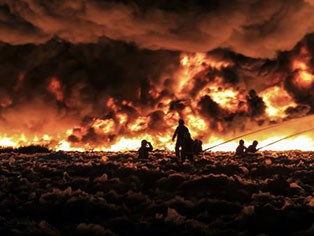
Compiled in conjunction with the Chief Fire Officers Association (CFOA), the guidance was warmly received by the Chartered Institution of Wastes Management, which congratulated the Agency on taking an important step in addressing waste fire prevention.
The document addresses fire prevention as the key for operators of waste sites, by keeping sources of ignition at least six metres away from stacks of combustible material, and introducing a regular maintenance and inspection programme.
Storage
Storage times, another area identified as a risk, have been addressed in the guidance which sets a six month limit on how long green, wood and general RDF and fines material can be stockpiled.
Meanwhile, a diagram sets out an example of good stack storage, and the maximum sizes and minimum separation distances required between them. The guidance states operators should apply a spacing of 20 metres between groups of 16 stacks.
Prior to releasing the guidance, the Environment Agency wrote to operators of 7,800 sites requesting they review their accident plans, and clearly setting out steps they are taking to prevent fires and to minimise their severity.
‘We are now seeing concerted action by a range of stakeholders and industry bodies to address this issue and this guidance note from the Environment Agency is an important and welcome step.’
Steve Lee, CIWM
As a supplement to statutory requirements for sites, the TGN applies to operators storing more than 50 cubic metres of solid combustible material at any one time in the absence of relevant sector fire code of practice, and an accident plan agreed with local fire and rescue services.
The guidance however does not apply to landfill sites, or those storing compost, animal bedding, flammable materials or liquids, or substances stored under COMAH regulations.
Welcome step
Commenting on the guidance, CIWM chief executive officer Steve Lee said: In the last year, we have seen a number of major incidents that have focused attention on the fire risks associated with waste management operations, particularly the storage of waste, and the environmental, health and economic impact of these incidents . We are now seeing concerted action by a range of stakeholders and industry bodies to address this issue and this guidance note from the Environment Agency is an important and welcome step.
This remains an important issue and CIWM is part of a working group led by the Chief Fire Officers Association and including the Environmental Services Association, HSE and the WISH Forum which will be developing further guidance in the coming months.
The industry guidance has been published as a direct response to the spate of high profile fires which struck the industry over the summer, including a blaze at Jayplas plastics recycling depot in Smethwick (see letsrecycle.com story).
Guidance
The Environment Agency has confirmed the current TGN is temporary, and will eventually be replaced by generic guidance for operators from both the Environmental Services Association (ESA) and CIWM. Trade body associations such as the Tyre Recovery Association and the Wood Recyclers Association (WRA) are also expected to produce sector-specific guidance in the months to come.
The CFOA is due to hold the Fire Futures Forum in London on November 27 to further discuss how the waste industry can improve risk assessments and prevent future incidents.

Subscribe for free