

And local authorities are told that in light of the Resources and Waste Strategy, they should think about making collection infrastructure changes when contractual opportunities arise.
The message on business waste comes as one point in the Waste Management Plan for England published earlier today (20 August) by the Department for Environment, Food and Rural Affairs.
The last Plan was published in 2013 and shocked the sector when the then Liberal Democrat minister, Dan Rogerson, all but said that there was nothing to plan for and it was ‘job done’ (see letsrecycle.com story).
Six years
The government is legally obliged to update the plan every six years under the European Union’s Waste Framework Directive. It aims to provide an up to date overview of waste management in England, but doesn’t outline any new regulations.
A consultation was released with the document to gather opinions on if the plan has met obligations and to allow for comments. However, the real focus of attention will be when the department publishes second stage consultations on its Resources and Waste Strategy which are not expected until next year.
Business recycling
Today’s Plan publication comments that business recycling is “relatively low”, with Defra estimates placing this between 30-40%.
“With the right combination of measures and support”, according to Defra, the figures could be much higher.
Defra said that proposals in its consultation on consistent collections which would require businesses and other organisations to segregate dry recyclable waste and food waste from other waste were “strongly supported”.
This led Defra to put forward duties for separate collection of recyclable waste from households, non-domestic premises and commercial and industrial premises in the Environment Bill.
Operators
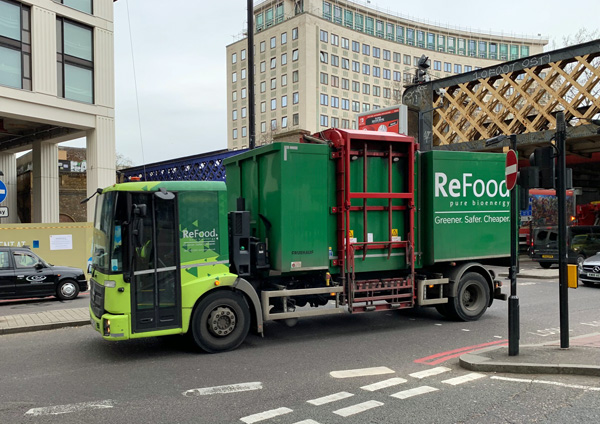
The plan goes on to mention the Government’s Cycling and Walking Strategy. This “states that the government will work with key stakeholders to explore options to allow local authorities to better co-ordinate the number of deliveries and waste collections in certain areas. While still allowing competition and choice, the government hopes this would “reduce the number of operators and vehicle movements”.
“Parts of some cities are served by as many as 50 waste management and delivery companies”
“Parts of some cities are served by as many as 50 waste management and delivery companies, with multiple pickups from businesses on the same street and large numbers of delivery vehicles carrying out duplicating trips,” the Waste Plan states.
The plan said that pilot projects which aim to reduce the number of suppliers have been successful and have brought about significant reductions in commercial vehicle traffic.
“Government will conduct further pilot projects to allow local authorities to franchise certain delivery and waste management services where appropriate,” the plan states.
Council funding
The Waste Plan also reiterated the government’s rhetoric that it will support councils financially to adapt to some of the new requirements brought in by the policies in the Resources and Waste Strategy.
The Plan states that the government has recognised that recognised that “where new burdens arise from new statutory duties on local authorities’, government should pay the net costs of these burdens”.
“We will work with local government and business regarding changes in infrastructure needs to ensure these are taken into account in implementing measure,” the plan read.
Contractual
However, later on in the document the government warned that it would expect changes to infrastructure as a result of the policies to happen “at the earliest opportunity allowed for by contractual obligations”.
“We will work with local government bodies to develop our assessment of costs and changes necessary,” the plan reads.
Related link
The Plan and the consultation can be read in full here.


Register for free to comment