

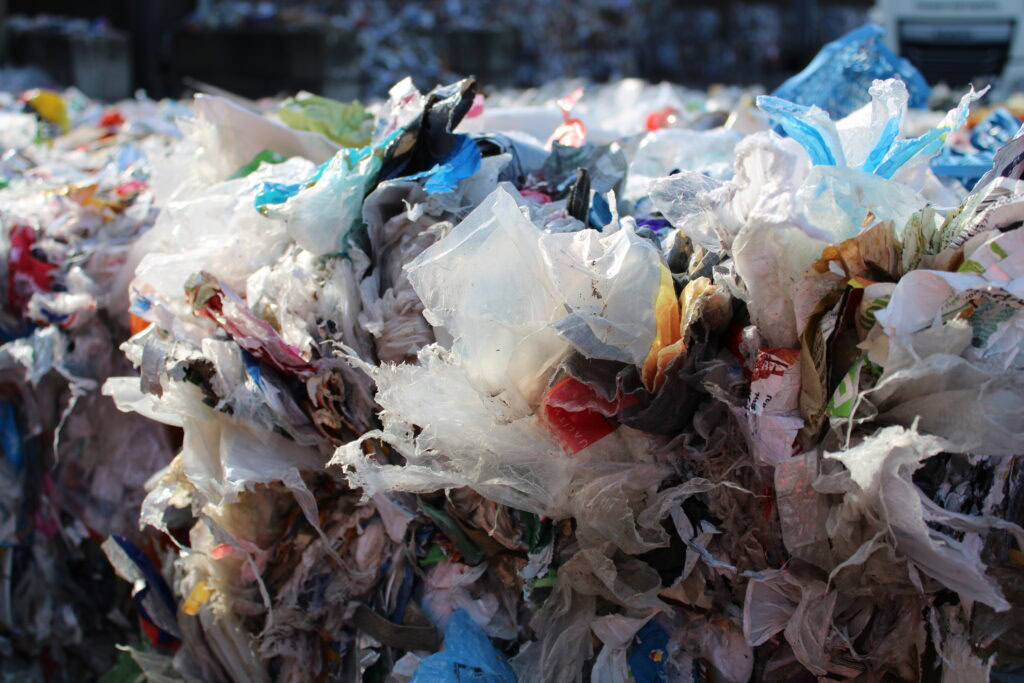
The report – titled “Rolling out plastic film collections to all households in England” – estimated that 392,000 tonnes of flexibles enter waste streams from UK households annually.
Of this, 3.83% is currently collected for recycling at 15,000 tonnes. The report estimated that this could rise to 96,000 tonnes after the rollout of mandatory collections, comprising 24.5% of the waste stream.
Valpak estimated that a total of 770,000 tonnes of film is placed on the market annually in England, with 50.9% ending up in household waste streams (392,000 tonnes).
The research was commissioned by the Local Government Association (LGA) and relied on evidence-based modelling. It was originally compiled as local authorities were preparing for mandatory flexible collections to be introduced next year.
Mandatory collections were due to be brought in for England in March 2027 as part of Simpler Recycling.
However, it was announced by the government last month that the implementation date had been delayed to March 2030.
Steve Gough, CEO of Valpak, said: “Whatever the timetable, local authorities need clear evidence to understand what flexible plastics collections could mean for their services.
“This is a challenging waste stream, and the picture will vary considerably between councils. Understanding likely volumes, collection systems, available capacity and end markets will help authorities plan and assess the implications for their own services.”
To build the analysis, Valpak’s consultancy team combined packaging data with material-flow analysis, cost modelling and “practical waste and recycling expertise”.
It also drew on Valpak’s packaging data alongside information from FlexCollect, WRAP, councils and industry stakeholders.
Reprocessing capacity
The analysis concluded that reprocessing capacity was unlikely to meet the influx of material has the 2027 implementation date gone ahead.
The UK currently has about 139,000 tonnes in reprocessing capacity for flexible plastics and 145,000 tonnes in sorting capacity.
However, the research stresses that not all of this capacity is available for household waste streams.
Generally, commercial sources tend to be preferred by these reprocessors as they provide a higher quality feedstock. Some of the capacity also has the potential to be used for rigid plastics.
The report highlighted that currently there are 290,000 tonnes in planned additional capacity, but that this infrastructure is not guaranteed.
Financial costs
Valpak estimated England-wide costs for collecting and managing household plastic film of between £82 million and £301 million a year – equivalent to around £3 to £12 per household.
However, financial costs will range depending on factors such as existing collection systems, whether film will be collected loose or in bags, sorting arrangements and available treatment routes.
An estimated 14% of film in household waste streams is non-packaging material. Unlike packaging, the costs associated with this material will not be covered by packaging Extended Producer Responsibility (pEPR) payments.
Zoe Goodman, Principal Consultant at Valpak, said: “There is no single answer that will apply to every council.
“Our role in this work was to examine the evidence objectively: how much material there is, where it currently goes, what capacity exists and what different collection approaches could cost.
“That same kind of modelling can help individual authorities understand what flexible plastics could mean for their own services.”

Register for free to comment