

The award was made today (March 14), two days after councillors from Bristol together with South Gloucestershire, North Somerset and Bath & North East Somerset councils agreed on a plan to seek PFI support for major new waste treatment facilities in the area.

In-vessel
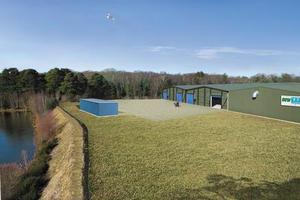
New Earth will build a facility capable of processing 30,000 tonnes a year of food waste, green waste and cardboard, at a site five miles from Bristol at Willow Farm, Severnside.
It is anticipated that the plant would be open by January 2010.
Bristol city council, which is already running weekly food waste collections across the city, has decided to stop sending the material more than 100 miles for treatment to New Earth Solutions' home base near Poole in Dorset.
The company has won an open competition to develop a more local plant to mechanically mix and aerate the organic material and use the composted product as a soil improver in agriculture or horticulture. The new facility is expected to seek accreditation under the PAS 100 standard for producing compost.
Peter Mills, commercial director for New Earth Solutions, said: “As far as New Earth is concerend it means our advanced composting systems have been recognised. And, as we have been working with Bristol for last 18 months as part of an interim contract, we are delighted to deliver a bedspoke facility for them, the city of Bristol itself.”
Food waste collections have already helped to double Bristol's recycling rates to 37%. The city council is now keen to widen the collections to households on estates and to flats.
Councillor Mark Bradshaw, executive member for access and environment, explained that introducing kerbside food waste collections had been a “first step”, requiring material to be taken to Dorset initially. “A number of people kept asking me why the waste has to be sent all the way to Dorset to be processed and this is why we decided to try and set up a plant closer to where the waste was being produced,” he said.
“For us this major contract is good news for Bristol and a vote of confidence in the massive weekly contributions which the residents are making in using the brown bin system.We hope that we can further improve levels of recycling both working within our own boundary and increasingly working with neighbouring authorities,” Cllr Bradshaw told letsrecycle.com.
New Earth's contract win came a week after waste firm SITA withdrew a bid to build a similar-scale in-vessel plant on a green-belt site at Westerleigh, next to the M4.
West England Partnership

I remain of the view that the proposal to build a mass burn incinerator will be the worst environmental solution, and act as a disincentive to recycle.
Cllr Charlie Bolton
Meanwhile, the four authorities within the West of England Waste Management and Planning Partnership agreed on a new Joint Residual Municipal Waste Management Strategy at a meeting on Wednesday.
Developed by the authorities since October 2005, the document entitled “Rubbish or Resource?” lays out how 330,000 tonnes a year of residual waste should be managed within the local area.
The Strategy includes four “phases” starting with a continuation of existing recycling and waste minismisation efforts.
Phase Two would see the procurement of an “interim” treatment contract of at least five years in length, using mechanical biological treatment or autoclaving to divert between 100,000 and 150,000 tonnes a year. The contract would be offered to the waste market later in 2008, to start around 2010/11.
Phase Three would then see a longer-term contract, likely 25 years in length, to divert a further 160,000 tonnes of residual waste from landfill from 2015. Energy-from-waste has been nominated as a “reference” technology for the contract in order to attract PFI credits, but the Partnership has said waste management companies would be free to propose alternative technologies.
The Partnership is submitting its expression of interest to Defra by the end of March 2008, and if successful will then have to outline a more detailed business plan. Should Defra then award PFI credits, a formal procurement process could then begin for a contract from 2011.
A final “phase four” could then be used to deal with any remaining residual waste, using “the lessons learned from previous Phases to continue to meet targets” beyond 2020.
The four authorities have been told that indicative costs of diverting 340,000 tonnes of waste from landfill over a 28-year period would be in the region of £1.67 billion for an MBT contract and £1.26 billion for an energy-from-waste contract. This would compare to a £2.1 billion cost of continuing to use landfill.
“Contentious”
The Strategy accepts that energy-from-waste is a “contentious” issue, but argued that it is “proven”, which is why the process is being recommended for the phase three contract. A technical appraisal graded it second highest after gasification, but the Strategy discounted gasification on the grounds that has not been demonstrated yet in the UK for a project of similar scale.
Bath and North East Somerset has withdrawn from phase three of the waste strategy as a result of energy-from-waste being recommended.
A statement from Friends of the Earth read to the meeting stated opposition to the project, and also asked why the authorities were not down-scaling the phase three project to take account of Bath and North Somerset withdrawing.
The group wants to see MBT used instead of incineration.
Green Party councillor Charlie Bolton also issued a statement to the meeting, outlining concerns about both energy from waste and the PFI funding process.
Cllr Bolton said: “PFI is likely to be highly inappropriate when in such a fast changing world as that of recycling and waste disposal clearly is. It will be extremely difficult and costly to set a contract which retains the flexibility to deal with changes in technology, recycling rates, legislation and peoples attitudes towards waste that we are seeing at this time.
“I remain of the view that the proposal to build a mass burn incinerator will be the worst environmental solution, and act as a disincentive to recycle. It defies the outcome of the consultation for small scale local solutions. It will likely be located in an area of relative social deprivation,” he said.

Register for free to comment