

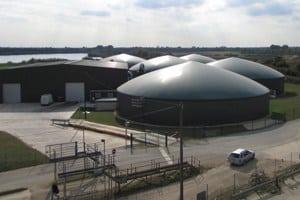
Large-scale AD projects of 500kw or more are not at risk following todays announcement that the Department of Energy & Climate Change has ruled out a consultation on feed-in-tariffs (FIT).
Industry experts had previously called for a tariff review of small-scale anaerobic digestion plants, as they claim current arrangements could trigger a 20% tariff reduction for such projects from April, despite few facilities of this size having been built (see letsrecycle.com story).

The concerns follow the introduction of preliminary accreditations and capacity-triggered tariff reductions one for projects above 500kw and one below, with most small-scale plants falling below 250kw in size – put in place by the government to prevent an unsustainable market boom.
But, the preliminary accreditations currently count towards capacity triggers at the time of registration rather than at the moment the plant comes online meaning some parties could artificially breach the sub-500kw trigger.
However, tariffs for larger-scale AD projects of 500kw or more are not at risk of being affected, as the capacity trigger has not yet been reached.
The industry today criticised energy secretary Greg Barker for performing a U-turn on a letter he had written to the AD sector in November, which outlined the governments strong commitment to the generation of energy from waste through AD and promised a consultation on FIT for small-scale projects.
Charlotte Morton, chief executive of the Anaerobic Digestion and Biogas Association, said the decision to drop the consultation was in contrast to the governments earlier pledge.
‘Disappointing’
She said: It is deeply disappointing that DECC have not been able to follow through on their commitment to consult on measures, including a tariff review, in January [2014], and this decision appears contrary to the governments stated support for small scale AD on farms in particular.
Smaller scale AD has a range of environmental benefits on top of generating electricity, including encouraging better manure management on farms and reducing the use of artificial fertilisers. A range of UK businesses are also in the process of developing technology and expertise which will be lost without the early-stage support which the current FIT level provides.
The highest tariff degressions were designed to deal with runaway deployment, but are hitting smaller scale AD despite just five sub 250kW plants coming online in 2013. This clearly goes against the spirit and intention of the policy, which will be hard to swallow for farmers, developers and their employees.
Meanwhile, Renewable Energy Associations head of policy Paul Thompson added: This is a bitter disappointment. We have worked hard with industry colleagues and DECC officials on proposals to fix the FIT for small and mid-scale AD, so it is extremely frustrating that this has not been done. The Government has kicked this issue into the long grass, leaving several projects and companies in the sector at extreme risk.


Register for free to comment