


And, while the organisation said it supported the proposals in general, it said that some recycling targets – for steel and wood – could be more ambitious, given that recycling rates for these materials are already relatively high.
In the case of glass, it said that a higher target could also be explored – but voiced concerns on the additional financial burden which could be placed on councils if sub-targets for glass, depending on end market, were introduced in a bid to incentivise closed loop recycling. It also warned that there may not be enough end markets to take all the green glass this may create.
Andrew Craig, principal policy officer at LARAC, said: “Overall LARAC supports the proposals contained within the consultation. However there are some targets that we feel are not challenging enough and will not enhance resource recovery in the UK as much as it could.”
Steel
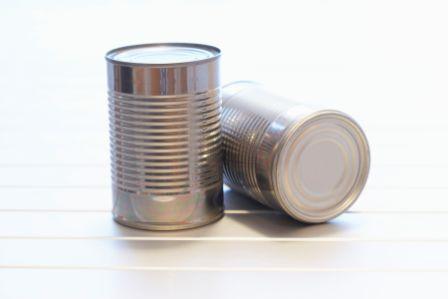
On the subject of steel, LARAC said that the proposed target of 62.8% in 2014 was not ambitious enough given than 61.7% was recycled in 2008 and that only half of steel cans in the municipal waste stream were currently captured.
It said: “There is a case for increasing the targets to incentivise obligated companies to engage closely with local authorities to develop and fund systems (and communications) to extract the steel from the municipal waste stream, especially non-household streams such as recycling on the go and offices”.
Wood

It said: “This would have the likely consequence of pushing up all PRN prices in the shorter term which would then generate more funding to promote collections of other packaging materials.”
For plastics, LARAC said that it broadly agreed with the proposed targets, but was aware that parts of industry thought them to be very challenging because the relevant technology to deal with mixed flexible plastics – a large part of the plastic packaging waste stream – would not be online until 2015/16.
As a result, the organisation said: “If true ‘closed loop' recycling is to be instigated as a condition for the end market destinations for plastics then LARAC believes that the targets will be too difficult to achieve.”
PRN system
Commenting on the rest of the packaging consultation, LARAC also voiced concern over plans to make the PRN system more transparent – which it said did not go far enough.
At present, packaging producers pay towards the cost of packaging waste recycling by packaging recycling evidence, known as a Packaging Waste Recovery Note (PRN) or its export equivalent, PERN. These are bought from reprocessors and the money used to subsidise the recycling process.
However, there has been criticism in the past that this subsidy has not been transparent or created confidence in the producer responsibility system.
As a result, LARAC said that reprocessors and exporters should be required to declare how they spend PRN money.
In the past, this has been ruled out due to commercial confidentiality.
LARAC said: “LARAC feels that if it is a requirement for all reprocessors and exporters to produce a report showing how PRN money has been spent the system becomes completely transparent. It also aids decisions making on where future investment needs to be made in order for ‘UK plc' to meet future targets.”
It added: “The claim of handing an advantage to competitors should not be an issue if all companies are required to report information in the same way, backed up by appropriate auditing to a suitable level, probably similar to current levels.”


Register for free to comment