


In May 2012, the HMRC put out guidance explaining that most fines from trommels and screens which have in the past been charged the lower landfill tax rate of 2.50 as inert material will now generally be charged the full rate of 64-a-tonne for active material (see letsrecycle.com story).
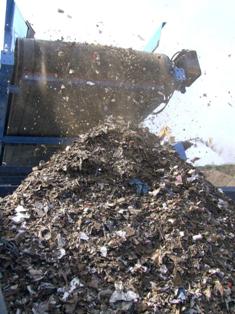
Infurther guidance issued on June 1 the HMRC acknowledged that if finescould beshown to be inert, and were listed in its Qualifying Order, they would still be eligible for the lower rate (see letsrecycle.com story).
However, the ESA which represents waste management companies said that it was still unclear what evidence must be provided to show that material qualified for the lower rate and whose responsibility it was to provide it.
The ESA is now in discussions with the HMRC, Treasury, Defra and the Environment Agency to resolve the situation, and the HMRC indicated at a meeting of stakeholders on June 15 that it would be producing further guidance on the issue (see letsrecycle.com story).
A statement issued by the ESA last week (June 20) said: Following discussions with ESA, HMRCs second note usefully clarified that fines composed only of qualifying material are still eligible for the lower rate. However, it remains unclear where the onus to prove that this is the case falls, and what evidence would be deemed sufficient by HMRC.
ESA and its members are working with HMRC to see if we can help advise on this issue. Our objective remains a policy which is both clear and consistently enforced, and in line with environmental objectives.
Policy
The ESA said that prior to the publication of the original HMRC guidance, the application and enforcement of the law had become inconsistent as it was easier for some less scrupulous operators to mix inert and active wastes together and claim the lower rate of tax.
Despite its concerns the ESA said that it supports the governments policy surrounding landfill tax.
It said: Government policy around landfill tax is clear to levy a high and increasing rate of landfill tax on the more polluting, active waste sent to landfill in order to drive this waste up the waste hierarchy, while retaining a lower rate for landfilled material which is clearly inactive and hence non-polluting. ESA supports this policy.
UROC
The ESAs comments came as the United Resource Operators Consortium (UROC), a trade association set up to give the skip hire and waste transfer station a voice following the landfill tax changes, named its shadow committee.
The shadow committee will provide a steer for the association until a full committee is appointed. It has already assisted government authorities with the trommel fines issue.
Members of the shadow committee are: Kathryn Lucas, Adjust Regulatory Solicitors; Charlie Trousdell, Countrystyle; John Crawford, Henry Waste Management Limited; Barry Harding, Harding Farms; Martin Campbell, A to B Skip Hire Limited; Steve Butler, IOD (Isle of Dogs) Skip Hire; and, Andrew Liddell, Ace Liftaway Limited.
UROC was formed in mid June 2012 as a not-for-profit trade body (see letsrecycle.com story). It intends to support the industry in all aspects of business and to respond to government consultations and guidance documents.


Register for free to comment