

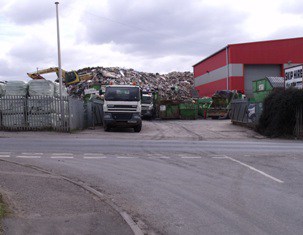
However, the Judge has delayed a final decision on the case until December 23 the same day that director Robert McNaughtons suspended prison sentence is due to start.
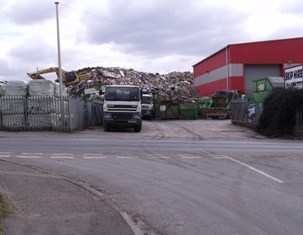
In June, Mr McNaughton was found in contempt after failing to remove the waste and was sentenced to six months in prison, suspended until December 23 to give him one last chance to take action.
Mr McNaughton was then given until September 10 to clear the site, but the Environment Agency (EA) claims the company has failed to meet this deadline.
As such, the Agency has brought contempt of court proceedings against director Robert McNaughton, which were heard at the High Court.
The company has also had its environmental permit revoked and the Agency has given Mr McNaughton until February 17 2014 to remove all the waste bales and refuse derived fuel (RDF) from the site or face further criminal charges.
Speaking about the case, David Hudson, environment manager at the Environment Agency said: We remain committed to getting this site cleared. We’ve now taken the decision that RDF should not be allowed to operate at the site. We’ve been focussed on dealing with the waste pile, and Mr McNaughton and his company are being dealt with in court for failing to clear the site.
‘We remain committed to getting this site cleared. We’ve now taken the decision that RDF should not be allowed to operate at the site. We’ve been focussed on dealing with the waste pile, and Mr McNaughton and his company are being dealt with in court for failing to clear the site.’
David Hudson, environment manager at the Environment Agency
Refuse Derived Fuel Ltd could not be reached for comment when contacted by letsrecycle.com.
Refuse Derived Fuel Ltd
The company took over operation of the Moor Street site as well as its environmental permit and conditions from Brian Hill Waste in 2009.
But, according to the Agency, the companys activities on the site primarily processing collected waste into fuel (RDF) for burning elsewhere did not comply with the conditions of the permit transferred by Brian Hill Waste.
As a result, the EA undertook enforcement action against the company for storing waste above the permits maximum height requirements. An independent surveyors report in October 2012 found that the height of the RDF on site varied generally between around six metres and eight metres.
After enforcement action to secure the companys compliance with the sites permit proved unsuccessful, the Agency first took legal action against Refuse Derived Fuel Ltd and its directors in April 2012.
Several hearings at the High Court in Birmingham subsequently followed in 2012 and 2013, at which the company and its directors made legally binding commitments to reduce the waste piles height and remove some of the waste bales.
Related Links
Nearby residents had also raised concerns about the height of the stacked RDF bales on the Moor Street site and the Agency has written regularly to the community on the progress regarding removal of the waste.
RDF is produced by shredding and dehydrating solid waste and is burned to produce energy. The largest market for the material from the UK is northern Europe.
Although RDF is a fuel, it is still considered waste and it must be stored, transported and used in accordance with the relevant waste regulations.

Register for free to comment