


The case could have implications for exporters of fly ash, the waste generated after contaminants are removed from gases produced from burning waste, because the judge backed the the Agency’s call that this falls under disposal, not recovery
However, the judge said future disputes should be settled on a case-by-case basis, but warned that the Environment Agency, as the specialist environmental regulator on waste, “has an expertise that is beyond the province of the court”.
Case
In a decision handed down yesterday (19 July), Mrs Justice Justine Thornton said the Agency had “rational and evidence-based grounds” for revoking permission for the export in February 2021, three months after it was approved.
The judge said she was “not persuaded of any error of law in the Agency’s exercise of its judgment”.
New Earth Solutions had claimed the Agency acted unlawfully when revoking the permission, because it failed to notice it as a recovery, not a disposal, operation.
Shipment
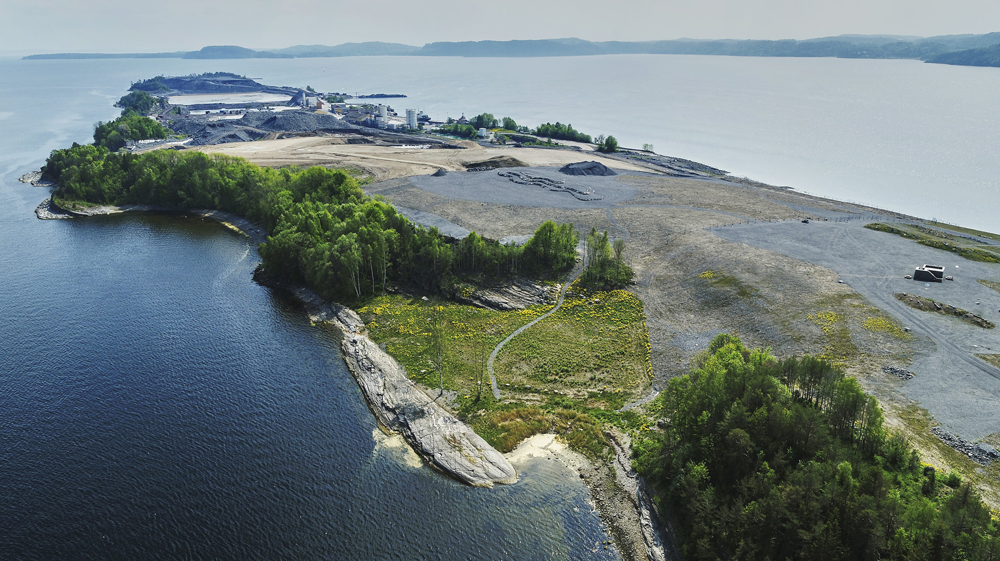
The case centred on a 100,000 tonne shipment of Air Pollution Control residue (APCr), also known as fly ash, from New Earth’s site in Boston, Lincolnshire, to Norway. It would have been received by Norsk Avfall Shandtering AS (NOAH), the owner of the island of Langøya, situated in the Holmestrand Fjord and belonging to the Homestrand municipality of Vestfold and Telemark in Norway. The island is comprised of limestone. It was, for centuries, subject to quarrying including modern industrial quarrying of limestone for use in the cement industry starting in 1899.
APCr is the waste generated after contaminants are removed from gases produced in thermal processes, typically the combustion of municipal waste. Lime is used to ‘clean’ the gases before they are emitted to the atmosphere. APCr is a hazardous waste.
In December 2020, New Earth Solutions notified the Agency of its proposal to export the shipment to Norway. The purpose of the shipment was said to be waste recovery with the waste operation R5, specified as ‘recycling/reclamation of other inorganic materials’.
On 22 February 2021, the Norwegian Environment Agency consented to the export as an R5 recovery operation, and two days later the English Agency followed suit.
Letter
However, the English Environment Agency received a letter from a Norwegian citizen “questioning the Agency’s consent and querying whether there were facilities in the UK” which could take the material.
“Accordingly, the Agency sought further information the Norwegian Environment Agency and New Earth Solutions,” the judgment says, before the consent was withdrawn on 10 June.
The judgment adds: “The Agency withdrew consent for the shipment on the basis New Earth Solutions had not supplied sufficient evidence to show that the deposit of the treated APCr in the quarry would meet the definition of a recovery operation and there were facilities for the material in the UK”.
Review
Challenging this, New Earth Solutions said the Agency has the “mistaken impression” that the waste would be sent to landfill. The letter explained that APCr was to be used as a direct substitute for virgin limestone to neutralise sulphuric acid waste.
Following a back and forth between the two, the Agency confirmed on 10 September that it had reviewed its decision and confirmed its decision to withdraw consent for the export on the basis that it is a disposal activity not a recovery operation.
The Agency said the original consent was an error, adding that the argument that the treatment of the waste sulphuric acid with APCr does not amount to a recovery operation, despite the Norwegian Environment Agency holding this view.
Hearing
New Earth Solutions then brought the case to court, and the session was heard on 10 and 11 May 2022.
New Earth submitted that that the waste operations at the site the material is sent to comprises three separate and distinct waste processes: i) substitution of APCr for virgin limestone; ii) ‘neutralisation’ of the sulphuric acid by mixing it (in colloquial terms), with the APCr; and iii) deposit of the neutralised mixture or treatment residue into landfill.
On behalf of the Agency, it is submitted that the waste operations in Norway are correctly characterised as a D9 disposal operation, and/or the main objective of the operations was the disposal of co-treated waste into landfill.
As the national specialist environmental regulator on waste, the Agency has an expertise that is beyond the province of the Court
– Court judgment
Ruling
However, in a complex case, the appeal was dismissed by the judge.
The judge said “where there is genuine uncertainty or overlap between recovery and disposal, then the waste operation must be classified on a case-by-case basis, which will include the definition of recovery in Article 3(15) of the Waste Framework Directive.
The judge added: “As the national specialist environmental regulator on waste, the Agency has an expertise that is beyond the province of the Court.
“ The Court of Appeal was only prepared to intervene in the Agency’s decision making on grounds of irrationality.
“It follows that I accept the Agency’s submission that the assessment of the ‘principal result’ of a waste operation is prima facie a matter of judgment and evaluation for the Agency as the expert regulator, to which the Court must afford a margin of appreciation”.


Register for free to comment